
Personal Info
Known For
Gender
Birthday
Place of Birth
Irina Kalinovskaya
Known for

Yurka's Sunrises
A story about the working life of rural youth in the 1970s. About the conflict between young specialist Yuri Khmel and the chairman of the collective farm, and his young wife Zhenya with her mother-in-law.
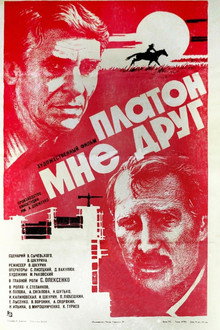
Platon is my friend
Platon Smolyak, the director of the industrial complex, decides to begin land restoration work following an accident at the quarry, but he faces resistance from members of the city party committee bureau. The workers support him, arguing that the cause was a shift in the soil rather than any failure on his part. Zhulai calls for a thorough analysis of the situation before a decision is made.

The Airport Incident
Major of the militia, Dzhuraev, is occupied with a rather mundane task — investigating the robbery of the apartment of the elderly actress Kurbatova, whose jewelry was stolen. The crime has already been confessed to by Bahor Murodov, a man who served his sentence. He intentionally "got caught" by breaking into a bridal shop without taking anything. And then — a sudden turn of events at the airport… Two officers from the private security service are poisoned, and their cargo — unique jewelry made of pure gold — is stolen...

Almost the Same Age
A literature teacher, graduate of the Pedagogical Institute, becomes the class teacher and best friend of the children in the tenth, graduating class...

Who’s Behind the Wall?
The near future. A fantastic experiment using the test of the mathematician Alan Turing, in which an examiner, a human, and a robot take part. During the test, the examiner must determine who is behind the wall: a person or a thinking machine. The experiment is conducted with one goal: to find out whether a machine can think.

A Woman From Afar
A young Ukrainian woman, Daria, marries a Tajik soldier, Rasulov, and leaves for his village. Their daughter is born, and soon the Great Patriotic War begins. The husband is wounded at the front and loses his eyesight. Daria's long struggle to bring Rasulov back to life is bearing fruit - he is beginning to see...
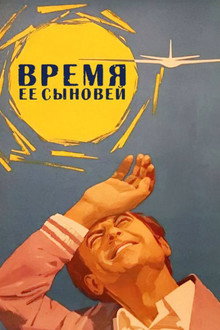
Time of Her Sons
Oncologist Ivan Gulyaev learns that his brother Pavel recently underwent a checkup at a clinic and that his case is hopeless. Pavel suspects the diagnosis, but when the brothers meet, they don't mention it.

Meeting in the Gorge of Death
The film is set during the Civil War. The Red Army, with the support of the people, is fighting the Basmachi band led by Kurbashi Rajabbek.

A Photo for the Memories
A boy falls in love with the girl whose injuries he is responsible for...

In the Fortress Village
According to M. Saltykov-Shchedrin's novel "Poshekhonskaya Starina. The Life of Nikanor Zatrapezny, a Poshekhonsky Nobleman." The author of the notes, Nikanor Zatrapezny, presents a whole gallery of portraits of his family members. These include elderly lodgers who are kicked out of the house, aunties who are known for their self-indulgence, and ugly sisters who are unable to find suitable matches. The multitude of images and facts that arise in Nikanor's memory has a profound impact on him. After describing his childhood visions, he doubts that he will be able to continue writing.

We Didn't Learn This
The heroes of the film are students of a pedagogical university, those who, after a year or two, have to carry knowledge to schoolchildren, "to sow the rational, good, eternal." In the meantime, student practice. True, the practice is not quite ordinary, because for the first time students leave far from the walls of their own university, for the first time they meet with students in the classroom not in the presence of their teachers, those with whom life encounters them daily at the institute, but with those who have been working for more than a year at school.

The Long Recess
A young teacher goes to a school for adults. He is younger than many of his students and some of them are starting to miss school.

They Are Waiting For Me On The Ground
Stanitsyn, a test pilot who dreamed of space, was rejected by the medical commission. But the courageous dreamer in love with the sky found himself at a lower altitude - in transport aviation.

The Nylon Christmas Tree
A group of people who happen to be on the same bus try to get home on the New Year's Eve, but their bus is delayed by numerous obstacles, and the tensions grow.

And I'm With You Again...
The film illustrates individual episodes showing the life of Alexander Pushkin. The script is based on the testimonies of contemporaries, as well as on poems, drawings, and letters of the poet.