Personal Info
Known For
Gender
Birthday
Place of Birth
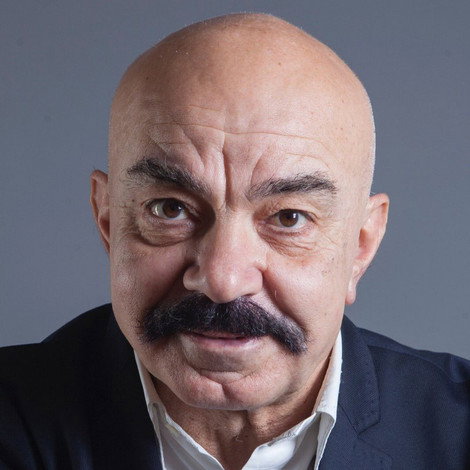
Melih Çardak
Known for

Cennet Mahallesi

Woman
The story of mother Bahar, who carries the weight and love of two children in their hearts with enthusiasm in their hearts. Bahar, abandoned by her mother when she was eight years old, later lost her grandma and her father. When she thinks she is all alone, she meets Sarp, whom she delicately loves.

Halka
Two men unite against a criminal conspiracy, pursuing a dark past of notebooks, cases, and lies. They face the mafia, money, intrigue, and the terrifying Halka.

Wounded Heart
Ferit is the cherished heir apparent of one of the well-established families of Antakya. Ayse, on the other hand, is a lively young girl living in Istanbul who has managed to stand on her own feet. Ferit, who is about to marry Hande, the daughter of the Varoglu Family, confronts the facts before the wedding and his world turns upside down.

Gece Gündüz
Gece Gündüz was a police procedural soap produced by the Altıoklar Productions, the main characters are Aslan Aydemir and Kemal. They both work at the Istanbul Organized Crime section of the police force. The series finished on its 33rd episode. The theme song is an edited version of "Gündüz Gece" by Âşık Veysel Şatıroğlu who is also named "Uzun Ince bir Yoldayım" which was a famous Turkish folk music and Veysel was the famous one for this song.

Bir Peri Masalı
Alina Boz gives life to a babysitter named "Zeynep". Zeynep, who grew up facing many challenges, partly due to her useless father, will face the biggest test when she stumbles upon a bag of cash

Milat

Devekuşu Kabare

Reklamlar
From print media to television, from the streets to the highways, our entire environment has become inundated with advertising. Even our homes are now ruled by advertising. We eat advertising, we drink advertising. From prize-winning chewing gum to installment plans for white goods, from lottery tickets to promotions for effective cleaning products, we are completely immersed in advertising! This irresistible phenomenon, which targets the audience defined as "media," manipulates our subconscious, and is transforming us into an increasingly consumerist society.

Iron Earth, Copper Sky
In this deeply symbolic and visually lush film, as far as Tashbash is concerned, he's just a malcontent, a fairly ordinary hell-raiser who has gotten into trouble with the law in the past. Sure, he hates the village headman who is a toady to the region's oppressive landlord, and he dislikes the fact that everyone looks to the headman for help because they have no place else to turn, but he's just an ordinary guy and has no solutions for his fellow villagers. However, after one of them has a vision in which Tashbash is shown to be a manifestation of one of their more important local saints, the villagers unite as one in seeking him out for help with the upcoming visit of the landlord to collect rents which they can't pay. Their adulation and reverence is so persistent that eventually even Tashbash becomes a believer.

Yıllar Sonra

Avcı

Seni Yaşatacağım

Yusuf of Kuyucak
An idealist district governor, Selahattin Bey, adopts Yusuf, orphaned after his family was killed by thugs. Yusuf falls in love with Muazzez, the daughter of Selahattin. But when Hilmi Bey’s son Şakir also wants to marry Muazzez, a conflict escalates.

Fidan
Ramazan, together with his children, migrate to the big city, Istanbul in order to give them a better life. His daughter Fidan begins working as a clerk at a shop. But she could not adapt to the life of big city. She runs away with the son of the shop owner. Ramazan searches for his daughter, but the big city already has corrupted his daughter