Margit Carstensen
Biography
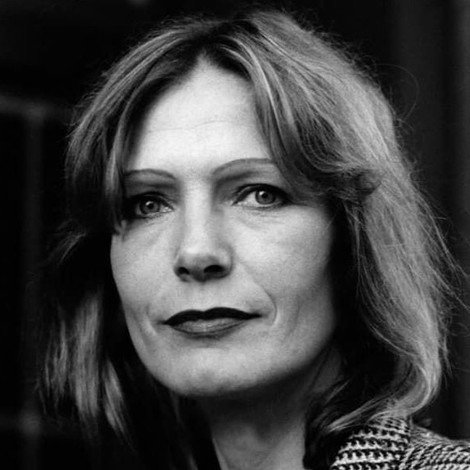
Margit Carstensen (29 February 1940 – 1 June 2023) was a German theatre and film actress, best known outside Germany for roles in the works of film director Rainer Werner Fassbinder.
Carstensen was born and raised in the northern German city of Kiel. Upon graduation from the local high school in 1958, she studied acting at the Hochschule für Musik und Theater Hamburg. This education led to her first stage appearances in Kleve, Heilbronn, Münster, and Braunschweig. In 1965, Carstensen began a four-year engagement with the German Playhouse in Hamburg.
In 1969, she gained a local profile for her work in the Theater am Goetheplatz in Bremen, where she first met director Rainer Werner Fassbinder. She then worked under his direction in a comedy by the 18th-century Venetian Carlo Goldoni, The Coffee Shop (which was recorded for television in 1970), bringing her national attention in West Germany. She subsequently played the role of serial murderess Geesche Gottfried in the premiere of Fassbinder's own play Bremen Freedom (also televised, in 1972), and then in the title role of his Henrik Ibsen adaptation Nora Helmer (televised in 1974) derived from A Doll's House. Outside of theatre, Carstensen played leading roles in the Fassbinder films The Bitter Tears of Petra von Kant (1972), her best-known role for him; Martha (1974), analysing a traditional marriage in a contemporary setting; Fear of Fear (1975); Mother Küsters' Trip to Heaven (1975); Satan's Brew (1976); Chinese Roulette (1976) and Women in New York (1977). She also appeared in episodes of two Fassbinder television productions: Eight Hours Don't Make a Day (1972), and Berlin Alexanderplatz (1980).
From 1973 to 1976, Carstensen held a steady acting engagement in Darmstadt. In 1977, she moved to West Berlin where she performed on the highly regarded Staatliche Schauspielbühnen. In 1982, she moved to Stuttgart in order to work with director Hansgünther Heyme, where she appeared in a series of plays directed by him.
During this time, Carstensen also worked in international film productions, such as Andrzej Żuławski's Possession (1981) and Agnieszka Holland's Angry Harvest (1985); the latter was nominated for an Academy Award for Best Foreign Language Film. By the late 1980s, she had developed ongoing working relationships with German directors Werner Schroeter, Christoph Schlingensief, and Leander Haußmann.
For the 2003–04 season, Carstensen appeared in the Vienna Burgtheater, in the premiere of Elfriede Jelinek's play Bambiland under the direction of Schlingensief. During the 2007–08 season Carstensen assisted with the Austrian-German TV documentary Mr. Karl – A Person for People, directed by Kurt Mayer.
In 2016, she was still on television, appearing in the long-running series Tatort.
Carstensen received many awards in her career. Among these were the 1973 German Film Awards (Gold), for her acting in The Bitter Tears of Petra von Kant, and the 2002 Bavarian Film Award, for her acting in Scherbentanz. In 1972 she was chosen by the German Film Critics Guild as Best Actress of the Year. In 2019, she was awarded the Götz-George-Preis for her life's work.
Description above from the Wikipedia article Margit Carstensen, licensed under CC-BY-SA, full list of contributors on Wikipedia.
Known for
Scene of the Crime
Tatort is a long-running German/Austrian/Swiss crime television series set in various parts of these countries. The show is broadcast on the channels of ARD in Germany, ORF in Austria and SF1 in Switzerland.
Derrick
Derrick was a German TV series produced by Telenova Film und Fernsehproduktion in association with ZDF, ORF and SRG between 1974 and 1998 about Detective Chief Inspector Stephan Derrick and his loyal assistant Inspector Harry Klein, who solve murder cases in Munich and surroundings.
Possession
A young woman left her family for an unspecified reason. The husband determines to find out the truth and starts following his wife. At first, he suspects that a man is involved. But gradually, he finds out more and more strange behaviors and bizarre incidents that indicate something more than a possessed love affair.
Berlin Alexanderplatz
In late 1920s Berlin, Franz Biberkopf is released from prison and vows to go straight. However, he soon finds himself embroiled in the city’s criminal underworld.
Berlin Alexanderplatz
In late 1920s Berlin, Franz Biberkopf is released from prison and vows to go straight. However, he soon finds himself embroiled in the city’s criminal underworld.
World on a Wire
In the future, Simulacron, a computer project simulating reality, encounters strange occurrences after its leader's death. Dr. Stiller questions the sudden disappearance of a friend and wonders if Simulacron holds the answers.
Eight Hours Don’t Make a Day
The sprawling story of the everyday triumphs and travails of the young toolmaker Jochen and many of the people populating his world, including the woman he loves, his eccentric family, and his colleagues, with whom he bands together to improve conditions on the factory floor.
Anwalt Abel
Anwalt Abel is a German television film series, broadcast on ZDF between 1988 and 2002. 20 television films were produced, based on the detective novels of Fred Breinersdorfer.
Agnes and His Brothers
Focuses on three very different siblings, all searching for happiness. Hans-Jörg is a sex addicted librarian, who is interested in young students. Werner is a successful politician with a dysfunctional family. Agnes, a trans woman, works as a table dancer in a night club. The three brothers just have one thing in common: their longing for a happy life.
Satan’s Brew
A famous poet who hasn't written a word in two years unconsciously plagiarizes the work of Stefan George, while dealing with several mistresses, his dimwitted brother, and a murder investigation.
Mister Karl
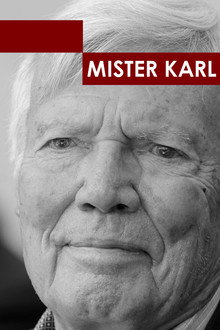
A documentary about the life of Karlheinz Böhm from his film career to his charity activities in Ethiopia.
The Coffee House
People meet and chat at Ridolfo's Coffeehouse; the conversations are mostly about money, but also about feelings, ideals, friendship, love, fidelity and respectability.