
Personal Info
Known For
Gender
Birthday
Place of Birth
Vera Gebuhr
Known for
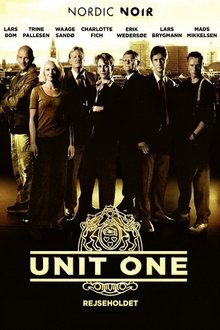
Unit One
Rejseholdet is a Danish television crime series starring Charlotte Fich, Mads Mikkelsen and Lars Brygmann. Produced by Danmarks Radio, the program aired 32 episodes spanning four seasons from 2000 to 2004. Each episode revolved around an elite mobile police task force called "Unit One" that travels around Denmark helping local police solve crimes. Cases portrayed in the show were loosely based upon actual incidents of sensational crimes such as murders, kidnappings, cross-border sex traffic and child pornography. Rejseholdet won the 2002 International Emmy Award for best drama series.
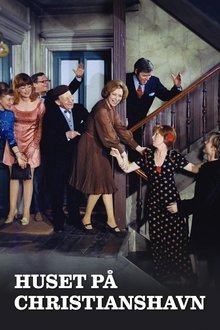
The House at Christianshavn
The series follows the residents of an apartment building on Copenhagen's Christianshavn, as they go about their daily lives and challenges. There is Olsen, a mover with an old fashion view of the world, Clausen who runs the local pet shop, Egon the career focused assistant, their wives who work hard to keep their spouses lives together, the young couple Tue and Rikke who recently moved in, the hard working caretaker Meyer, who never puts in to much effort, and of course Emma, the innkeeper of Rottehullet, where all the important decisions are made while running up the bar tab. The series was produced by Nordisk Film for Danmarks Radio TV station between the years 1970-77. The series' first director was Ebbe Langberg, then Erik Balling and Tom Hedegaard respectively. The series was conceived by an author team of well-known Danish authors such Leif Panduro, Benny Andersen, and Lise Nørgaard.
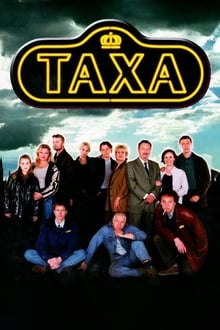
Taxa
TAXA is a Danish television drama made by Danmarks Radio with 56 episodes, written by Stig Thorsboe and produced by Rumble Hammerich. The series revolves around a small taxi central, CrownTaxi, in Copenhagen. The series was a success from the start, 14 September 1997 on DR1. The series was broadcast during the period 1997-1999 for a total of five series. CrownTaxi has its ups and downs and in the course of the series, following the various drivers, radio opertor Lizzie and boss Verner Boye-Larsen. They have all their problems both with clients and family life and constantly threaten the show's villain Hermann from the competing taxi firm, City Car, which wants to take over the CrownTaxi. TAXA was also screened in Sweden on SVT1.
The Kingdom
The Kingdom is the most technologically advanced hospital in Denmark, a gleaming bastion of medical science. A rash of uncanny occurrences, however, begins to weaken the staff's faith in science – a phantom ambulance pulls in every night, but disappears; voices echo in the elevator shaft; and a pregnant doctor's fetus seems to be developing much faster than is natural.

Skjulte spor
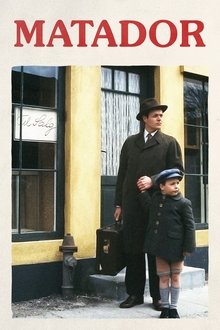
Matador
Matador is a Danish TV series produced and shown between 1978 and 1982. It is set in the fictional Danish town of Korsbæk between 1929 and 1947. It follows the lives of a range of characters from across the social spectrum, focusing specifically on the rivalry between the families of two businessmen: The banker Hans Christian Varnæs, an established local worthy, and social climber Mads Skjern, who arrives in town as the series opens. The name Matador was taken from the localised edition of the boardgame Monopoly, also the series' tentative English title. In addition, in contemporary Danish a "matador" is often used to describe a business tycoon, in the series referring to the character of Mads Skjern and his craftiness as a self-made entrepreneur. Directed by famed Danish film maker Erik Balling, Matador was the idea of author Lise Nørgaard who wrote the bulk of the episodes alongside Karen Smith, Jens Louis Petersen and Paul Hammerich. The series is one of the most well-known and popular examples of Danish television and represents the peak of longtime development of Danish TV drama by the public service channel Danmarks Radio. The series has become part of the modern self-understanding of Danes, partly because of its successful mix of melodrama and a distinct warm Danish humour in the depiction of characters, which were portrayed by a wide range of the most popular Danish actors at the time; but also not least because of its accurate portrayal of a turbulent Denmark from around the start of the Great Depression and through Nazi Germany's occupation of Denmark in World War II.
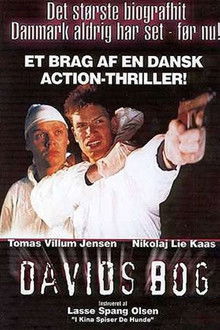
Davids bog
Henrik helps his uncle clear out a rich man's villa after the owner went bankrupt and committed siucide. During the clearance he finds a book that gives minute details of perfect crimes.
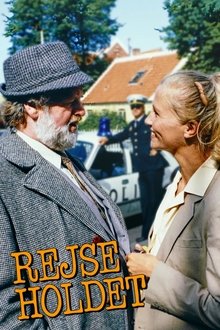
Rejseholdet
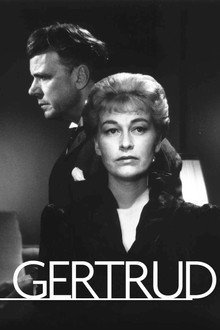
Gertrud
Hopeless romantic Gertrud inhabits a turn-of-the-century milieu of artists and musicians, where she pursues an idealized notion of love that will always elude her. She abandons her distinguished husband and embraces an affair with a young concert pianist, who falls short of her desire for lasting affection. When an old lover returns to her life, fresh disappointments follow, and Gertrud must try to come to terms with reality.

Mændenes Forbund
A cheerful tale of what can happen when the two sexes try to achieve balance through millimeter democracy, including when it comes to love and cohabitation. After throwing rolling pins and other objects at their husbands, the women have left their husbands behind in the city and are spending sunny and fun days at a camp, while their husbands take over the boring daily chores. The men send a brave negotiator, who approaches the camp with a white flag raised above his head.
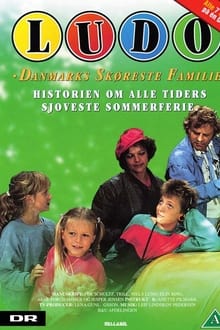
Ludo
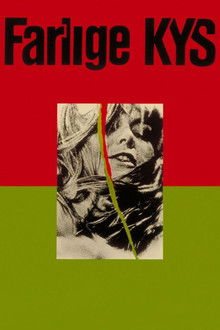
Dangerous Kisses
In this Danish suspense film, the foibles of the psychological helping professions are wryly surveyed. A woman has murdered her husband. That's clear enough. Now the woman is in a psychiatric hospital because it seemed clear to the judges that she was not fully competent. Her doctor, who is helping her a great deal, has problems of his own. First, he is against the cookie-cutter treatment practices of his hospital, second, he is on shaky mental ground himself. Then he violates his therapeutic ethics by carrying on an affair with the woman he is treating.
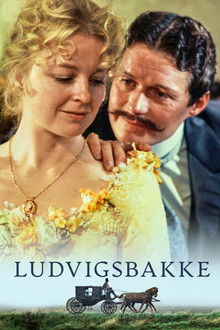
Ludvigsbakke
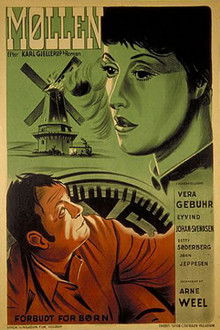
Møllen
When Møller Jakob Clausen of "Højmøllen" sits at his wife's deathbed, he makes her promise that if he marries again, he will choose a woman who will be good to their little son, Hans. And in motherly care for her little son, the dying wife mentions the forester's gentle and kind sister, Hanne, who will surely be able to become both a faithful wife for the miller and a good mother for Hans.