
Personal Info
Known For
Gender
Birthday
Place of Birth
Günther Lüders
Known for

Die Drehscheibe

Deutscher Kleinkunstpreis
Sonderdezernat K1
Das Ehesanatorium
O Wildnis
In a town in Connetticut in 1906, newspaper publisher Miller has problems with his sixteen-year-old son Richard, who reads Wilde, Shaw, Swinburne and Ibsen. Richard loves the neighbor's daughter with touching naivety, which the neighbor finds sinful. The problems of puberty are solved idyllically with a great deal of understanding and bourgeoisie. The everyday life of an average family with small disasters and small victories oscillates between heart and sentimentality and the wilderness of awakening love is nothing more than a teasing maze.

Manöverball
Blick zurück im Film
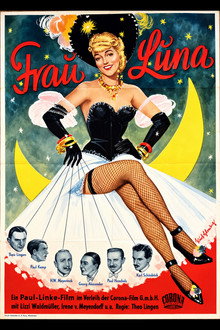
Mistress Moon
Berlin's theatre crowd is excited about the new operetta "Frau Luna". But for the head of the city's vice police, who was invited to the dress rehearsal, the costumes for the ladies onstage are a bit too revealing. He demands the show be cancelled as offensive. The president of the Thusneldenbund has taken it upon himself to alert everyone about the growth of immorality in the capital. The theatre director Knopp has come up with an idea to convince these "fine" gentlemen to let the operetta go onstage again: He intends to win over the friendship of the moral police and then nothing will stand in the way of "Frau Luna" once more being performed.

Hearts Are Trumps
Hotel tycoon Paulsen re-meets an old flame who mistakes him for a waiter. Paulsen's daughter Toni likes hotelier Reno and accepts to work for him as a waitress and chambermaid because she wants to be loved for herself, not her money.

Rote Mühle
A respectable woman in her 50s inherits a local night club from her husband in a divorce settlement, provided that she shows up there every night at 10:00pm for a month. In spite of eny and provocation, she manages to meet the terms.
Der Tag vor der Hochzeit
Anneliese Rothenberger gibt sich die Ehre