
Personal Info
Known For
Gender
Birthday
Place of Birth
Helle Virkner
Biography
Known for
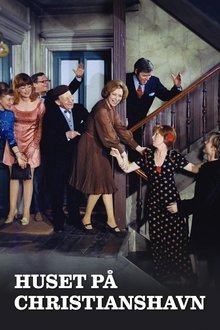
The House at Christianshavn
The series follows the residents of an apartment building on Copenhagen's Christianshavn, as they go about their daily lives and challenges. There is Olsen, a mover with an old fashion view of the world, Clausen who runs the local pet shop, Egon the career focused assistant, their wives who work hard to keep their spouses lives together, the young couple Tue and Rikke who recently moved in, the hard working caretaker Meyer, who never puts in to much effort, and of course Emma, the innkeeper of Rottehullet, where all the important decisions are made while running up the bar tab. The series was produced by Nordisk Film for Danmarks Radio TV station between the years 1970-77. The series' first director was Ebbe Langberg, then Erik Balling and Tom Hedegaard respectively. The series was conceived by an author team of well-known Danish authors such Leif Panduro, Benny Andersen, and Lise Nørgaard.
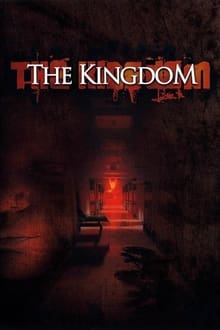
The Kingdom
The Kingdom is the most technologically advanced hospital in Denmark, a gleaming bastion of medical science. A rash of uncanny occurrences, however, begins to weaken the staff's faith in science – a phantom ambulance pulls in every night, but disappears; voices echo in the elevator shaft; and a pregnant doctor's fetus seems to be developing much faster than is natural.
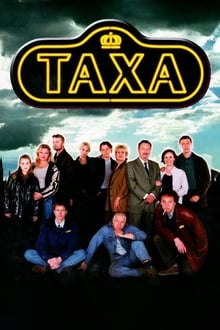
Taxa
TAXA is a Danish television drama made by Danmarks Radio with 56 episodes, written by Stig Thorsboe and produced by Rumble Hammerich. The series revolves around a small taxi central, CrownTaxi, in Copenhagen. The series was a success from the start, 14 September 1997 on DR1. The series was broadcast during the period 1997-1999 for a total of five series. CrownTaxi has its ups and downs and in the course of the series, following the various drivers, radio opertor Lizzie and boss Verner Boye-Larsen. They have all their problems both with clients and family life and constantly threaten the show's villain Hermann from the competing taxi firm, City Car, which wants to take over the CrownTaxi. TAXA was also screened in Sweden on SVT1.
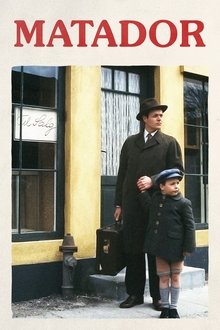
Matador
Matador is a Danish TV series produced and shown between 1978 and 1982. It is set in the fictional Danish town of Korsbæk between 1929 and 1947. It follows the lives of a range of characters from across the social spectrum, focusing specifically on the rivalry between the families of two businessmen: The banker Hans Christian Varnæs, an established local worthy, and social climber Mads Skjern, who arrives in town as the series opens. The name Matador was taken from the localised edition of the boardgame Monopoly, also the series' tentative English title. In addition, in contemporary Danish a "matador" is often used to describe a business tycoon, in the series referring to the character of Mads Skjern and his craftiness as a self-made entrepreneur. Directed by famed Danish film maker Erik Balling, Matador was the idea of author Lise Nørgaard who wrote the bulk of the episodes alongside Karen Smith, Jens Louis Petersen and Paul Hammerich. The series is one of the most well-known and popular examples of Danish television and represents the peak of longtime development of Danish TV drama by the public service channel Danmarks Radio. The series has become part of the modern self-understanding of Danes, partly because of its successful mix of melodrama and a distinct warm Danish humour in the depiction of characters, which were portrayed by a wide range of the most popular Danish actors at the time; but also not least because of its accurate portrayal of a turbulent Denmark from around the start of the Great Depression and through Nazi Germany's occupation of Denmark in World War II.
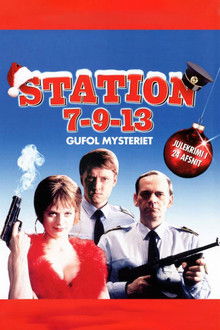
Station "Knock on Wood": The Gufol Mystery
At the local Police station in Copenhagen station 2 it's not going too well. They are not solving enough cases and are therefore in danger of the station being closed permanently. In disguise as fake Father Christmas', mysterious criminals start offering "Gufol" candy to children in the streets, the children end up going crazy because of the candy. It's now up to the police officers to stop the craziness and save both Christmas, their station and the kids.
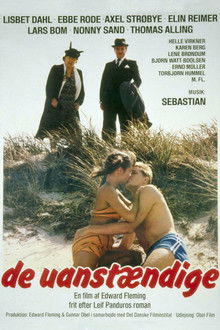
Topsy Turvy
An uptight young man and his equally uptight family moves next door to a hedonistic clan, including the beautiful, sexy Topsy, who charms the new neighbor boy Tom. But Tom discovers that the price of loving Topsy may be higher than he's willing to pay -- she insists on absolute honesty and a life and love without possession or exclusivity.
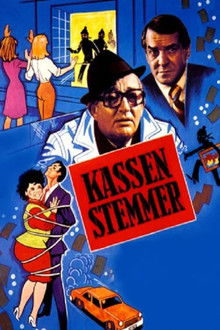
Kassen stemmer
Three young men discover a scam that three somewhat older gentlemen from Aarhus' upper class have set up to avoid bankruptcy. The gentlemen directors have both accounts and safe deposit boxes at the bank branch where one of the young men works, so it seems only natural to give the swindlers a taste of their own medicine, so to speak. The situation is further complicated when a journalist gets wind of the double heist and wants his share of the pie.
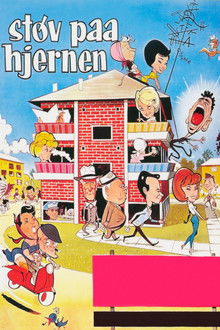
Dust on the Brain
The story centers around the busybody housewives of a modern Danish working class neighborhood of the 1960's. A remake of the Norwegian comedy film from 1959.
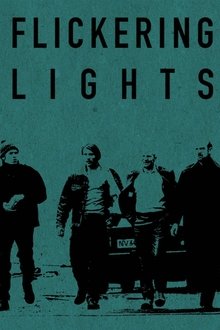
Flickering Lights
Four small gangsters from Copenhagen trick a gangster boss: they take over 4,000,000 kroner which they were supposed to bring him. Trying to escape to Barcelona they are forced to stop in the countryside, in an old, wrecked house, hiding there for several weeks. Slowly, one after another, they realize, that they would like to stay there, start a new life.
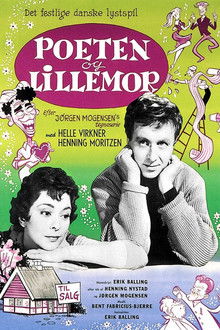
The Poet and the Little Mother
Poeten and Lillemor are making their living on his writing, but the general interest in modern poetry is low and their income very small. A creditor is dogging them, when a sudden bequest gives them some breathing-space. They buy an old house in a small village, where living is cheaper than in Copenhagen. The villagers are distrustful towards the newcomers. After a while the baker, the butcher and the grocer won't give Poeten and Lillemor credit anymore. Also the old creditor is back dogging them. Should Poeten renounce his high poetical standards and write simple verses for popular music, to get money?
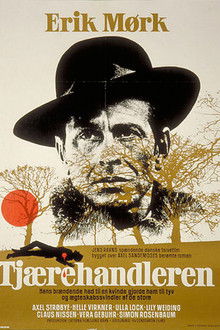
Tjærehandleren
Audun’s son is killed in an accident while the mother is in bed with her lover. Ten years later is Audun on the road living as a salesman and on the lone women that he meet and steal money from.

Cirkus Buster
Most of the ingredients in this filmed circus performance are familiar and simple, but something special has been added—something as simple as ordinary humanity. They talk and behave just like everyone else.
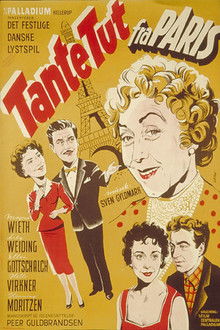
Tante Tut fra Paris
Mogens Wieth is a songwriter who lives beyond his means. He is expecting to inherit a fortune from his Aunt Tut in Paris, who is old and filthy rich. He has been corresponding with her for many years. In reality, Aunt Tut is dead, and it is her daughter who writes the letters. A young singer who wants to ingratiate himself with the songwriter claims that he knows the aunt and that she is coming to Copenhagen. He has persuaded an older actress to play the role of Aunt Tut. Unfortunately, the aunt's charming daughter also arrives in Copenhagen at the same time, setting the stage for costly episodes and amusing complications...
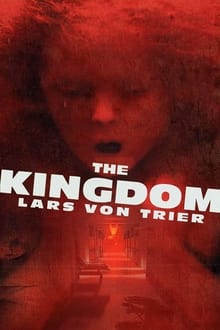
The Kingdom
At The Kingdom, Denmark's most technologically advanced hospital, a number of strange and otherworldly events begin occurring, much to the dismay of its doctors and patients. A ghostly ambulance appears and disappears, the voice of a little girl calls to a patient in an elevator shaft, and a doctor's fetus begins growing at an alarming rate.
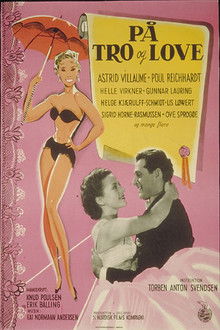
På tro og love
The young advertising executive Hans and his young wife Grete, who is a dentist, have a considerable annual income between them – and they pay dearly for this to the tax authorities. They calculate that they can save a considerable amount of money by getting divorced. Their friend and lawyer Georg, after much hesitation, agrees to help them with the divorce. However, their "marriage" continues, but it is not long before they each discover that temptation lurks just around the corner—and it is difficult to resist...