Personal Info
Known For
Gender
Birthday
Place of Birth
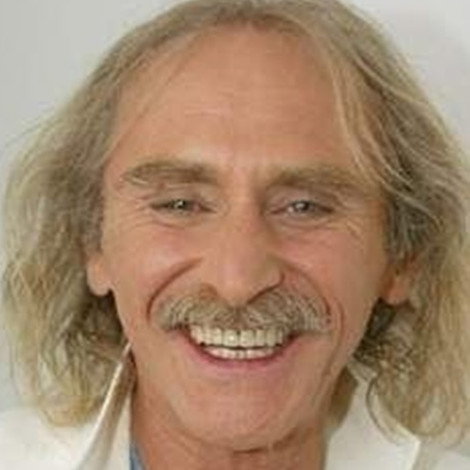
Jerzy Kryszak
Known for

Kryminalni
Kryminalni was a Polish crime drama television series that aired on TVN network from September 18, 2004 until May 24, 2008. It ran for 8 seasons and 101 episodes were broadcast in total. It was created by Polish director and screenwriter Piotr Wereśniak and produced by MTL Maxfilm studio. The series followed life and work of police officers from the elite Criminal Terror and Murders Division of the Warsaw Metropolitan Police; the title refers to police officers in the crime section. The three main characters were Adam Zawada, an experienced, tough cup, his younger colleague Marek Brodecki and Barbara Storosz, an ambitious female officer who in the first season joins the team just after graduating. Although none of the main actors had had star status before the series debuted, all three of them rose to prominence and popularity during the 5-year-long run. Many of Poland's best known actors guest starred, usually playing roles of people involved in just one particular investigation. The serial was one of the most popular in Poland: each week it had an audience of 4 million.

Daleko od noszy

4 Alternative Street
4 Alternative Street was a Polish comedy TV show that was finished in 1983 and aired in 1986 due to censorship. Many famous Polish actors appeared in the series. The filming location used in the mini series was a residential complex which is still in existence at 3 Grzegorzewska Street in Warsaw, Poland. The series was a satire to the communist rule in Poland, spoken in a way that it passed through communist censorship office.

LOL: Last One Laughing Poland
Cezary Pazura invites ten comedy stars and entertainment personalities to a unique challenge, where they can’t laugh for six hours. Contestants try everything to make others laugh while keeping a poker face at the same time. Those who can’t make it are out of the game. See who will be the last one laughing!

Daleko od noszy 2

Napoleon
The miniseries charts Napoleon Bonaparte’s career from his return after the Egyptian campaign to his downfall and exile on Elba, portraying his political maneuvering, military ambition, and complex relationships with key figures such as Talleyrand, Fouché, Murat, Tsar Alexander, Joséphine de Beauharnais, and Countess Marie Walewska.

Sukces

Tulipan

An Immoral Story
Told as a film within the film, the story concerns an aging actress. Ewa is a flamboyant, pushy actress whose career and love life have come to a dead end. She lives in a faceless housing development. She is totally engrossed in herself and dreams of making a comeback as a singer. But her overbearing personality time after time sets her into conflict with those she tries to work with in the theater and her bedroom.

Cheat
The year is 1750. Europe is in a ravaged state following a plague. Victor Moritz and Rufolf de Sevre are gamblers, frequenters of elegant casinos and fashionable brothels. Rudolf is a young aristocrat, charming and charismatic. His degenerate behavior has an animal intensity. Victor, though leading the life of libertine, remains to one side. He is a man of a refined taste despite his low birth and buys his noble title thanks to his gambling skills. Victor and Rudolf have been inseparable friends for years. Then two young, beautiful and innocent people - a brother and sister - enter their life...

Mężczyzna niepotrzebny!
Małgosia, a medical student, is expecting a child with Paweł, a doctor at the clinic. She is unsure whether to terminate the pregnancy. Her older sister, Ewa, urges her to do so. Ewa was once Paweł's lover. She terminated her pregnancy and is now unable to have children.

Crimen
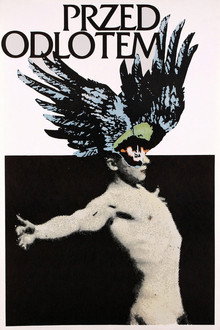
Break Away
A doctor working on finding a substance that would inhibit the growth of certain types of cancer learns that he has cancer. He decides to try an unproven drug on himself.

Uczennica
Based on the diaries he has obtained, a young journalist tries to recreate the struggle of sixteen-year-old Hania with the German occupier.
