
Personal Info
Known For
Gender
Birthday
Place of Birth
Hussein al-Imam
Biography
Known for

Al-Gama'a
Al-Gama'a is an Egyptian television drama, Historical and Political drama series written by Wahid Hamid, directed by Mohammed Yasin and produced by Kamel Abu Ali. The series began filming in January 2010 with a budget of 50 million Egyptian pounds. The show deals with the rise of the Muslim Brotherhood, Egypt’s largest Islamist political group, which was officially banned but nonetheless tolerated to an extent before the revolution. Critics have decried the show's pro-government stance, charging that it plays into the Egyptian government's agenda prior to the 2010 Egyptian parliamentary elections.

Hawanem Garden City
In a dramatic context, the events of the series deal with the changes of the social relations between the Shazli family members and its head, Mahmoud, from the Royal era until the events of 1952.

Words on Paper
When a major character is murdered by a hit-man in Beirut, an Egyptian in the city is charged with the crime. Against a backdrop of mystery and suspense, the story continues to unfold until the true culprit is revealed.

Justice Has Many Faces
Gaber Ma'moun Nassar, a famous businessman with a good reputation among people, lives a quiet life with his wife and daughter. Throughout his whole life, he has tried to hide the fact that he is an illegitimate child. When a murder occurs and he gets investigated, it reveals his hidden secrets.

Good Mood
The drug dealer, Afandina, tries to monopolize the drug trade in his neighborhood, but he has a tough rival in Al-Noah and his son Bara'a, who want to take revenge on Afandina for killing Gharib Al-Noah.
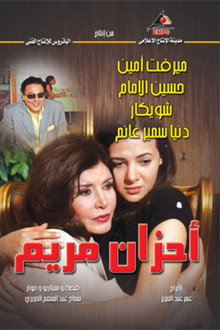
أحزان مريم

6 Tahrir Square
The series revolves around a group of young people who live in the same hostel in Tahrir Square, and experience many funny and comedic situations during their stay together.

Cairo as Told by Youssef Chahine
This concise masterpiece began as a commission by French TV for the news series Envoyé spécial. By filming Cairo with his unique sense of artistic digression, Chahine transformed this portrait of a city into the self-portrait of a filmmaker.

Silence!
The married couple Hommos and Halawa perform their choreographic show in the street, to the amusement of a record label owner who records a song for them. When a famous singer called Ghandour steals their song, they embark on a journey to take revenge.

The Red Rose
A love story between (Salah) and (Gamila) ends and years later they meet again after she married Azmi al-Damanhuri,one of the big smugglers. (Gamila) tries to get back with (Salah) but he refuses and Azmi finds out about them and goes through a psychological conflict with them.

Hob Fauq Al-Burkan
Ahmed and Nawal's half-brother (Hussein) steals Ahmed's money to spend on the dancer (Dusa). Nawal pawns jewelry with (Umm Jaber), the moneylender, in order to give (Hussein) the money. Ahmed goes to retrieve Nawal's jewelry, and at the same time, Hussein kills Umm Jaber. Ahmed runs away from the house in panic. Nima sees him leaving and thinks he is the killer. As she goes down to catch him, she falls and loses her sight. Ahmed feels guilty, so he marries her.

Alfarysa

Scheherazade, Tell Me a Story
Heba is a TV presenter interested in broadcasting stories that touch on the everyday secret lives of women and the social injustices they face. Her frank style in broadcasting puts her husband's job and consequently her marriage in jeopardy. While Heba is conducting a television interview with a woman named Safaa, who talks about her life with her sisters. So Safaa herself is the eldest, Wafaa is the middle sister, and Hanaa is the youngest—along with a man named Saeed El Khafif who works with them at the shop that belonged to their late father.

Samir Abu el Nil
Samir Abo El-Nil (Ahmed Makki) lives in a local neighborhood where he gets into problems with its residents because of his stinginess . When his cousin Hussein Abo El-Nil (Hussein Al-Imam) leaves him a fortune , he starts a satellite channel where he discusses his relations with those around him.

Prayer of the oppressed
Manar marries a wealthy man while she is in a relationship with Medhat. He sends her letters in the name of Nabila, her brother Sharaf's wife, but divorces her when he gets his hands on one of them. He suspects his paternity of Mervat and hands her over to a teacher who runs a pickpocket den.