Personal Info
Known For
Gender
Birthday
Place of Birth
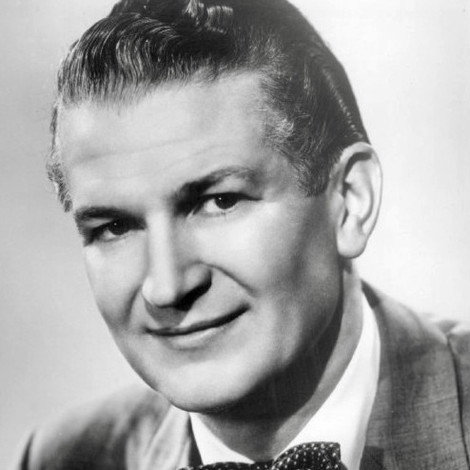
Bud Collyer
Known for

What's My Line?
Four panelists must determine guests' occupations - and, in the case of famous guests, while blindfolded, their identity - by asking only "yes" or "no" questions.

The New Adventures of Superman
The New Adventures of Superman is a series of six-minute animated Superman adventures produced by Filmation that were broadcast on CBS between 1966 and 1970. The 68 segments appeared as part of three different programs during that time, packaged with similar shorts featuring The Adventures of Superboy and other DC Comics superheroes.

The Superman/Aquaman Hour of Adventure
The Superman/Aquaman Hour of Adventure is a Filmation animated series that aired on CBS from 1967 to 1968. Premiering on September 9, 1967, this 60-minute program included a series of six-minute adventures featuring various DC Comics superheroes.

Truth or Consequences
Truth or Consequences is an American television show originally hosted on NBC radio by Ralph Edwards and later on television by Edwards, Jack Bailey, Bob Barker, Bob Hilton and Larry Anderson. The television show ran on CBS, NBC and also in syndication. The premise of the show was to mix the original quiz element of game shows with wacky stunts. The daily syndicated show was produced by Ralph Edwards Productions, in associated with and distributed by Metromedia Producers Corporation and Lorimar-Telepictures.


To Tell the Truth
The show features a panel of four celebrities attempting to correctly identify a described contestant who has an unusual occupation or experience. This central character is accompanied by two impostors who pretend to be the central character. The celebrity panelists question the three contestants; the impostors are allowed to lie but the central character is sworn "to tell the truth". After questioning, the panel attempts to identify which of the three challengers is telling the truth and is thus the central character.
Quick as a Flash
Quick as a Flash was a 30-minute radio quiz program which featured drama segments with guest actors from radio detective shows. Created by director Richard Lewis and emcee Ken Roberts, the program debuted over the Mutual Network on Sunday, July 16, 1944. Sponsored by the Helbros Watch Company, the show was produced by Lewis and Bernard J. Prockter with scripts by Gene Wang. Music was by Ray Bloch and the Helbros Orchestra. Six contestants from the studio audience competed for cash and other prizes. Clues were presented in the form of dramatic sketches covering such subjects as current events, movies, books and historical situations. With a buzzer, a contestant could interrupt at any time to submit an answer. During the Helbros Derby, a guest detective from a radio mystery program put in an appearance. Frank Gallop and Win Elliott were announcers. The series ended on June 29, 1951. Approximately one year later, the series made an attempt to go on television.
Number Please
Number Please is a Goodson-Todman Productions game show hosted by Bud Collyer which aired from January 30 to December 29, 1961. It replaced Collyer's Beat the Clock when its ABC run completed, and was an early predecessor of Wheel of Fortune and other word-puzzle game shows.
Fleischer Cartoons – Greatest Hits, Volume 1
Beautifully restored in 4K, largely from original studio negatives, come 20 cartoons from legendary animation pioneer Max Fleischer in Fleischer Cartoons – Greatest Hits, Volume 1. Relive the Fleischers’ art and inventions like never before, from the silent era, to the dawn of sound, to their glorious Technicolor spectacles in this carefully curated collection. Each silent short also has musical accompaniment composed and performed by Ben Model, Kevin MacLeod and Joel Pierson.

Jackie Gleason: Genius at Work
This special is a thorough retrospective of Jackie's most popular characters from his 1950's television series, characters that include: Ralph Kramden, Reginald Van Gleason, III, the Poor Soul, Fenwick Babbit and Joe The Bartender. Many of the sketches have not been available or even viewed since their original live broadcasts. Jeff Garlin of Curb Your Enthusiasm hosts the program with feature commentary from Mrs. Marilyn Gleason.

Beat the Clock
Beat the Clock is a game show hosted by Bud Collyer that ran on CBS from 1950 to 1958 and ABC from 1958 to 1961.

Terror on the Midway
When things go wrong at the circus, it's up to Superman to stop the escaped animals.

Superman
After The Daily Planet receives a letter from a mad scientist threatening to wreak destruction with his Electrothanasia Ray, Lois Lane heads out in the hopes of getting more information for a news story.

The Arctic Giant
A frozen Tyrannosaurus rex is found and put on display in a museum, but when he thaws out and revives, Superman has to stop his rampage!

Max Fleischer's Superman 1941-1942
More than just a landmark in superhero animation, Max Fleischer's Superman shorts were no less than the foundation for so many shows that succeeded it. Playing in theaters in 1941-42, only a few years after the Man of Steel made his debut in Action Comics, these 17 exciting films were produced by Fleischer and made famous the phrase "This looks like a job for Superman!" At 10 minutes, each film had just enough time to run the opening credits, establish the threat, let Lois Lane make a headstrong rush into peril, and allow Clark Kent to change to his alter ego and save the day. The films show a remarkably dynamic and atmospheric storytelling style that enables them to hold up for modern viewers. At first the films followed a science fiction-fantasy theme, but not unexpectedly for that time soon focused on wartime concerns.