Personal Info
Known For
Gender
Birthday
Place of Birth
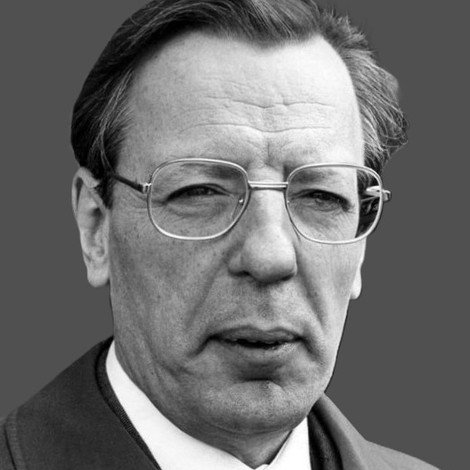
Jean Bouise
Biography
Known for

Spécial cinéma
Marcello Mastroianni, Isabelle Adjani, Alain Delon, Martin Scorsese, Woody Allen... the biggest stars in cinema were welcomed by Christian Defaye on his show Spécial cinéma. Between intimate confessions from actors and immersion in the world of the greatest filmmakers, Christian Defaye took viewers on a journey into the fascinating world of cinema for nearly thirty years.


Credo
Based on an actual Cold War incident in which a Ukrainian prisoner of conscience was forced to defend his Christian faith while under Soviet interrogation

The Big Blue
Childhood friends Jacques and Enzo share a passion for the danger of free diving. Jacques, following in the footsteps of his father, who died at sea when Jacques was a boy, harbors a remarkable ability to adjust his heart rate and breathing patterns in the water, with his vital signs more closely resembling those of dolphins than men.

Nikita
A beautiful felon, sentenced to life in prison for the murder of a policeman, is given a second chance – as a secret political assassin controlled by the government.

The Assassination
Darien, a left-wing police informant, is forced to lure his old friend Sadiel to Paris, allegedly to film a television special about the Third World. Sadiel, the exiled leader of a North African state, is being hunted by the ruthless Colonel Kassar, who will stop at nothing to capture his political rival. Once Sadiel arrives in Paris, Darien realizes he has been manipulated. He tries to turn back the clock, not realizing what or who he’s truly dealing with.

Mr. Klein
Paris, France, 1942, during the Nazi occupation. Robert Klein, a successful art dealer who benefits from the misfortunes of those who are ruthlessly persecuted, discovers by chance that there is another Robert Klein, apparently a Jewish man; someone with whom he could be mistakenly identified, something dangerous in such harsh times.

The American
A man returns to Rouen, after fifteen years in the United States, and feels like a stranger among old friends.

Sale rêveur
A young man struggling with reality and dreams finds himself caught between his fantasies and the harshness of everyday life. As he drifts through surreal encounters and romantic aspirations, he must confront the limits of his imagination and the disappointments of the real world.

The Brigade
This film explores the experiences of some of the members of an anti-Nazi resistance group in France composed mostly of Polish immigrants, known as "La Brigade." Many of them also fought for the leftist cause during the Spanish Civil War, and for them the resistance is simply a continuation of their prior activities. After the war, some of them continue to have a "resistance" mind-set. One of the stories concerns a love relationship between a Polish boy and a French girl who are thrown together because of their war efforts. After the war, they get together and reminisce.

Equator
Although based on a novel by Georges Simenon, director (and songwriter) Serge Gainsbourg has superimposed several dark emotions and a subtle brutality over the weak plot about a man's trip to Africa and his unfortunate passion for a murderess whose amorality sends the disillusioned fellow back to Europe. Sometimes described as frustrating and self-centered, reactions to this film swing across a broad spectrum of complaints -- not the least might be whether or not Gainsbourg is using a clichéd and stereotypical view of "dark Africa" to convey what he sees in his characters.

The Old Gun
In Montauban in 1944, Julien Dandieu is a surgeon in the local hospital. Frightened by the German army entering Montauban, he asks his friend Francois to drive his wife and his daughter in the back country village where Julien has an old castle. One week later, Julien decides to meet them for the week end, but the Germans are already occupying the village.

Z
A prominent politician is murdered during a demonstration. The government and army are trying to suppress the truth, but a tenacious magistrate is determined not to let them get away with it.

Subway
Fred, a raffish safe blower, takes refuge in the Paris Metro after being chased by the henchmen of a shady businessman from whom he has just stolen some documents. While hiding out in the back rooms and conduits of the Metro, Fred encounters a subterranean society of eccentric characters and petty criminals.

Appointment in Bray
In 1917, the First World War is raging. Julien is from Luxemburg, so instead of having to go to war he studies piano in Paris. One day his friend Jacques, also a musician and now a fighter pilot on the front, invites him to spend a few days in his family's empty house in Bray. The housekeeper, a beautiful stoic woman lets Julien in, but his friend is late and he is obliged to wait. In the meantime, he starts reminiscing of the pre-war days spent with his friend and Jacques' girlfriend Odile.