
Personal Info
Known For
Gender
Birthday
Place of Birth
Christiana Guinle
Known for

Side by Side
Winner of the International Emmy Award for Best Telenovela, "Side by Side" focuses on two women of different origins and social classes. The brave Isabel, daughter of a former slave and in love with the capoeira player Zé Maria; and Laura, descendant from a wealthy family and destined to an undesired marriage to Edgar. In addition to an unshakable friendship, the two share the same purpose in life: the conquest of freedom in the conservative society of Rio de Janeiro of the early 20th century.

Vida Nova
São Paulo, 1945. A tenement in the Bixiga neighborhood centralizes the plots and characters. The cheerful Lalá is a former prostitute who got along with a senator of the Republic, her lover, who, when he died, left her in an excellent financial situation, since she had a daughter with him, Marialina. Lalá is courted by the simple Italian Antônio Sapateiro, a mature man in love with her. The Portuguese Manoel Vitor loves the Jewish Ruth, but her parents forbid dating because of religion.

Os Ossos do Barão
Os Ossos do Barão is a Brazilian telenovela produced by SBT and originally broadcast from April 28 to September 8, 1997. It is an adaptation of Jorge Andrade's 1963 play of the same name, adapted for television by Walter George Durst, with collaboration from Duca Rachid, Mário Teixeira, and Marcos Lazarini. The telenovela stars Ana Paula Arósio, Tarcísio Filho, Juca de Oliveira, Othon Bastos, and Leonardo Villar. Set in São Paulo in 1948, the story follows Egisto Ghirotto, the wealthy son of Italian immigrants who dreams of gaining social prestige by marrying his son, Martino, to Isabel, the great-granddaughter of the late Baron of Jaraguá. Their romance sparks a bitter conflict between a rising immigrant family and a declining aristocratic dynasty, exposing themes of class, ambition, tradition, and the social transformation of Brazil.

JK
Juscelino Kubitschek was born in Diamantina. Rising from a humble childhood to become a respected physician, he married Sarah and began the journey that would lead him to the presidency of Brazil.
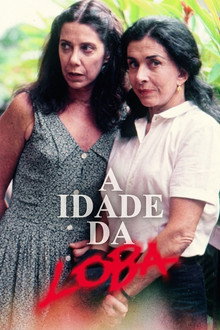
A Idade da Loba
Valquíria, after the death of her husband, leaves the small town of São José do Barreiro, in the interior of São Paulo state, in search of professional fulfillment, alongside her best friend, Irene. In this new phase of their lives, they encounter a shared love from thirty years ago, Montenegro. This reunion is marked by many misunderstandings, including the difficulty Montenegro and Valquíria have in being together permanently. In parallel, other storylines will develop: that of Suzana, Valquíria's daughter who discovers that Montenegro is her real father and does not accept him; and that of the various residents of Piconês's boarding house, where Valquíria lives, who seek professional success and romantic fulfillment.

Chiquinha Gonzaga
It tells the story of Chiquinha Gonzaga, a revolutionary musician who marked the history of music in Brazil, and challenged the social standards of her time. Chiquinha was raised very comfortably and had an excellent education provided by his father, Jose Basileu, who expected his daughter to be a lady of the imperial court. But after listening to songs played in a black yard and influenced by friends, such as composer Joaquim Callado, Chiquinha begins to make compositions mixing polka and lundu. By imposition of her father, Chiquinha is forced to marry Jacinto, with whom she has three children. However, Jacinto forbids her to play, and she decides to separate from her husband, going against social standards. Chiquinha, then, fights for his freedom to play and will live with the great love of his youth, João Batista de Carvalho Jr., with whom he has a daughter, Alice.

Delegacia de Mulheres
On her first day at the Women's Police Station, Detective Belinha surprises everyone, including Detective Celeste. Together, they confront cases of assault and unusual situations.

A, E, I, O... Urca
Silvia goes to Rio de Janeiro as a chorus girl at the Cassino da Urca to free her father, who is imprisoned for defending communism, and becomes involved in a complex love triangle and blackmail.

Chacrinha: O Velho Guerreiro
The story of José Abelardo Barbosa, narrated from the time of his youth, when he was at medical school, and dropped everything to become a radio announcer. After that, we follow the transformation of his life and the creation of his alter ego, Chacrinha.

Mil e Uma
Alice faces a lot of trouble to make a film about artist Marcel Duchamp. She randomly chooses musician Antônio for the main part, and ends up having an affair with him.