
Personal Info
Known For
Gender
Birthday
Place of Birth
Enno Patalas
Biography
Known for

The Enigma of Kaspar Hauser
The film follows Kaspar Hauser, who lived the first seventeen years of his life chained in a tiny cellar with only a toy horse to occupy his time, devoid of all human contact except for a man who wears a black overcoat and top hat who feeds him.

Germany in Autumn
Nine fictitious documentaries and films reflect the mood of late 1970s Germany, particularly the two-month period in 1977 when a businessman was kidnapped by the RAF (Red Army Faction). The kidnap had been made to orchestrate the release of the original leaders of the RAF, aka the Baader-Meinhof.

Der Platzanweiser

Tracing Battleship Potemkin
Documentary detailing the extensive number of shots long lost from constant film re-cutting of 1925's great silent cinema classic Battleship Potemkin in the last 80 years, and how many of those shots have been returned.
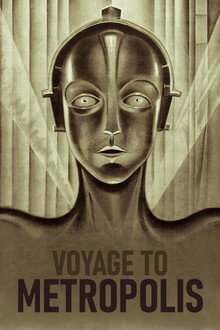
Voyage to Metropolis
A documentary about the making of the final version of "Metropolis" by restoring all material from different sources.

Ernst Lubitsch in Berlin: From Schönhauser Allee to Hollywood
Featuring interviews with daughter Nicola Lubitsch, film historians Enno Patalas and Jan-Christopher Horak and filmmaker Tom Tykwer (among others), Ernst Lubitsch in Berlin documents the life of the legendary filmmaker from his birth in 1892 to his departure for Hollywood in 1923. The documentary is sprinkled with excerpts from Lubitsch's rarely-seen early work (both as actor and director) and offers fascinating insights into the German film industry in the silent era.

People at the Espresso Bar
Vesely’s study on changing urbanity claims that "the Espresso has a democratic touch." Italy has expanded into Munich and instead of beer hall cellars, there are Cappuccinos, ice creams and tables in the open.

...Geist und ein wenig Glück
Documentary about the current state of German cinema. Produced for German television.

The Shipwrecker
Three actors portray scenes from the life of Sterling Hayden, with a particular focus on his appearance before the House Un-American Activities Committee. Inspired by Hayden’s memoir “Wanderer.”


Metropolis Refound
Argentinian film historians find a complete print of Fritz Lang's “Metropolis” (1927) at Buenos Aires Film Museum and take it to Germany for its restoration.
