Personal Info
Known For
Gender
Birthday
Place of Birth
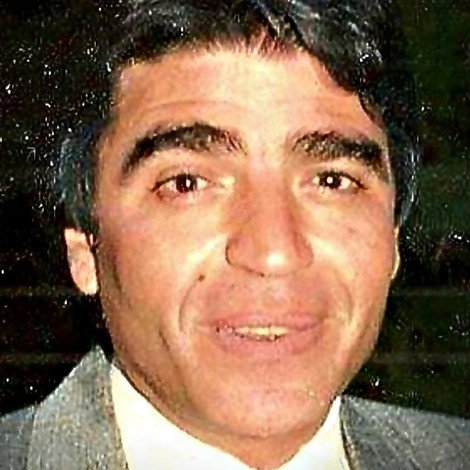
Mahmoud El Gendy
Biography
Known for

Zezenia
Set in Alexandria during the 1940s, at the height of the city's cosmopolitan golden age, Zezenia follows Bishr — the son of an Egyptian father and Italian mother — as he navigates a fractured sense of identity torn between East and West. Against a backdrop of World War II, mixed nationalities, and a society on the brink of change, the series is a sweeping portrait of love, belonging, and the soul of a city.

Al-Gama'a
Al-Gama'a is an Egyptian television drama, Historical and Political drama series written by Wahid Hamid, directed by Mohammed Yasin and produced by Kamel Abu Ali. The series began filming in January 2010 with a budget of 50 million Egyptian pounds. The show deals with the rise of the Muslim Brotherhood, Egypt’s largest Islamist political group, which was officially banned but nonetheless tolerated to an extent before the revolution. Critics have decried the show's pro-government stance, charging that it plays into the Egyptian government's agenda prior to the 2010 Egyptian parliamentary elections.

The God Father
The series revolves around a large family dominated by Father Zain Al Attar, who embodies the course of the artist Mahmoud Hamida, and has a large number of children who live with him in the house except two, one of them lives in a shelter and the other an aggressive person, and recounts the relationship of this father with gangs of arms and smugglers.

Forgive me, I didn't mean to
The husband of the businesswoman (Gulnar) dies in a plane crash, and she later discovers that he is married to her close friend. She suffers a nervous breakdown that leads to her being admitted to the hospital. Then she marries (Marzouq), the accountant in her company, and then problems occur between them and events unfold.

Ramadan Kareem
Taking place during the month of Ramadan in a local neighborhood, where one of the girls tries to disavow her family and her social level. She claims that she is from a wealthy family in order to meet a young man who she falls in love with.

المصراوية

The Flood
The Mandoah family leads a humble life, with the mother, Safia, bringing up her children after the death of her husband. Her husband has left a piece of land in Ismailia that turns out to be part of the planned area for the Suez Canal project, which causes the price of the land to skyrocket to 300 million pounds. They each find themselves owning millions in the blink of an eye. What will come next?

Nelly and Sherihan
Nelly is a wealthy girl, and Sherihan is the opposite. They happen to be cousins, with completely different personalities. When they find out that they will be getting an inheritance from their grandfather, they put their differences aside to solve the 'Mickey Mystery' which should get them to the inheritance.

Lahfa
A comedy about an aspiring actress who enlists the help of her uncle, a casting agent, in order to land her breakthrough role, because the last thing she wants is to end up being an extra like her father.

Bab Al Khalq
After the Arabic language teacher travels outside Egypt in despair, he returns after a while to his hometown in Bab Al Khalq to be surprised by many changes that foretell a possibly mysterious future, whereupon he tries to coexist and keep pace with them to ensure the continuation of life.

Morning and Evening Talk
The latest that deals with the social and political history of Egypt revolves through three personalities, its children and grandchildren branches, and follows their conflicts, social roles, their human relationship and their different attitudes towards life and the homeland through the direct effects of economic interests on the relationships between the characters and the origins of these three trees.

King Farouk
The biography of King Farouk I of Egypt, the penultimate king of the Muhammad Ali dynasty. Succeeding his father, Fuad I, to the throne, Farouk's reign ended when the Egyptian revolution of 1952 broke out, and he was overthrown and exiled.

The Thug
The series shows how the leaders of the former regime used thugs in their illegal business, one of those thugs is Hamza, who works as a mechanic as a cover for his dubious activities.

Harun Al Rashid
The story of the Abbasid caliph Harun al-Rashid, which depicts the era of the Abbasid state and its historical glory, focusing on the personal life of the Abbasid caliph who was famous for his infatuation with women, and shedding light on his amorous exploits and the feuds of the harem inside the palace.