Personal Info
Known For
Gender
Birthday
Place of Birth
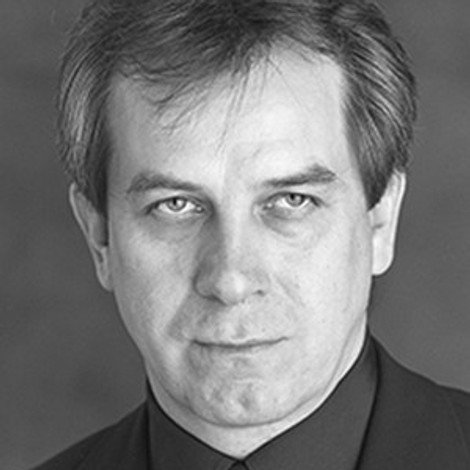
Jarosław Gajewski
Known for

Miodowe lata

Ekipa
Ekipa is a Polish political drama TV series created and directed by Agnieszka Holland, aired from 13 September 2007 until 6 December 2007 on Polsat. Ekipa is the second Polish political fiction series after the 1980s miniseries The Career of Nicodemus Dyzma.

First Million
It's the early 1990s. Frik (Szymon Bobrowski), Kurtz (Przemysław Sadowski), and Piki (Aleksander Semchev) are childhood friends. They started out selling waste paper to collectors, then began searching for new ways to make money. They only began doing real business on the fledgling Polish stock exchange. In the space of a few months, they make their first million. Along the way, they run afoul of Kajzar (Jarosław Gajewski), a prominent underworld figure operating on the stock exchange. The friendship of Frik, Kurtz, and Piki is put to the test, as the former two compete for Dominika (Agnieszka Warchulska), with whom they have had a crush since childhood.

Sfora

Fałszerze - Powrót Sfory
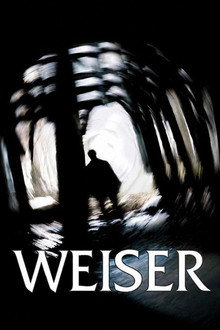
Weiser
The film is based on the well-known, translated into many languages novel of writer Pawel Huelle. It is imbued with nostalgia and the atmosphere of mystery story of a group of children, fascinated by the figure of a man named David Weiser.

Europa Europa
A Jewish boy separated from his family in the early days of WWII poses as a German orphan and is taken into the heart of the Nazi world as a 'war hero' and eventually becomes a Hitler Youth.

Marszałek Piłsudski

Wartime Portraits: Women
A documentary series about heroines of the II World War. Stories told from the perspective of the characters are full of emotions and tension, they show courage, sacrifice, willpower but also recklessness or pragmatism. Characters of the series are not flawless monuments but regular women with their own problems, who happened to play an important role in the history. The visual style of the project is animadoc. It comprises archival materials, interviews with experts, and sequences of fictionalised scenes: shots stylised as comic frames, where an actor is connected with scenography hand-drawn by comics illustrators.

Bohun and Kmicic
A unit of the People's Army celebrates the moment of liberation of the country. They remember the times of occupation, the actions they took, and their fallen colleagues.
O sławnym człowieku
A certain inhabitant of Lailonia named Tat, very much wants to become a famous man. He ponders for a long time what to do, especially since there are people more famous than him in all fields of science, culture and art. He comes to the conclusion that he can become famous by doing the worst thing in the world. However, he wins only temporary applause from the crowd or exposes himself to ridicule. Finally, he comes to the conclusion that he will gain fame by becoming the least famous man in the world. This is what he does. Soon everyone forgets about him and Tat achieves his goal.

The Last Family
Beksiński is a gentle man with arachnophobia, despite his hardcore sexual fantasies and his fondness for painting disturbing dystopian works. Beksiński is a family man who wants only the best for his loving wife Zofia, neurotic son Tomasz and the couple's aging mothers. His daily painting to classical music eventually pays off and he makes a name for himself in contemporary art. Good Catholic woman Zofia tries to hold the family together, but troubled son Tomasz proves to be a handful with his violent outbursts and suicidal threats. Their relief is brief when he starts dating women and becomes a radio presenter and movie translator, and the concerned parents must be on constant watch to prevent their son from hurting himself. But Beksiński never believed that family life would always be sunshine and rainbows. As he tapes everything with his beloved camcorder, the 28-year Beksiński saga unfolds through paintings, near-death experiences, dance music trends and funerals...
Old Woman Incubating
Różewicz's play from 1968 is rather a dramatized picture, closer to the open formula of poetry than to the traditional dramatic structure. This is an important voice of a poet concerned about the future of the world. The drama shows a civilization threatened with extinction, dominated by consumerist ideals, mental emptiness, disappearance of authorities and moral decay. The title character symbolizes life, energy and the immutability of the basic laws of nature. In Barański's staging, he moves in a wheelchair. The piece consists of two parts. The first takes place in a botanical garden, the second in the scenery of a huge junkyard, which symbolizes modern civilization.
Garby
A stonemason Ajio, quiet, honest and conscientious by nature, works on road construction in Lailonia. One day, a hump grows on his back, which quickly turns into Ajio's double. Ajio's double is aggressive, vicious and lazy. He quickly manages to convince those around him that he is the real Ajio. Soon an epidemic of humpbacks affects all the residents of Lailonia. Real people are replaced by their doubles. They are aggressive and imperious. Ajio's double takes over the city of humpbacks. Only Ajio's son manages to escape the city. He hopes that when he grows up - he will return and deal with the humpbacks.

A Few People, a Little Time
The unusual bond between a blind female writer and an acclaimed poet changes their lives and forms an exceptional creative cooperation, free of politics and the complexities of mundane life.