
Personal Info
Known For
Gender
Birthday
Place of Birth
Regina Casé
Biography
Known for

The Trapalhões
Os Trapalhões was a Brazilian comedy group and also a Brazilian television series created by Wilton Franco. Its members were Dedé Santana, Zacarias, Mussum and their leader Didi Mocó, that was played by Renato Aragão. The name Trapalhões is derived from the Portuguese verb atrapalhar, which means the opposite of helping, to do something the wrong way or to Those that confuse. The name is translated "Tramps" in English DVD subtitles. It was aired by Rede Globo from 1977 to 1999. On March 18, 1990, Zacarias died due to respiratory failure, but the group and the series didn't come to an end until July 29, 1994, when Mussum died due to an unsuccessful heart transplant.
Chico Anysio Show

Que História é Essa, Porchat?

Three Graces
Gerluce became pregnant as a teenager and, just like her mother, Lígia, she raised her child alone. Now, Gerluce watches her daughter Joélly become the third generation of the family to go through the same situation. Besides the impact that teenage pregnancy brings to the whole family, the three Marias das Graças must deal with Lígia’s worsening health.

Guerra dos Sexos
Cousins Charlô and Otávio once had a romance, but today they detest each other. However, fate plays a trick on them: they will receive a large inheritance, on the condition that they live together.

A Mother's Love
Lurdes is a mother of five who tirelessly seeks for Domenico, a child of hers who was sold by his own father 26 years ago; Thelma is an overprotective mother who finds out she has a terminal illness, and must race against time to make her dreams come true and prepare her son for a life without her presence; Vitória is a successful lawyer who sees the end of her marriage after countless failed attempts to have a baby and decides for adoption, but finds out she is pregnant during the process. In "A Mother's Love", the lives of these women are intertwined while they recognize themselves in the unconditional love provided by motherhood.

Vereda Tropical
The story revolves around the conflicts within Silvana and Oliva's family—her mother and paternal grandfather—who are fighting for custody of Zeca after the child's father dies.

All the Flowers
Maíra was raised by her father believing that her mother had died. This was a lie her father told her in order to protect her from the scorn of her mother, who rejected her when she learned that her daughter was born with a disability. Many years later, Maíra comes across a stranger on their doorstep. That’s Zoé, her mother. Without revealing her true intentions, Zoe reappears asking her daughter’s forgiveness for having abandoned her. As in a dream that turns into a nightmare, Maíra experiences the strongest emotions of her life and what would be a happy fresh start for Maíra with her family turns into a long and dangerous journey.
As Filhas da Mãe
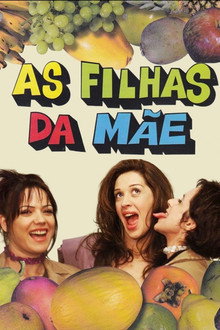
Years after being estranged from her family, Lucinda returns as the famous Lulu of Luxembourg, to reunite with her children and unravel the mysterious disappearance of her ex-husband, who was involved in a major scam.

Cambalacho
The story follows the lives of Naná and Gegê, a pair of con artists. Gegê is the uncle of Tina Pepper, a Tina Turner fan who dreams of becoming a famous singer.


TV Pirata
TV Pirata was a weekly Brazilian comedy show aired on Rede Globo between 1988 and 1990, being re-aired monthly in 1992. Some of the writers later went on to form the comedy troupe Casseta & Planeta. The show was first aired in April 1988 to fill a gap on Rede Globo's Tuesday night prime time line-up and its comedy was inspired by sketch comedy shows such as Saturday Night Live and Monty Python's Flying Circus with a no-nonsense approach to Brazilian comedy; however, it mixed a new style of comedy with elements of Brazilian culture such as football, politics, pop culture, telenovelas, economics and celebrities. No well-known figure or member of any economical or social class was spared from the show's cutting edge humor. The premise of the show was a TV studio being invaded by pirates who took over the programming department and put a tape on the air with some "unusual" programming. Another new element to Brazilian audiences was the performers, who weren't the usual comedic actors, but dramatic actors doing more comedic roles.

Armação Ilimitada
Partners Juba and Lula are up for any challenge. Living together, they embark on adventures and radiate vitality. Everything changes when they meet and fall in love with young reporter Zelda Scott.

Companhias do Teatro Brasileiro
The series Companhias do Teatro Brasileiro (Brazilian Theater Companies) offers a documentary overview of the evolution of theatrical art in Brazil. The history of Brazilian theater is told through the testimonies of artists, historians, and researchers. Drawing on extensive archival material—including photographs, as well as audiovisual and audio recordings—the series revisits influential companies and groups such as Cia. João Caetano, Teatro Brasileiro de Comédia, Teatro Experimental do Negro, Teatro Oficina, and Grupo Galpão. Across 15 episodes, the series showcases these iconic groups, highlighting their artistic styles, repertoires, and the work of their actors and directors.