Personal Info
Known For
Gender
Birthday
Place of Birth
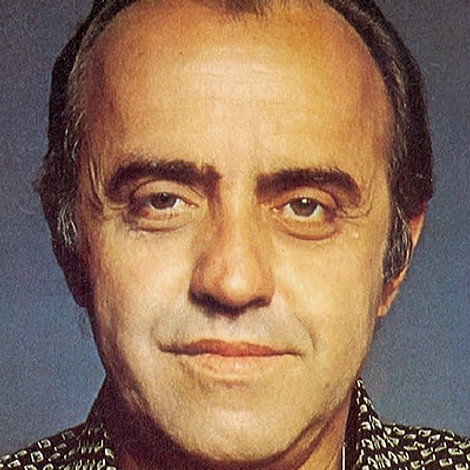
Mauro Mendonça
Biography
Known for

A Grande Família
The daily lives of a typical Brazilian middle-class family, that are always very close and tries, in their way, to survive the financial and relationship difficulties.

The Trapalhões
Os Trapalhões was a Brazilian comedy group and also a Brazilian television series created by Wilton Franco. Its members were Dedé Santana, Zacarias, Mussum and their leader Didi Mocó, that was played by Renato Aragão. The name Trapalhões is derived from the Portuguese verb atrapalhar, which means the opposite of helping, to do something the wrong way or to Those that confuse. The name is translated "Tramps" in English DVD subtitles. It was aired by Rede Globo from 1977 to 1999. On March 18, 1990, Zacarias died due to respiratory failure, but the group and the series didn't come to an end until July 29, 1994, when Mussum died due to an unsuccessful heart transplant.

A Favorita
Flora and Donatella were two friends bonded by their love of music, but whose passion for the same man separated them forever. Donatella was Marcelo’s wife; Flora, his lover and murderer — a crime which cost her freedom and the custody of her daughter Lara, born out of that relationship and raised by Donatella. Now, history repeats itself, only this time their quarrel is not only over the same man but for Lara’s love. Torn between two mothers, the girl doesn’t know that Flora’s dirty, scheming ambition is not to draw her closer, but to keep her away from her longtime rival – plus snatch the inheritance of her former lover. The theme of rivalry — Flora’s bitter jealousy of the prettier and more talented Donatella permeates this provocative story and makes vengeance a ruleless game.

The Good Side of Life
The Good Side of Life tells the story of a naïve young man from the countryside who was abandoned as a newborn against the will of his mother, and who goes to the big city to look for her. There he will also have the chance to meet the love of his life once again. Candinho's optimism and good humor are his allies against life's difficulties, including the plots of two scoundrels that cross his path.

Bang Bang
Twenty years after seeing his family decimated by gunmen, Ben Silver returns to Albuquerque to take revenge on the person responsible for the massacre, but falls in love with his rival's daughter.

The Buzz
Enemies since childhood, André Spina and Ariclenes Martins became Jacques Leclair and Victor Valentim and now compete for the spotlight in the fashion world.

Dancin' Days
A down-on-her-luck former inmate tries to reconnect with her daughter--to the objections of her sister who raised the girl, meets a millionaire, and transforms into a strong woman, returning to society at Dancin' Days nightclub's opening.

Passione
An ambitious young woman with a traumatizing past targets an Italian man, the distant son of a wealthy Brazilian family.

Cara & Coroa
Fernanda and Vivi are identical, but from different worlds. A cruel plan swaps their identities and transforms their lives into a game of lies and ambition.

Sangue do Meu Sangue

Golden Dream
After losing custody of her daughter, Claudia tries to rebuild her life and meets the brothers Lucas, with whom she falls in love, and the villainous Jorge, who wants to win her over.

Little Missy
In 1886, in the small town of Araruna, Little Missy rejects the actions of her father—the slave-owning Colonel Ferreira—alongside Rodolfo, an active abolitionist republican with whom she falls in love.

My Sweetheart
The plot revolves around the romantic conflict involving four young people who have known each other since childhood. Antônio Mourão, an orphan raised by Father Ovídio, has two dreams in life: to graduate in Medicine – he has just passed the entrance exam – and to marry Rebeca, one of the daughters of his godfather, the Protestant pastor Bilac. Antônio and Rebeca end up separated thanks to the interference of Lívia, the youngest daughter of Pastor Bilac. Sensual and deceitful, she dreams of abandoning her life in São Tomás de Trás, working as a lacemaker and attending her father's church services, to live in the big city. She sees in Antônio a chance to fulfill her desire and, even knowing about the romance between the young man and her sister, she orchestrates a situation to seduce him and manages to get pregnant by him. The two are then forced to marry and move to the capital.

Mandala
Jocasta, an 18-year-old sociology student and daughter of communist activist Túlio Silveira, is actively involved in the country's political landscape. She is in love with Laio—her polar opposite—a disengaged, esoteric young man who lives off his wealthy father's allowance. A mystic, Laio makes no move without consulting his guru and friend Argemiro, whom he turns to upon learning of Jocasta's pregnancy. The cowrie shell reading reveals that his son is destined to kill him and enter into a romantic relationship with his mother. Terrified, Laio disappears with the child immediately after birth, aided by Argemiro—who loves Laio and loathes Jocasta. Twenty-five years later, Jocasta is a successful yet restless woman searching for her missing son. She is estranged from Laio, who has spent recent years expanding his father's fortune through involvement in underground gambling. On a highway, he encounters Oedipus, unaware that the young man is his son.

Mico Preto
The disappearance of Áurea Menezes Garcia sparks a fierce dispute over her business dealings. Firmino, her attorney, assumes power, but faces the greed of her children.