Personal Info
Known For
Gender
Birthday
Place of Birth
Ida Gomes
Biography
Known for

The Trapalhões
Os Trapalhões was a Brazilian comedy group and also a Brazilian television series created by Wilton Franco. Its members were Dedé Santana, Zacarias, Mussum and their leader Didi Mocó, that was played by Renato Aragão. The name Trapalhões is derived from the Portuguese verb atrapalhar, which means the opposite of helping, to do something the wrong way or to Those that confuse. The name is translated "Tramps" in English DVD subtitles. It was aired by Rede Globo from 1977 to 1999. On March 18, 1990, Zacarias died due to respiratory failure, but the group and the series didn't come to an end until July 29, 1994, when Mussum died due to an unsuccessful heart transplant.

Força de um Desejo
Set in the 19th century, the novel tells the story of an impossible romance. Inácio, a young man from a traditional family, falls in love with Esther, the owner of the most famous brothel in the Court.

Véu de Noiva

Selva de Pedra
Amidst an unresolved crime, Simone protects Cristiano and falls in love with him. However, the couple faces ambition and betrayals that tear them apart. Presumed dead, she returns under a new identity seeking revenge.

Bang Bang
Twenty years after seeing his family decimated by gunmen, Ben Silver returns to Albuquerque to take revenge on the person responsible for the massacre, but falls in love with his rival's daughter.

Power Play
Eloá and Osmar's marriage is thrown into crisis when a mysterious man crosses their path. With a thirst for prestige and power, Eloá will face the consequences of her ambition.

Desejos de Mulher
Andréa and Júlia are two estranged sisters. Until one of their lives changes when she discovers she is adopted and that her biological sister is living with her.

O Astro
Herculano Quintanilha, after a failed coup and escape from prison, becomes a magician. He meets Márcio, a conflicted heir, and begins to influence his powerful family.

O Homem Que Deve Morrer

Cara & Coroa
Fernanda and Vivi are identical, but from different worlds. A cruel plan swaps their identities and transforms their lives into a game of lies and ambition.

Pé na Jaca
The hypochondriac lawyer Arthur, the model Maria, the religious Elizabeth, the hardworking Guinevere, and the womanizing personal trainer Lancelotti reunite after 25 years in the fictional town of Deus me Livre, in the interior of São Paulo. Determined to correct past mistakes and start their lives anew, they end up rekindling old flames. This is the main plot of Pé na Jaca, which, starting with the reunion of the five childhood friends, shows a frantic hunt for fortune, seasoned with hilarious romantic entanglements.

A Rainha Louca

Hipertensão
The routine of the quiet town of Rio Belo changes with the arrival of Carina, a traveling actress determined to discover who her father is. At the same time, a mysterious crime involving the powerful Donana shakes the town.
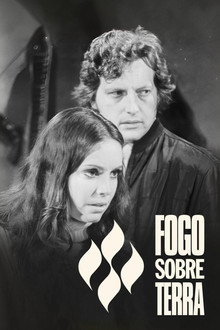
Fogo Sobre Terra
The plot takes place in a fictional city called Vale do Café, where two powerful families, the Toledo and Fontes, are locked in an intense dispute for power and land ownership. Conflicts are marked by betrayals, forbidden loves and dark secrets. The soap opera addresses themes such as ambition, revenge, romance and conflicts between families, showing the fire that consumes the land and human relationships.

Of Body and Soul
Diogo is an upright judge, professionally recognized, married to the submissive Antônia, with whom he maintains a relationship of appearances, only to preserve the family institution. Diogo falls madly in love with Bettina, and the two have an affair. Deciding to fully embrace their passion, Diogo and Bettina plan a trip together, but he ends up not having the courage to abandon Antônia and leaves his lover waiting at the airport. Upon realizing she is alone, Bettina despairs and suffers a serious car accident. Her brain death is diagnosed, and her heart is transplanted into Paloma. Upon learning of Bettina's death and the transplant of her heart, Diogo, feeling guilty, becomes obsessed with the idea of getting close to Paloma, believing that in doing so he would be close to the heart of the woman he loved. Paloma is a young woman who abandoned her fiancé Tavinho at the altar to marry Juca, her first boyfriend.