Personal Info
Known For
Gender
Birthday
Place of Birth
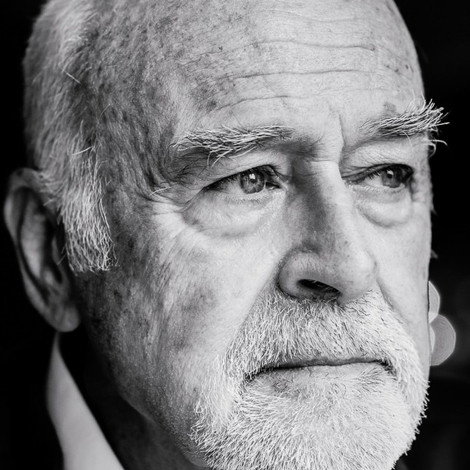
José van Dam
Biography
Known for

Le monde est à vous

Le Grand Échiquier
Le Grand Échiquier is a French variety television program created and presented by Jacques Chancel. It aired at 8:30 pm on the first channel of the ORTF from January 12, 1972 to July 12, 1972, then on the second color channel of the ORTF from September 1972 to December 1974, and finally on Antenne 2 from January 1975 to December 21, 1989. The program returned to France 2 on December 20, 2018 and is hosted by Anne-Sophie Lapix.


The Music Teacher
Aging opera singer Joachim Dallayrac retires from the stage and retreats to the countryside to school two young singers. Although the rigorous training takes its toll on both teacher and students, there is plenty of time for relationships to develop between the three.

Babel opéra, ou la répétition de Don Juan de Wolfgang Amadeus Mozart
Set in a scorching Brussels, Babel Opera blends documentary and fiction during the intense rehearsals of Mozart’s Don Giovanni. As an international cast struggles to bring the opera to life, four fictional characters appear around the set. Their real-life conflicts, infidelities, and passions begin to mirror the seductions of the opera itself, completely blurring the lines between art and reality as the grand premiere approaches.

José van Dam in “Don Quichotte” - His farewell to the stage
ARTE pays tribute to bass-baritone José van Dam, who passed away on February 17, 2026, and who will remain one of Belgium's most iconic voices. In May 2010, the “maestro” bid farewell to the stage at the Théâtre de la Monnaie in Brussels, in one of his favorite roles, Jules Massenet's “Don Quichotte.” A moment out of time.

Karajan Brahms Ein Deutsches Requiem
This unique document from the 1978 Salzburg Festival has fortunately been released on DVD and is a magical interpretation, prodigiously realized with a sublime fusion of timbres, a cohesion and ultimately, a simplicity that are truly unequalled. Listen as this great conductor produces musical nuisances that are unique to his art and how he accompanies the soloists with understanding and rapport. I have no hesitation in claiming this is one of the great recordings of the century.
Man of La Mancha
"Man of the Mancha" tells the story of the "mad" knight Don Quixote as a play within a play, performed by Cervantes and his fellow prisoners as he awaits a hearing with the Spanish Inquisition. Television broadcast of the Liège production in French with German subtitles.

Prokofiev - L'Amour des trois oranges
L'Opéra National de Paris' production of L'Amour des trois oranges must certainly be one of the most elaborate operatic presentations. It has a cast of gazillions, characters who fly, jugglers, fire-eaters, remarkably elaborate costumes, amazingly realistic props (those five-foot oranges are convincingly juicy and edible looking), a huge set, fireworks, and so on. In fact, at times, it looks more like a Cirque de Soleil show than something you'd see in an opera house. Director Gilbert Deflo's conception and William Orlandi's costumes and sets are rooted in commedia dell'arte, but the production is thoroughly eclectic, with allusions to a wonderfully weird assortment of styles and periods.

Falstaff
Based, in part, on Shakespeare's The Merry Wives of Windsor, Falstaff is Verdi's last work for the stage - and only his second comic opera. And yet the humour in this multilayered masterpiece is distinctly wry, for all the main characters exhibit an array of human weaknesses that are implacably exposed by Verdi and his librettist Arrigo Boito.

Herbert von Karajan: Verdi: Requiem
This installment in the "Karajan Legacy" series captures the acclaimed conductor leading the Vienna Philharmonic Orchestra with the Vienna State Opera Chorus and the Sofia National Opera in a masterful performance of Verdi's "Requiem." Filmed in 1984, the concert features an array of renowned soloists, including tenor José Carreras, soprano Anna Tomowa-Sintow, bass-baritone José van Dam, bass Kurt Moll and mezzo-soprano Agnes Baltsa.

Offenbach - Les contes d'Hoffmann

Letter to Peter
Jean-Pierre Gorin filmed the rehearsals and premiere of Saint Francis, Olivier Messiaen's monumental opera directed for the Salzburg Music Festival by the American wunderkind Peter Sellars. The result was a first-person documentary in the form of a letter.

Pelléas et Mélisande
John Eliot Gardiner conducts the Orchestra of the Opéra National de Lyon in this 1987 production of Claude Debussy’s opera of jealously and love denied, “Pelléas et Mélisande”, starring Colette Alliot-Lugaz and François Le Roux in the lead roles. The production places the story in vast gloomy castle halls, a sparse but atmospheric environment that only adds to the opera’s sense of dark beauty entangled with doom.

Il Trovatore - Verdi
The gypsy Azucena (Fiorenza Cossotto) takes revenge for her mother who was accused of putting a curse on one of the old Count di Luna's two sons: she decides to abduct the younger child and throw it in the flames. But when she is about to carry out this fatal act, the gypsy sacrifices her own child and keeps the old Count’s son, whom she names Manrico (IL TROVATORE, Plácido Domingo). Later, as adults, the troubadour Manrico and the Count di Luna’s elder son (Piero Cappucilli) do not know each other, but become rivals for the beautiful Leonora (Raina Kabaivanska). Manrico succeeds in winning the young woman’s heart, and she sacrifices herself for him, deceiving the Count’s son. Mad with jealousy, the latter orders the execution of the troubadour in front of his mother. Azucena reveals to him that Manrico was his brother. This legendary performance of Giuseppe Verdi's most successful opera was recorded at the Vienna State Opera under the baton of Herbert von Karajan.