
Personal Info
Known For
Gender
Birthday
Place of Birth
Norbert Christian
Known for

Polizeiruf 110
Polizeiruf 110 is a long-running German language detective television series. The first episode was broadcast 27 June 1971 in the German Democratic Republic, and after the dissolution of Fernsehen der DDR the series was picked up by ARD. It was originally created as a counterpart to the West German series Tatort, and quickly became a public favorite.

Die Verschworenen

Abschied vom Frieden
Prague 1913: The family of newspaper publisher Alexander Reither, traditionally reunited for a New Year’s dinner, moves along convoluted and secretive paths in everyday life. Granddaughter Wally is impressed by the opaque businessman Marko Gelusich. Her cousin Adrienne meets the young socialist Joseph Prokop at an illegal anarchist meeting. On a business trip to Vienna, Alexander Reither falls in love with Irene v. Claudi. Adrienne wants to move completely into Joseph Prokop’s proletarian world, but her mother Kalivoda makes her a painful announcement. Joseph already has a girl. Alexander finds Irene v. Claudi in Budapest. They spend happy days in Vienna. In Prague, the printing workers go on strike. Adrienne fights alongside the workers and Robert Kalivoda. She experiences class struggle with her cousin Guido Frank. Alexander tries to introduce Irene to the family.

Der Streit um den Sergeanten Grischa
Russian soldier Grisha escapes from a German prisoner-of-war camp in the spring of 1917. He is caught and is to be shot as a spy. This decision is controversial. The dispute continues. Grisha is executed on the orders of the army high command.

Ich-Axel Cäsar Springer
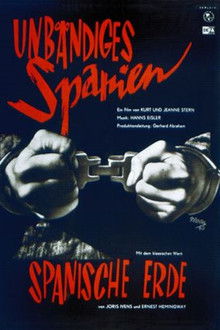

Denn ich sah eine neue Erde
Four-part miniseries about the theologian Thomas Müntzer, who became a revolutionary and opponent of Luther during the Peasant War in 1525.

Daniel Druskat
Large-scale, five-part film about the relationship between two men caught between friendship, rivalry and hatred during the first decades of GDR in the countryside.

Das Licht der schwarzen Kerze

Junge Frau von 1914
In 1914 Berlin, bank heiress Leonore Wahl and struggling Munich student Werner Bertin fall passionately in love, defying class and her parents’ expectations. Their idyll is shattered by the outbreak of WWI: Werner, swept up in patriotic fervor, is conscripted to the Western Front, while Leonore, pregnant and abandoned, faces her family’s condemnation and a clandestine abortion. Set against the tumult of war, the film explores idealism, social divides, and the personal costs of duty and desire.

Kein Hüsung
Mecklenburg, 19th century. For generations, the Brand family of farmers has worked a piece of land as tenants of the baron, who owns almost all of the village's land. The baron himself comes from a family of farmers who became rich through corruption and were ennobled. He is the absolute potentate, no one dares to contradict him, he takes what he wants and stops at nothing in his excesses. At the same time, he is the center of petty bourgeois, bigoted social life. Johann, the stable boy, wants to marry Mariken Brand and asks the baron for a piece of land so that he can build a life of his own. But the lord is harsh, not only refusing him the land, but also increasing the rent. Johann rebels, trying to rouse the farmers in the village from their lethargy—in vain. Only when Mariken dies does the mood change. A peasant uprising breaks out, and Johann kills the baron.
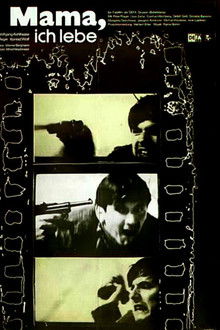
Mama, I’m Alive
In a Russian POW camp, four Germans determined to end WWII agree to pose as Red Army soldiers. Are they patriots or traitors, heroes or opportunists? Although they go to the frontlines, their new Russian comrades are initially unsure whether to trust them. Three of them then accept a mission behind German lines, but they are unprepared to fire upon their countrymen and it ends up costing the life of a Russian soldier. In the meantime, the fourth man has fallen in love with Russian radio operator Svetlana. After being criticized by the other Russians, he too agrees to participate in the mission..

Arnold Zweig
A short biography of Arnold Zweig, through the lens of East Germany state media.
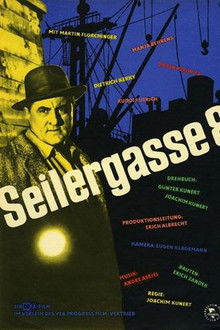
Seilergasse 8
The young lady Lisa Gau probably took her own life at Seilergasse 8 in Rostock, at least that's what it looks like. Captain Schirding, who has been assigned to the case, sees things differently. Together with forensic scientist Kurt Lisowski, he investigates the case and soon discovers that Lisa was poisoned and is shocked when all the evidence points to his...