Personal Info
Known For
Gender
Birthday
Place of Birth
Álvaro de Luna
Known for

A Fistful of Dollars
The Man With No Name enters the Mexican village of San Miguel in the midst of a power struggle among the three Rojo brothers and sheriff John Baxter. When a regiment of Mexican soldiers bearing gold intended to pay for new weapons is waylaid by the Rojo brothers, the stranger inserts himself into the middle of the long-simmering battle, selling false information to both sides for his own benefit.

Tales to Keep You Awake
Tales of terror by established authors such as Ray Bradbury or Edgar Allan Poe, as well as original scripts.

Curro Jiménez
Curro Jiménez was a successful Spanish TV series that aired on TVE1 from 22 December 1976 to 1979. Its main theme was Andalusian "bandolerismo" in the 19th century, located in the Ronda mountains. The main characters were four bandits, Curro Jiménez
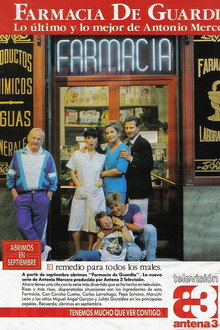
Farmacia de guardia
A pharmacist attends to her colorful neighbors with the help — or distraction — of her eccentric assistants, restless children and flirty ex-husband.

Eurocops

El Cuervo

Maestros
Five legendary bank robbers carve out a nice lifestyle for themselves during their long sentences in a Spanish maximum-security prison, where the guards and inmates buckle to their every demand. When they are granted a surprise and immediate release, they flounder on the greatly changed, modern streets of Madrid. They plan one more major heist, but do they have the updated skills and wherewithal to pull it off?

The Strangers
A violent and ruthless bank robber hides out from the police scouring the countryside for him in the home of a couple living far out in the desert. But the couple not only know who he is, they have secrets of their own and are just as ruthless.

Torrejón City
Tom Rodriguez, a young cowboy, arrives in Torrejón City. However in Torrejón City the unsuspecting Tom is mistaken for the famous outlaw Tim El Malo and the people want to lynch him.

El mundo de Juan Lobón

Mi general
A group of generals of the army meet for a course about NATO and new weapons. In the beginning everything is normal but as the time passes they behave more and more like school children.

Christopher Colombus
Vittorio Cottafavi's four part series on the life of Christopher Colombus

The Shack
Vicente Blasco Ibáñez wrote in 1898 "La barraca" (The Shack), a novel with some cultural significance among Spanish literature for reflecting rural life at the end of 19th century with specific local color. In 1979, León Klimovsky directed an adaptation in the form of a miniseries. The shack referred to in the title is a barraca, a typical building of the Valencian Community that served as housing for farmers in irrigated farming areas.

Vampiresas 1930
As the era of silent films finds itself at a close, four down-and-out silent film actors and musicians struggle to find work. Fate leads them to a former star of the silent era as she struggles to escape her reputation as a wild and evil vamp of the silver screen and longs to be just thought of as an honest and decent woman. They join forces, and for a short time have a decent amount of success singing and dancing at clubs and bars. But the public has an insatiable taste for foreign black jazz bands, and they will stop at nothing to become a success.

Mambí
At the end of the 19th century, Goyo, a young laborer from the Canary Islands, is forced to enlist in the Spanish army to fight the Cuban independence revolt. During the war, Goyo will share hardships with his comrades Galleguito and Sevillano, and fall in love with a young Cuban woman...