Personal Info
Known For
Gender
Birthday
Place of Birth
Louis Arbessier
Biography
Known for

Arsène Lupin
Arsène Lupin is a French TV show which was co-produced with German, Canadian, Belgian, Dutch, Swiss, Italian and Austrian TV stations. It was only loosely based on Maurice Leblancs novels. Georges Descrières' portrayal of Arsène Lupin showed more similarity to Graf Yoster than to Maurice Leblanc's original. He behaved in the first place as a perfect gentleman who never got angry. He was always relaxed, because whatever could possibly had bothered him in daily life was taken care of by his butler. It wasn't questioned how he had come to his financial independence although the series sometimes discreetly implied that he was a professional criminal. Besides rescuing damsels in distress Lupin took on criminals, competing with their wit and intelligence. Either he stole paintings from rich people who had to be considered white-collar criminals or he acted as a detective who derailed criminal schemes. However, when he was attacked, he could defend himself effortlessly by using elegant jujutsu methods. Among the guest stars were German actors such as Günter Strack and Sky du Mont. Jean-Paul Salomé said in his commentary on the DVD version of his film Arsène Lupin he had like this series as a child. German TV, one the investors, would broadcast the show eventually between 18:00-20:00 o'clock because it was only allowed to show commercials within that very timeslot. For them to get a financial return on investment the show had to be appropriate for families and also for children who would watch it alone. Subsequently it was nearby to ask to defuse and flatten some of Leblanc's plots in order to avoid possible complaints that could force the station to broadcast the show beyond the "Vorabendprogramm".

Ulysses 31
Ulysses and his crew struggle against the divine entities that rule the universe, the ancient gods from Greek mythology.

Spartakus and the Sun Beneath the Sea
The Arkadians are a civilization that survived a great cataclysm and moved to the center of the earth, thriving under the power of their artificial sun, The Tehra, until one day it began to fail. In desperation, the Arkadians broke the ancient law and entered the Forbidden Archives to search for an answer. They used their special powers and created a messenger to the people above, naming her Arkana. She meets up with Matt and Rebecca, two ordinary kids from the surface world, Bic and Bac, two strange anteaters from Arkadia, and Spartakus, a mysterious warrior. Together they search the worlds of the strata for a way to save a people and possibly the world.

The Coin
Bob recruits Jacques, a desperate blacksmith, to "recover" smuggled diamonds from de Belar. The heist goes badly wrong. The crooks kill each other for the money, but the diamonds are gone and Jacques returns to his life as an honest man.

Pasha
Six months before his retirement from the criminal police, inspector Joss finds his colleague Gouvion dead, in a poorly faked suicide attempt. Joss loses his temper, and investigates on his own, which leads him through the bas-fond of Paris...

The Great Spy Chase
A cold-war spy parody. After the death of an armaments manufacturer, an international group of spies is drawn into a high-stakes battle of wits to obtain the valuable military patents which have been inherited by the lovely widow.

Les Dossiers de l'Agence O
L’Agence O is a famous Parisian private detective firm. Its premises are located in the Passage Choiseul. In front, Torrence leads the shop. In fact, the agency's team is complemented by Émilie le Roux, Mademoiselle Berthe and Barbet, who scrutinize clients through a one-way mirror located behind the desk. Getting hold of a man disguised as an old lady, solving the mystery of the Prisoner of Lagny or discovering who is blackmailing the painter Tigrane Alban does not worry the experts at the O Agency. Les Dossiers de l’Agence O is a French-Canadian television series in thirteen episodes of approximately 55 minutes created by Marc Simenon and broadcast first in Quebec from December 14, 1967 to March 13, 1968 on Télévision de Radio-Canada, then in France from March 11 to June 3, 1968 on the first channel of the ORTF.

Ondine
In the forest, knight-errant Hans meets and falls in love with Ondine, a water-sprite who is attracted to the world of mortal man.
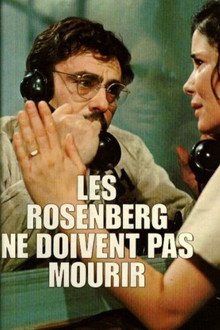
Les Rosenberg ne doivent pas mourir
A French two-parter about a famous American trial - that of Julius and Ethel Rosenberg, who became the first people in American history to receive the death penalty for espionage.

Illusions perdues
1819, Angouleme, France, a young ambitious poet, Lucien Chardon is introduced in the salon of Mme de Bargeton where meets the high society of the city. Lucien dreams of going to Paris to conquer the glory. But if Paris is the city where he can find fame, it is also that of great disappointments.

We Are All Murderers
Originally titled Nous Sommes Tout des Assassins, We Are All Murderers was directed by Andre Cayette, a former lawyer who detested France's execution system. Charles Spaak's screenplay makes no attempt to launder the four principal characters (Marcel Mouloudji, Raymond Pellegrin, Antoinine Balpetre, Julien Verdeir): never mind the motivations, these are all hardened murderers. Still, the film condemns the sadistic ritual through which these four men are brought to the guillotine. In France, the policy is to never tell the condemned man when the execution will occur--and then to show up without warning and drag the victim kicking and screaming to his doom, without any opportunity to make peace with himself or his Maker. By the end of this harrowing film, the audience feels as dehumanized as the four "protagonists." We Are All Murderers was roundly roasted by the French law enforcement establishment, but it won a special jury prize at the 1952 Cannes Film Festival.

Imperial Violets
Violeta, an Andalusian gypsy, foretells a lady she will become empress. The lady is Eugenia de Montijo, and when she marries emperor Luis Napoleón of France she takes the young girl with her. The empress'cousin readily makes her his focus of attention, then she discovers a criminal attempt against the empress.

Under the Sign of the Bull
Albert is an eccentric inventor of missiles who comes under fire from his investors when his first prototype explodes. Even his sympathetic mistress has her doubts, as Albert lashes out in a verbal tirade condemning those of little faith in his genius.

Tonight We Kill
In Antwerp, Belgium, in 1959, a succession of Interpol agents are gunned down without obtaining what they're looking for: a list of all the influential crooks. Only one remains, Larry Laine, who is about to show them what he's made of.

Les Misérables
In 19th century France, Jean Valjean, a man imprisoned for stealing bread, must flee a relentless policeman named Javert. The pursuit consumes both men's lives, and soon Valjean finds himself in the midst of the student revolutions in France.