Personal Info
Known For
Gender
Birthday
Place of Birth
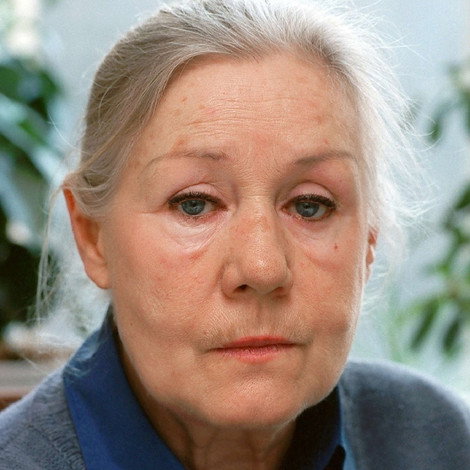
Käthe Reichel
Known for

Polizeiruf 110
Polizeiruf 110 is a long-running German language detective television series. The first episode was broadcast 27 June 1971 in the German Democratic Republic, and after the dissolution of Fernsehen der DDR the series was picked up by ARD. It was originally created as a counterpart to the West German series Tatort, and quickly became a public favorite.

Lebensläufe

Abschnitt 40
Abschnitt 40 was a German police television series broadcast between May 21 2001 and 2006. It was aired on RTL Television.
Florian
Florian, who works in a retirement home as part of his community service, brings a breath of fresh air—sometimes to the displeasure of the home's management.

Levin's Mill
In a small village in West Prussia in the 1870s, Germans, Poles, Gypsies and Jews live together as neighbors. One night Johann, a German mill-owner, secretly opens the dam gates and floods the mill of his Jewish rival Levin. After his business is ruined and his calls for justice go unanswered, Levin leaves town.

Daniel Druskat
Large-scale, five-part film about the relationship between two men caught between friendship, rivalry and hatred during the first decades of GDR in the countryside.

Brecht - Die Kunst zu leben
He wanted to revolutionize theater practice and at the same time social awareness: Today Brecht, who was born in Augsburg in 1898 and died in East Berlin in 1956, is one of the most important playwrights of the 20th century.

My Friend Robinson
19-year old Peter is working to gain practical experience for his planned medical studies. But his life turns into confusion as he unexpectedly comes a father.

Du und ich und Klein-Paris
When Angelika moves to Leipzig, she is forced to rent a room at Mrs. Häublein’s for a start, since her parents will not follow until a few months later. Fellow tenant Thomas, a philosophy student, is not at all enthused about his new, pretty housemate. Because of Angelika he has to move into a smaller room. Furthermore, he is annoyed at her many male acquaintances, without sensing that his aggression might be prompted by jealousy. When Angelika’s father comes for a visit, he asks Thomas to keep an eye on his daughter. Thomas takes this assignment very seriously and finally realizes that he has fallen in love with Angelika.

The Legend of Paul and Paula
Paul and Paula have had bad experiences with love: Paul is financially well off but has lost all affection for his wife, and Paula leads a troublesome life raising two children on her own. They meet and discover a strong passion for each other. Life seems like a dream when they're together - but their short flights from the burdens of reality are once and again interrupted by Paul's ties to family and career.

The Farmer's Clever Daughter
A farmer receives land from the king and discovers a buried golden mortar. He decides to give it to the king out of gratitude, but his clever daughter warns him that the king will surely want him to bring a corresponding pestle as well. When the king throws the farmer into jail for fraud, he bemoans the fact that he did not listen to his daughter.

The Flying Windmill
Olli, the main character in the movie, got a very bad grade and is terribly annoyed. She runs away from home and, together with a dog and a horse, finds a (mad? nutty?) scientist in a windmill. They experience the strangest adventures in this windmill and find other interesting characters, a lot of excitement and peril. While you may well interpret something as the "socialist value system" into this movie, it is more meant to be a children's movie, showing the kids that there are more exciting things out there than the ones that your parents and teachers show you, and that you will only find out most of those things on your own, if you show enough curiosity.

Die Weihnachtsgans Auguste
The opera singer Ludwig Löwenhaupt wants a proper festive roast for Christmas, so he buys a goose in advance to feed the whole family. What he doesn't realize, however, is that the children, Elli, Gerda and Peterle, will grow fond of the animal, which is christened Gustje, and will no longer want to eat it. After the "liberation", the "five kilos of meat", which were initially locked up in the cellar, become a pet that the children take to bed with them and communicate with. But shortly before Christmas, father Löwenhaupt still wants to slaughter them. However, as his family protests and his conscience gets in the way, he can't slaughter the goose after all. So Gustje only has to leave a few feathers as proof that she has been plucked, and the opera singer is given another goose that has already been cut up.