
Personal Info
Known For
Gender
Birthday
Place of Birth
Ruth Kommerell
Known for

Polizeiruf 110
Polizeiruf 110 is a long-running German language detective television series. The first episode was broadcast 27 June 1971 in the German Democratic Republic, and after the dissolution of Fernsehen der DDR the series was picked up by ARD. It was originally created as a counterpart to the West German series Tatort, and quickly became a public favorite.

Der Staatsanwalt hat das Wort
Der Staatsanwalt hat das Wort was an East German television series.
Der Staatsanwalt hat das Wort
Der Staatsanwalt hat das Wort was an East German television series.

Gewissen in Aufruhr
As a German soldier in the 6th Army, Colonel Joachim Ebershagen is trapped in the Stalingrad cauldron. His experiences cause him to begin to doubt the meaning of the war. He is flown out as a wounded soldier on one of the last planes. Back home, he becomes commander of Greifswald. Towards the end of the war, he surrendered the city to the Soviet army without a fight on April 30, 1945. The death sentence pronounced by a court martial is not carried out.

Fridolin

Rottenknechte
The film concentrates on the last days of the German navy during World War II.

Born in '45
Originally banned in 1966, East German director Jürgen Böttcher's tale of love and disillusionment among two newlyweds attempting to navigate the treacherous world of marriage was never officially released in his homeland until after reunification in 1990.

Isabel on the Stairs
Twelve-year-old Isabel and her mother, who was a famous political singer, had to escape Chile after the 1973 military coup. Isabel’s father stayed behind fighting in the underground. For six years, they have lived in a new apartment building in East Berlin. At first, the neighbors made an effort to welcome them, but later became more distant. Isabel does not feel at home in the strange country. Not even her friendship to Philip, the neighbors’ son, can change her mind. Almost every day, Isabel sits on the stairs waiting for a letter from her father, from whom she has not heard for many years.

Visa für Ocantros
In the troubled state of Ocantros, the prime minister is assassinated. Martin Katrup, who is responsible for setting up a large printing plant, is also on the island at this time. A short time later, two of his colleagues disappear without a trace and Katrup sets off in search of them. The situation is exacerbated when the secret service tries everything in its power to spark a coup and a civil war.

Junge Frau von 1914
In 1914 Berlin, bank heiress Leonore Wahl and struggling Munich student Werner Bertin fall passionately in love, defying class and her parents’ expectations. Their idyll is shattered by the outbreak of WWI: Werner, swept up in patriotic fervor, is conscripted to the Western Front, while Leonore, pregnant and abandoned, faces her family’s condemnation and a clandestine abortion. Set against the tumult of war, the film explores idealism, social divides, and the personal costs of duty and desire.

Meines Vaters Straßenbahn
Ralph grows up in pre-war Dresden as the eldest son of a principled and orderly streetcar conductor. With the rise to power of the Nazis, the war, the collapse and the hesitant new beginning, his firmly established middle-class world is also thrown off course. His father is one of the first to be called up to the front. His mother is left alone with the responsibility for Ralph and his younger brother Achim. In the air-raid shelter, during the nights of bombing and later in the daily struggle against misery and hunger, the mother quickly abandons all moral baggage and develops a pragmatic will to survive, for which she admires Ralph. At the same time, the boy is frightened by his mother's desperate claim to happiness because he perceives her affairs as a betrayal of his father, who has gradually faded into a symbol of a happy, carefree childhood.
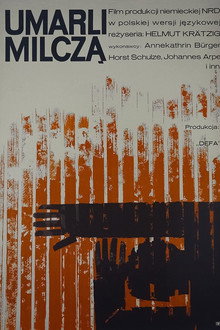
Tote reden nicht
After Elmers, the head of the publishing house, is reported missing, his son-in-law Jürgen Brandt is targeted by the Hamburg criminal police. Inspector Graumann and his assistant Weber presume murder. The suspicion against editor-in-chief Brandt is confirmed by the fact that he is incriminated by the testimony of several witnesses. At a press conference, Brandt claims that the Elmers murder case was staged only to exonerate the innocently convicted family man, Parsetti. But to Brandt's horror, Elmer's body is actually found.
