
Personal Info
Known For
Gender
Birthday
Place of Birth
Cyril Descours
Known for

Murders in...
Murders in... is a collection of French-Belgian police TV movies taking place each time in a different French city and region.

John Adams
Adapted from David McCullough's Pulitzer Prize-winning biography, this lavish seven-part miniseries chronicles the life of Founding Father John Adams, starting with the Boston Massacre of 1770 through his years as an ambassador in Europe, then his terms as vice president and president of the United States, up to his death on July 4, 1826.

Clement
Benoit turns 13 and develops an intense crush on his godmother, Marion. As they lie on beaches in the summer, she humors him by talking about the mysteries of women.
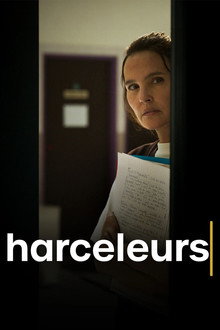
Harceleurs

Mystery in Paris
Follows a series of ghastly murders that occur in the most iconic places in the City of Light, centering around the women of the Belle Époque.

A Woman and The Revolution
Manon, takes refuge in Paris in 1789. When the people rise up to change the established order and conquer their freedom, Manon's convictions are shaken.

This Is Our Land
Pauline, a devoted and generous home help nurse, raises her two children alone, while also looking after her father, a former steelworker. Taking advantage of her popularity, the directors of an extremist political party suggest she become their candidate at the mayoral elections.

Paris Je T'aime
Olivier Assayas, Gus Van Sant, Wes Craven and Alfonso Cuaron are among the 20 distinguished directors who contribute to this collection of 18 stories, each exploring a different aspect of Parisian life. The colourful characters in this drama include a pair of mimes, a husband trying to choose between his wife and his lover, and a married man who turns to a prostitute for advice.

Accomplices
Two police detectives investigate the murder of a high-end male prostitute, and his relationship with his girlfriend.

Red Sky
Vietnam - 1946. Philippe is committed to pacifying an unknown country made of dense forests and spectacular mountains. His ideals collapse when he realizes that he must torture and kill a young vietnamese who is fighting for his independence. He decides to flee with her on an unpredictable journey to the heart of the jungle. They will discover who they are. This film is the story of their love.
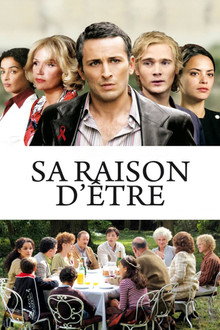
What Love Means
The miniseries, for the most part, charts the AIDS epidemic in France from 1980 – present through the microcosm of a family, but particularly through their gay son Nicolas, who narrates the story.

La fin de la nuit
Twenty years have passed. Thérèse lives alone in Paris. We exiled her there. She seems to be asking nothing more for life. She is sick and lives in slow motion. One day, we ring rue du Bac. It is Mary, her daughter, whom she sees so little. She is twenty years old now and comes to see her to escape her middle-class south-west. She is very in love with a boy, she expects from her mother a support, a freedom of point of view. His name is Murad. The arrival of her daughter awakens Therese with her reserve and torpor. It does not shock Mary, who is very busy with her love. Thérèse proposes to meet Mourad. She quickly understands that he is not willing to marry Mary but wants her without wanting to bond more deeply to her. It is she Therese, that the young man looks ... She wanted to help her daughter to be happy, a wish too official not to be suspicious. Here she is delivered to the power of her own seduction ...
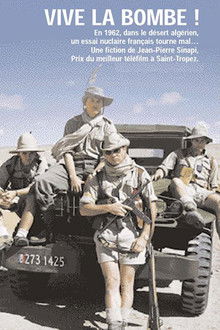
Vive la bombe!
April 30, 1962. The Algerian War has been over for two months, but Charles de Gaulle negotiated with the FLN during the Évian Accords to continue nuclear testing in the Sahara Desert. Under the eyes of officials gathered in an observation post located 5 km from the blast site, the Taourirt fissures, releasing a radioactive cloud: this will be known as the Béryl accident.

La Manière forte
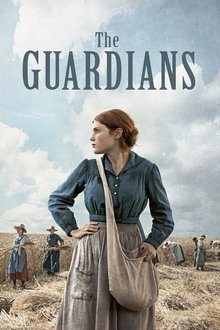
The Guardians
In this ensemble drama set in rural France, the women of the Paridier farm are left to run it by themselves while their men are off fighting in World War I. But things become complicated with the arrival of American troops.