
Personal Info
Known For
Gender
Birthday
Place of Birth
Luís Miguel Cintra
Biography
Known for

Vertiges
In a specialized, hermetic drama about love won and lost, not necessarily by the same individuals, novice director Christine Laurent has focused on the backstage melodramas of an opera company. The conductor for an upcoming performance of the Marriage of Figaro has his mind and heart on other matters -- an entrancing diva who keeps him enraptured with her presence and voice. In the meantime, he finds fault with his cast members who cannot, of course, measure up to the woman of his dreams. As singers encounter one problem or another, it is clear that something has to be done about the conductor. Director Laurent designed costumes for both theater and opera, giving her some insight into the venue.
História do Cinema Português
War
The recollections of a Portuguese teacher in the present will make us follow his father, Manuel, former fighter in our colonial war and constantly tormented with those memories. He'll walk us through the depths of the physical sites that haunt him - from training barracks to the lakes and gardens of his youth and infatuation - and also to his memory's gulf - war and passion combined, entangled, in a battle that questions or howls immemorial existential doubts.
Pas Perdus
The Dancer Upstairs
A police detective in a South American country is dedicated to hunting down a revolutionary guerilla leader.

Villa Mauresque
Vincent, a young Swiss, is upset by his meeting with the city of Lisbon. He will meet two persons: a prostitute of high flight and a great writer fallen and suicidal.
Anteroom
Using video assist recorded images, Antecâmara is about the “act” of shooting, the physical reality and ritual energy of two film crews during the preparation for a shot. The first video assist rule is that the image one sees in it has to be more interesting than what one sees outside. Nothing is left to chance. It helps to preview the shot, organise space, arrange the scenes, move the actors and light the set. And it provides it all with a meaning depending on how the camera is used. It is the space-time before the shot, where it is sketched.
Zéfiro
Zephyrus is a film-voyage, a fresco about Southern Portugal. A movie dealing metaphorically with the South of Portugal, singling it out as a place where various cultures came together and mix, giving birth to a singular identity, as unique as this movie itself, a mixture of fiction and documentary
Pathos
Once upon a time, the last days of 2028. This world’s disarray, no more no less than ever. Accommodate, adapt, evolve. The inability to live. The endless survival. Angela, a retired history teacher, has long lived in voluntary isolation, locked in an apartment in Lisbon. All her life, she refused conventions. Today, on Christmas Eve, she is faced with a “trivial” decision. Hospitality.
Entremês Famoso Sobre a Pesca no Rio Minho
Tall Stories
12-year-old Miguel is punished because he has not done his homework properly: he must stay at his aunt's inn for holidays. First bored, then a friendship begins between him and other inn's regular holiday-makers, like maid Luisa or fisherman João. But doctor Fernando's arrival is going to overwhelm the place's peaceful life and to change Miguel's mind.
The Uncertainty Principle
Having lost her place among the social elite, a widow remarries and starts a family.
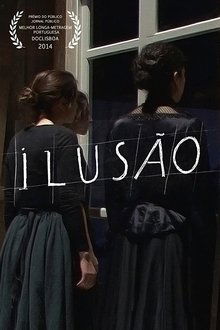
Illusion
Luis Miguel Cintra, renowned actor, stage director and director of the Portuguese theatre company Teatro da Cornucópia, staged the play Illusion in early 2014. This play was based upon texts by Federico García Lorca. However, the 119th company's show was no ordinary show, for in the cast there were 59 non-actors, amateurs and theatre students.
If I Were a Thief... I'd Steal
1920s. Vitalino, a small farmer from São Vicente sees his father die of the epidemic which decimated the country. Some years later, of all the brothers, Vitalino is the strongest and takes his father’s place in the house. But the village is too small for his aspirations and he decides to head to Brazil, leaving his sisters in charge of the household. In parallel with Vitalino’s story, If I Were a Thief… I’d Steal portrays the world of Paulo Rocha rummaging through his films and ghosts over the years.