Personal Info
Known For
Gender
Birthday
Place of Birth
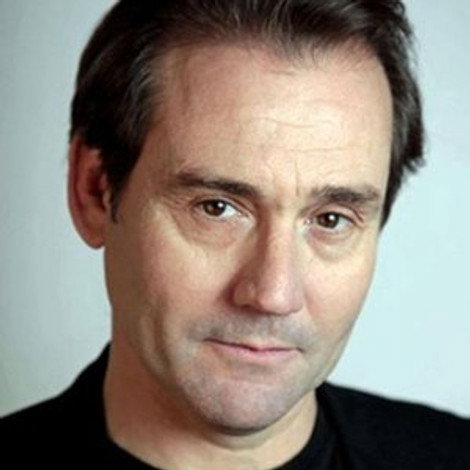
Wadeck Stanczak
Biography
Known for

Champs-Elysées

Le Grand Échiquier
Le Grand Échiquier is a French variety television program created and presented by Jacques Chancel. It aired at 8:30 pm on the first channel of the ORTF from January 12, 1972 to July 12, 1972, then on the second color channel of the ORTF from September 1972 to December 1974, and finally on Antenne 2 from January 1975 to December 21, 1989. The program returned to France 2 on December 20, 2018 and is hosted by Anne-Sophie Lapix.

The Other
A man who survives an earthquake is convinced that there is another man still stuck in the debris.

Paris 16e

Le Pantalon
Lucien is a young soldier in the French army during the First World War. Recently married and with a young daughter, his only aim is to get through the war unscathed and get back to his wife and daughter. But this world is turned upside down by a pair of trousers.

Disorder
Three young friends steal some music equipment for their struggling post-punk band and, in a panic, kill the shop’s owner. The film examines, with characteristic restraint and acuity, the psychological fallout as the band unravels—and each of its members grapple with their own feelings of guilt, paranoia, and despair.

Chimère
Lovers Beatrice Dalle and Wadeck Stanczak can't quite cope with the situation when Dalle becomes pregnant. Stanczak fears that his future as an architect will be scuttled by any parental responsibilities. For her part, Dalle wants to keep the baby, but she also wants to keep Stanczak. Attempting to smooth the waters is the couple's mutual friend Francis Frappat. Chimere was the second feature-film project for director Claire Devers, who rose to prominence on the strength of her award-winning maiden effort Black and White.

C'est jamais loin
In Dieppe, a taciturn young man is fascinated by a woman whom he has only seen in the street. One day, he leaves Dieppe and Lola, the girl he was living with. He becomes a truck-driver. In the Middle East, Christian's travels end in a prison in the heart of the desert. There he meets Eliot who lives an isolated life within the prison environment. Since Eliot talks, Christian who was mute up to that point, listens then speaks too. But Eliot receives letters from a woman: Marie. And Christian starts dreaming that she's the woman he saw on the streets of Dieppe.

Missus
Kyiv, 1974. Father Pietro, exposed by the KGB as a Vatican spy, flees to Rome. Years later, his past catches up with him. Under the code name “Missus,” he is sent back to the East. His mission is to unmask an agent who has been infiltrated into the Vatican to eliminate a high-ranking official.

The Colors of the Devil
A young talented painter dreams of glory. A man promises it in exchange for his talent and his soul.

Rendez-vous
Nina is a young, carefree actress who arrives in Paris searching for her big break. There, she finds drama both on- and offstage as she becomes involved with three men: a mild-mannered real-estate agent who offers her stability, a bad-boy actor who lives dangerously on the edge, and an intense theater director who casts her in a production of “Romeo and Juliet.” As opening night approaches, the emotional extremes of Nina’s love life fuel her art.

The Return of Casanova
After many years of rambling across Europe the aging Giacomo Casanova is impoverished. He wants to return to the Republic of Venice but he doesn't dare going there directly because he was a fugitive when he left. While he tries to find a way to get a pardon he meets a young lady named Marcelina. The more he shows his affection, the more ostentatiously she rejects him. Even so he doesn't give up on her because her lover Lorenzo has grave gaming debts. In return for the required money Lorenzo tells Casanova about a looming secret rendezvous with Marcelina. Moreover he lets Casanova take his place. Undercover of the night Casanova finally seduces her. Lorenzo later feels his honor was besmirched and demands satisfaction. Casanova kills him in a duel and then goes home to Venice.