Personal Info
Known For
Gender
Birthday
Place of Birth
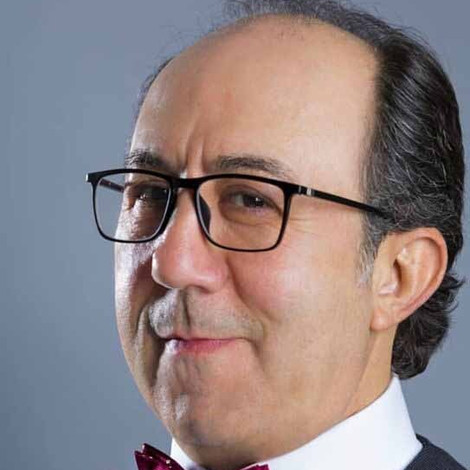
Mohammad Kheir Al-Jarrah
Known for

The Harem
Haramlek is a Syrian historical drama set during the late Ottoman era in Syria. It explores life inside elite households, focusing on women’s quarters (“haramlek”) and the hidden power struggles within. The story follows intertwined characters dealing with love, betrayal, and ambition, revealing how influence is exercised behind closed doors, especially by women navigating strict social structures.

Hammam AlQishani
The series goes into details of the events that Syria went through between the years 1955-1959, including the tripartite aggression against Egypt in 1956, the establishment of unity between Syria and Egypt, and the revolution against the monarchy in Iraq, through the Qishani neighborhood, where its people work as merchants, lawyers, doctors, intellectuals and other works.

Al Zeer Salem
Chronicling the Basus War between two Arabian tribes and their allies, the drama follows the emergence of renowned Arab figure, Al Zeer Salem.

Ferqet Naji Atallah
A retired Egyptian officer working at the Egyptian embassy in Tel Aviv decides to plot revenge against Israel for freezing his bank accounts when he objected to its monstrous conduct in Palestine. In Egypt, he recruits five of his former students to rob Israel’s largest bank.

Ala Al Hilwa Wa Al Morra
Farah is a talented wedding planner who has kept her heart locked up ever since the man she was supposed to marry vanished on their wedding day five years ago. When her boss hands her his new wedding to organise, she discovers the groom is that same man — now engaged to someone else. A warm, bittersweet Lebanese romantic comedy-drama starring Dana Mardini and Nicolas Mouawad, adapted from the Turkish hit İyi Günde Kötü Günde.

The Leader
In 1918 Damascus, after the downfall of the Ottoman Empire and before the French colonization of the country, six Damascene neighborhoods decide to choose one head to rule over them, only for clashes over the throne to crystalize and extend.

Al-Hout
A drama series that tells the story of the coastal environment during the era of the French mandate in Syria, especially the environment of fishermen in light of the exploitation and greed of some people and the bitter struggle of others against the French occupier.
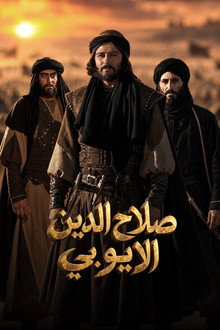
Salah Al-Deen Al-Ayoubi
A sweeping historical epic tracing the life of Saladin from his humble origins to his unification of fractured Muslim kingdoms and his legendary recapture of Jerusalem from the Crusaders after nearly a century of occupation. Starring Jamal Suleiman and directed by the late Hatem Ali, written by Walid Seif — the same partnership behind Palestinian Alienation — this is widely regarded as one of the finest historical dramas in Arabic television, epic in scale yet deeply human in its portrayal of leadership, faith and sacrifice.

The Falcon of Quraish
When the Abbasids overthrow the Umayyad Caliphate in Damascus, slaughtering nearly the entire dynasty, one young prince escapes — Abd al-Rahman. Hunted across deserts and seas, he eventually reaches the fringes of the Muslim world and, through sheer will and political genius, founds a new Umayyad emirate in Andalusia. Written by Walid Seif and directed by Hatem Ali, this is the first chapter of their celebrated Andalusian trilogy — epic, human and historically meticulous.

Al Baa Tahtaha Nuqta
Maitha and her two friends form a women's independence front and enroll in a literacy school, which becomes the scene of amusing events as a result of the mixing of different Arab nationalities and dialects on the one hand, and the husbands' tireless efforts to thwart the women's plans on the other.

Naked Souls
A contemporary social series that takes place in Damascus, and deals with the subject of doubt in the human being when some of its constants in life are shaken.

Palestinian Alienation
The first comprehensive dramatic telling of the Palestinian Nakba, seen through the eyes of a poor rural family from the 1930s British Mandate era through the massacres of 1948 and the defeat of 1967. Written by Palestinian poet Walid Seif — based on his own family history — and directed by the late Syrian master Hatem Ali, this is widely considered one of the greatest Arab television dramas ever produced. A monumental work of collective memory, historical witness and human endurance.

Memories of the Next Era
Matar disappears under mysterious circumstances for 20 years, during which everyone has believed he had died a martyr. However, he returns in a new form and builds a financial empire amidst the mystery surrounding the source of his wealth. Using the spider's method, he tightens his grip on everyone and exploits them to achieve his goals of doubling his wealth and taking revenge on his past friends.

Ma khtalafna
Through separate, connected episodes, the series addresses many contemporary social issues, such as corruption, unemployment, poverty, social relations, and others.

Behind Bars
Naji Saeed is a ruthless Damascus businessman who built his empire by climbing over everyone beneath him. When Nader — desperate and naive — walks into his orbit seeking money, he finds there's no clean way back out. A Syrian social drama that traces how class, greed and moral compromise trap people in invisible prisons long before any actual bars appear. Starring Bassam Kousa, Bassem Yakhour and Sulafa Mimar. Directed by Allaith Hajjo.