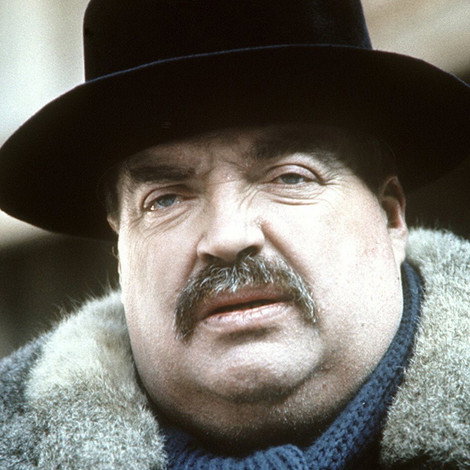
Helmut Qualtinger
Biography
Helmut Qualtinger was born in Vienna, Austria. He initially studied medicine, but quit university to become a newspaper reporter and film critic for local press, while beginning to write texts for cabaret performances and theater plays. Qualtinger debuted as an actor at a student theater and attended the Max Reinhardt Seminar as a guest student.
Beginning in 1947, he appeared in cabaret performances. In 1949, Qualtinger's first theatrical play, Jugend vor den Schranken, was staged in Graz. Up to 1960, Qualtinger collaborated on various cabaret programmes with the Namenlosen Ensemble made up of Gerhard Bronner, Carl Merz, Louise Martini, Peter Wehle, Georg Kreisler, and Michael Kehlmann.
Qualtinger was famous for his practical jokes. In 1951, he managed to launch a false report in several newspapers announcing a visit to Vienna of a (fictional) famous Inuit poet named Kobuk (author of "The Burning Igloo"). The reporters who assembled at the railway station however were to witness Qualtinger, in fur coat and cap, stepping from the train. Asked about his "first impressions of Vienna", the "Inuit poet" commented in broad Viennese dialect, "Haaaßis'sdo - [It's hot here]".
The short one-man play Der Herr Karl, written by Qualtinger and Carl Merz and performed by Qualtinger in 1961, made the author known across German-speaking countries. "Herr Karl", a grocery store clerk, tells the story of his life to an imaginary colleague - from the days of the Habsburg empire, the First Austrian Republic, the Austrofascist regime leading up to the Anschluss (annexation) by Nazi Germany, World War II and finally military occupation by Allied forces in the 1950s, seen from the perspective of a one who is a prototypical opportunist. Qualtinger's portrayal of the petit-bourgeois Nazi collaborator came at a time when "normality" had just been restored and Austrians' involvement in the Nazi movement was being downplayed and "forgotten", making many enemies for the author, who even received anonymous threats of murder.
Beginning in the 1970s, Qualtinger frequently performed recitals of his own and other texts, including excerpts from Adolf Hitler's Mein Kampf and Karl Kraus' Die letzten Tage der Menschheit (The Last Days of Mankind). These recitals were highly popular and resulted in several records being published.
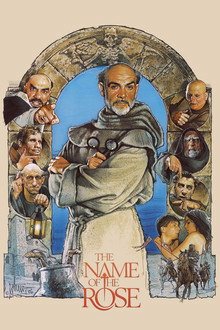
Qualtinger played countless theater, TV and film parts, making his final appearance in The Name of the Rose in 1986, along with Sean Connery.
Qualtinger died in Vienna on 29 September 1986, of a liver condition.
From Wikipedia, the free encyclopedia
Known for
The Name of the Rose
14th-century Franciscan monk William of Baskerville and his young novice arrive at a conference to find that several monks have been murdered under mysterious circumstances. To solve the crimes, William must rise up against the Church's authority and fight the shadowy conspiracy of monastery monks using only his intelligence; which is considerable.
The Devils
In the mid-1870s, landowner Varvara Stavrogina and Professor Stepan Verkhovensky are the center of society. Stavrogina's son Nikolai and Verkhovensky's son Pyotr are staying in Geneva. There, Nikolai becomes engaged to the lovely Lisa Tushina. However, he is already to be married to another.
Die schöne Lügnerin
In 1815 Vienna, a corsetmaker falls in love with a valet.
MitGift
Edgar Burgman, after collaborating to assassinate the elder senator husband of Alice Young, the wife remarried. The woman, after a short period, doubts of love Edgar and convinces more and more that, having married out of interest, now wants to eliminate the possession of his great assets.
Radetzkymarsch
The story of the Trotta family during the rise and fall of the Austrian-Hungary empire. Based upon the novel by Joseph Roth.
Das Abgründige in Herrn Gerstenberg
An Oral History of: The Name of the Rose
An oral history of the 1986 film adaptation of "The Name of the Rose", gathering together the memories of several members of the surviving cast/crew.
Die Alpensaga
A six-part film series addressing the problems of rural Austria from 1900 to 1945. Contrary to the traditional "Heimatfilm", the Alpensaga detaches itself from typical clichés and tries to depict a critical view of societal structures of the time. World history is shown from the view of a peasant family living in a small village in Upper Austria.
Cat's Game
Erzsi, living alone in Budapest, keeps up phone and letter contact with her sister Gisa in Germany. Both elderly, they’ve long grown apart in how they face aging: Gisa accepts it, while Erzsi tries to hold on to youth, encouraged by her friend Paula and by Viktor, an aging opera singer and former lover.