Personal Info
Known For
Gender
Birthday
Place of Birth
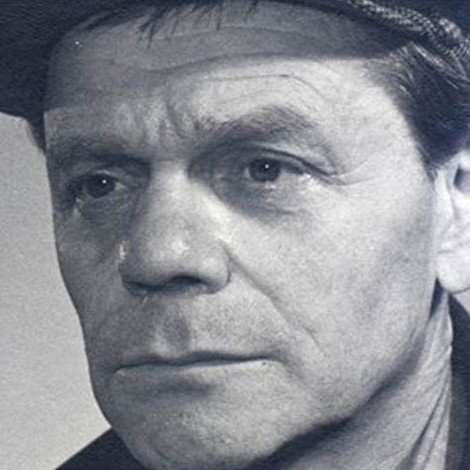
Vladimir Uralskiy
Known for

Battleship Potemkin
In the midst of the Russian Revolution of 1905, the crew of the battleship Potemkin revolt against the brutal, tyrannical regime of the vessel's officers. The resulting street demonstration in Odessa brings on a police massacre.


Strike
Just before the 1905 Bolshevik Revolution, factory workers strike against their oppressive factory bosses. When a worker is accused of stealing a piece of machinery, he commits suicide, and his colleagues revolt against the overarching Czarist regime. As the strike drags on and government officials grow increasingly desperate to end it, their methods of dealing with the rebellious workers become more and more aggressive.

Ivan the Terrible, Part I
Set during the early part of his reign, Ivan faces betrayal from the aristocracy and even his closest friends as he seeks to unite the Russian people. Sergei Eisenstein's final film, this is the first part of a three-part biopic of Tsar Ivan IV of Russia, which was never completed due to the producer's dissatisfaction with Eisenstein's attempts to use forbidden experimental filming techniques and excessive cost overruns. The second part was completed but not released for a decade after Eisenstein's death and a change of heart in the USSR government toward his work; the third part was only in its earliest stage of filming when shooting was stopped altogether.

Aelita: Queen of Mars
A young man travels to Mars in a rocket ship, where he leads a popular uprising against the ruling group with the support of Queen Aelita, who has fallen in love with him after watching him through a telescope.

Involuntary auditors
Two business travelers, Laptev and Rusakov, staying at a small town hotel, were surprised by the care that the service staff showed them. It turns out that the hotel administrators, lazy and bureaucratic, accepted the new guests as capital auditors. But it soon turns out that the real auditor has been living in one of the rooms for three days and has already started working as a hotel staff member.

The District Secretary
A story about a Secretary of the Communist Party District Committee who is leading partisans in their fight with the Nazis during WWII.

The Train Goes East
On the evening of May 9, 1945, when Moscow is noisily and cheerfully celebrating the Victory Day, a young girl agronomist Zina Sokolova and a sailor officer Lavrentyev meet in the compartment of the Moscow-Vladivostok train. The sailor takes the lively, direct character of the girl for windiness and frivolity. Sokolova also reacted frowningly and mockingly to the satellite. To get to know each other better, travelers are helped by nuisance: they are behind the train, and the rest of the way they are together, getting to know people and the life of the country along the way.
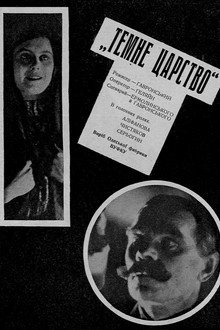
Темне царство

The Bay of Death
A machinist on a Navy ship has two sons, both bolcheviks. When the revolution comes the Tsarist police captures the machinist to put pressure on his sons.

Dream of a Cossack
Soviet filmmaker Yuri Raisman once more combines political dogma with solid entertainment values in Dream of a Cossack (aka Cavalier of the Golden Star). The title character, played by future director Sergei Bondarchuk (and billed for obscure reasons as Semyon Bondarchuk), is an ex-soldier who returns home to the Kuban region, there to take up life as a farmer. Instead, he galvanizes the local citizenry into participating in a massive construction project, which will result in a new power station and canal. Thus does Raisman offer an prime example of Russian collectivism while making it seem as though it had sprung from individual initiative. Dream of a Cossack is based on a popular novel by S. Babayefsky.

Minin and Pozharsky
Historical film about the invasion of the Poles in the Moscow Empire (1611), the creation of Minin and Pozharsky people's militia. The beginning of the XVII century. Already the sixth year the Muscovite land under the yoke of intervention. In the fall of 1610 Polish pans in deceitfully seized the Kremlin and tried to break through to the north. Everywhere rebellions broke out, but well-armed interventionists smashed the scattered peasant detachments. The liberation movement was led by Nizhny Novgorod merchant Kuzma and Prince Dmitry Pozharsky.

A Great Life, Part 2
This is a dramatic story of the restoration of the mines after the liberation of Donbass from the Nazis during the Second World War.


Aerograd
A Russian outpost in Eastern Siberia comes under threat of attack by the Japanese. Aerograd is a new town with a strategically located airfield of vital interest to the government. Work on the new outpost is complicated when tensions develop between workers and a religious sect. Relations between the two countries are further strained in the days before World War II, dating back to the Russo-Japanese War of 1905.