Personal Info
Known For
Gender
Birthday
Place of Birth
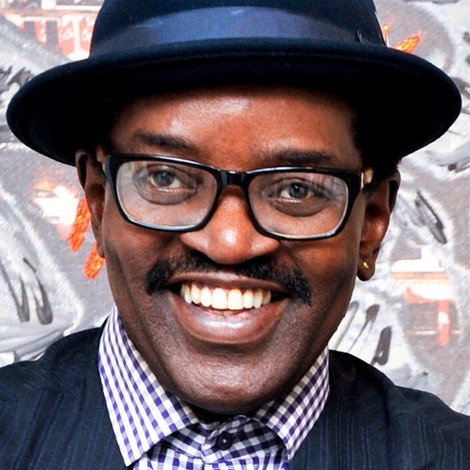
Fab 5 Freddy
Biography
Known for
Law & Order: Criminal Intent
The third installment of the “Law & Order” franchise takes viewers deep into the minds of its criminals while following the intense psychological approaches the Major Case Squad uses to solve its crimes.

Marvel's Luke Cage
Given superstrength and durability by a sabotaged experiment, a wrongly accused man escapes prison to become a superhero for hire.

American Gangster
Loosely based on the criminal career of Frank Lucas, a gangster from La Grange, North Carolina, who smuggled heroin into the United States on American service planes returning from the Vietnam War, before being detained by a task force led by Newark Detective Richie Roberts.

Yo! MTV Raps
Popular rap music videos showcased along with live performances and interviews with notable rap artists.

The Andy Warhol Diaries
After he's shot in 1968, Andy Warhol begins documenting his life and feelings. Those diaries, and this series, reveal the secrets behind his persona.

The Manchurian Candidate
Years after his squad was ambushed during the Gulf War, Major Ben Marco finds himself having terrible nightmares. He begins to doubt that his fellow squad-mate Sergeant Raymond Shaw, now a vice-presidential candidate, is the hero he remembers him being. As Marco's doubts deepen, Shaw's political power grows, and, when Marco finds a mysterious implant embedded in his back, the memory of what really happened begins to return.

Rachel Getting Married
A young woman who has been in and out from rehab for the past 10 years returns home for the weekend for her sister's wedding.

The Defiant Ones
A four-part documentary series that tells the stories of Jimmy Iovine and Dr. Dre -- one the son of a Brooklyn longshoreman, the other straight out of Compton - -- and their improbable partnership and surprising leading roles in a series of transformative events in contemporary culture.

Hip Hop: The Songs That Shook America
From executive producers Ahmir "Questlove" Thompson, Tariq "Black Thought" Trotter, Shawn Gee and Alex Gibney, each episode of this series focuses on a groundbreaking song pivotal to the evolution of American music and culture. From the early hip-hop battles to verses that sparked hope and inspired change, watch artists deconstruct their composition, revisit the impact the song had on them personally, and dissect the socio-economic and cultural conditions that inspired the landmark work and gave voice to a generation.

TV Party
TV Party was a public-access television cable TV show in New York City that ran from 1978 to 1982. Glenn O'Brien was the host. Chris Stein, the co-founder of the pop band Blondie, was the co-host and Walter "Doc" Steding was the leader of the TV Party orchestra. Amos Poe was the director. Guests included Mick Jones, David Byrne, Debbie Harry, James Chance and Jean-Michel Basquiat. Brink Films has re-released some of the best of the 80 plus episodes on DVD, as well as a documentary about the TV show.

New Jack City
A gangster, Nino, is in the Cash Money Brothers, making a million dollars every week selling crack. A cop, Scotty, discovers that the only way to infiltrate the gang is to become a dealer himself.

Juice
Four Harlem friends -- Bishop, Q, Steel and Raheem -- dabble in petty crime, but they decide to go big by knocking off a convenience store. Bishop, the magnetic leader of the group, has the gun. But Q has different aspirations. He wants to be a DJ and happens to have a gig the night of the robbery. Unfortunately for him, Bishop isn't willing to take no for answer in a game where everything's for keeps.

TV Party
From 1978 to 1982, Glenn O'Brien hosted a New York city public access cable TV show called TV Party. Co-hosted by Chris Stein, from Blondie, and directed by filmmaker Amos Poe, the hour long show took television where it had never gone before: to the edge of civility and "sub-realism" as Glenn would put it. Walter Steding and his TV Party "Orchestra" provided a musical accompaniment to the madness at hand, and many artists and musicians, from The Clash, Nile Rodgers, Jean-Michel Basquiat, David Bryne and Arto Lindsey were regular guests. It was the cocktail party that could be a political party. With 80 hours of disintegrating 3/4 inch videotape as a starting point, we tracked down the trend setting participants still living today and found out what they remember of the period and how the show influenced their lives. This, combined with clips from the orginal show, became the documentary "TV Party.


And You Don't Stop: 30 Years of Hip-Hop
The film documents the development of hip hop culture since its inception in the 1970s. With interviews from various figures in the community such as Afrika Bambaataa, Grandmaster Flash, Fab 5 Freddy, KRS-One, MC Hammer and Busy Bee.