Personal Info
Known For
Gender
Birthday
Place of Birth
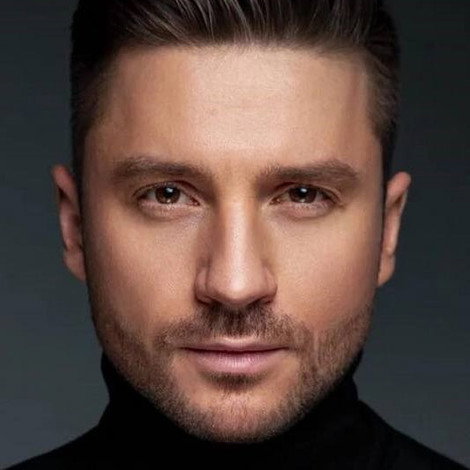
Sergey Lazarev
Biography
Known for

Eurovision Song Contest
The Eurovision Song Contest is an international song competition, organised annually by the European Broadcasting Union (EBU) and featuring participants representing primarily European countries. Each participating country submits an original song to be performed on live television and radio, transmitted to national broadcasters via the EBU's Eurovision and Euroradio networks, with competing countries then casting votes for the other countries' songs to determine the winner.

KVN Major League
KVN is a Russian humour TV show and competition where teams compete by giving funny answers to questions and showing prepared sketches. The programme was first aired by the First Soviet Channel on November 8, 1961. Eleven years later, in 1972, when few programmes were being broadcast live, Soviet censors found the students' impromptu jokes offensive and anti-Soviet and banned KVN. The show was revived fourteen years later during the Perestroika era in 1986, with Alexander Maslyakov as its host. It is one of the longest-running TV programmes on Russian Television. It also has its own holiday on November 8, the birthday of the game, which KVN players celebrate every year since it was announced and widely celebrated for the first time in 2001.

Where's the Logic?
Humanity knows two types of logic: male and female. In the new TNT show, we do not push them together, but rather make them work for one common result. Star couples, partners on the set, just good friends and acquaintances will together try to build logical links between the most seemingly illogical events, objects or facts.

Secret For a Million
«Secret for a Million» is a game show for celebrities. Guest stars win money for disclosing personal secrets. Guest has to answer 10 hardball questions from the host. The last question is the hardest one and a truthful answer will be awarded by 1 million rubles. Only the most honest and brave of the guests dare to answer it telling the ugly truth they hid from their fans for years.
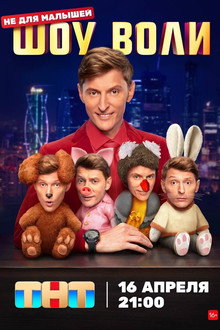
Volya's Show
Every week Pavel Volya, together with invited guests — stars and ordinary people — will sum up the past week in the best traditions of TNT. Viewers will be treated to a discussion of the most interesting events of the past week, interactive events with celebrities, absurd contests, unexpected musical experiments and much more.

Improvisation

Женский Форум

Comedy Woman
Women celebrities entertain the audience with their comical acts and satirical comments on various topics like relationships, fashion and lifestyle.

The Masked Singer Russia
The Masked Singer (Russian: Маска, romanized: Maska, lit. 'Mask') is a Russian reality singing competition television series based on the Masked Singer franchise which originated from the South Korean version of the show King of Mask Singer. It premiered on NTV on 1 March 2020.

Natal Chart
In which the hosts analyze the guest’s natal chart. Olesya very much believes in this, but Dima very much doubts it. Who is right is up to the guest to decide.
Star Factory
Fabrika Zvyozd, sometimes known internationally as Star Factory, is a popular Russian television talent show that aired on Channel One from 2002 until 2007. It was the Russian version of the Endemol format Operación Triunfo.