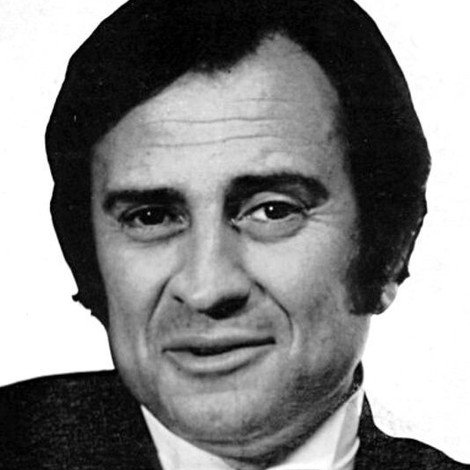
Personal Info
Known For
Gender
Birthday
Place of Birth
Georges Descrières
Biography
Known for

Sacrée soirée

Le Grand Échiquier
Le Grand Échiquier is a French variety television program created and presented by Jacques Chancel. It aired at 8:30 pm on the first channel of the ORTF from January 12, 1972 to July 12, 1972, then on the second color channel of the ORTF from September 1972 to December 1974, and finally on Antenne 2 from January 1975 to December 21, 1989. The program returned to France 2 on December 20, 2018 and is hosted by Anne-Sophie Lapix.

Discorama

At Theatre Tonight
At Theater tonight is a TV show broadcasted from 25th August 1966 to 21st September 1985. The show is broadcast plays recorded in two or three days, during public performances at the Théâtre Marigny on the Champs-Élysées, or sometimes Edouard VII theater.

Samedi soir

30 millions d'amis

Arsène Lupin
Arsène Lupin is a French TV show which was co-produced with German, Canadian, Belgian, Dutch, Swiss, Italian and Austrian TV stations. It was only loosely based on Maurice Leblancs novels. Georges Descrières' portrayal of Arsène Lupin showed more similarity to Graf Yoster than to Maurice Leblanc's original. He behaved in the first place as a perfect gentleman who never got angry. He was always relaxed, because whatever could possibly had bothered him in daily life was taken care of by his butler. It wasn't questioned how he had come to his financial independence although the series sometimes discreetly implied that he was a professional criminal. Besides rescuing damsels in distress Lupin took on criminals, competing with their wit and intelligence. Either he stole paintings from rich people who had to be considered white-collar criminals or he acted as a detective who derailed criminal schemes. However, when he was attacked, he could defend himself effortlessly by using elegant jujutsu methods. Among the guest stars were German actors such as Günter Strack and Sky du Mont. Jean-Paul Salomé said in his commentary on the DVD version of his film Arsène Lupin he had like this series as a child. German TV, one the investors, would broadcast the show eventually between 18:00-20:00 o'clock because it was only allowed to show commercials within that very timeslot. For them to get a financial return on investment the show had to be appropriate for families and also for children who would watch it alone. Subsequently it was nearby to ask to defuse and flatten some of Leblanc's plots in order to avoid possible complaints that could force the station to broadcast the show beyond the "Vorabendprogramm".

Schulmeister, l'espion de l'Empereur
Schulmeister, l’espion de l’empereur (Schulmeister, the Emperor's Spy) is a French historical adventure television series consisting of 13 episodes (1971–1974), inspired by the real life of Charles Louis Schulmeister, a famous spy in the service of Napoleon I. It alternates between historical facts and fiction, offering a fictionalized portrait of a cunning spy, loyal to Napoleon, and always ready to turn a situation to his advantage.

the famous escapes
From Bonaparte to Casanova, history is cast in the light of famous escapes from various European countries.

Le Misanthrope
Alceste hates all of humanity, denounces its hypocrisy, cowardice and compromise. But he nevertheless loves Célimène, flirtatious and slanderous. The virtuous thus launches into battles lost in advance which force him to flee.

La Comédie-Française
La Comédie-Française

Molière pour rire et pour pleurer
Molière pour rire et pour pleurer recounts the life of Jean‑Baptiste Poquelin, from his childhood in an artisan family to his rise as Molière, a central figure of French theatre. The series shows his difficult decision to abandon the family trade and join Madeleine Béjart to found L’Illustre Théâtre, marked by debts and repeated setbacks. While touring the provinces, he shapes his style and discovers the power of comedy. Back in Paris, he makes a name for himself with Les Précieuses ridicules, but his sharp satires provoke fierce opposition, especially during the Tartuffe scandal. Supported by Louis XIV, he continues despite attacks, literary rivalries, and tensions within his troupe, particularly with Armande Béjart. The miniseries also follows his growing exhaustion, his determination to perform at any cost, and his final breath after Le Malade imaginaire, the ultimate symbol of an artist who lived — and died — for the stage.

TV Story Superstar

Le Chef de famille
The head of the family is a beautiful and independent woman who lives with her mother Isa, grand-mother Liane, aunt Teresa. The tribe spends holidays in the countryside. Everyone carries his issues, despite the pleasure to be together.