
Personal Info
Known For
Gender
Birthday
Place of Birth
Felix Bressart
Biography
Known for
Ninotchka
A stern Russian woman sent to Paris on official business finds herself attracted to a man who represents everything she is supposed to detest.

Ziegfeld Girl
Discovery by Flo Ziegfeld changes a girl's life but not necessarily for the better, as three beautiful women find out when they join the spectacle on Broadway: Susan, the singer who must leave behind her ageing vaudevillian father; vulnerable Sheila, the working girl pursued both by a millionaire and by her loyal boyfriend from Flatbush; and the mysterious European beauty Sandra, whose concert violinist husband cannot endure the thought of their escaping from poverty by promenading her glamor in skimpy costumes.

The Shop Around the Corner
Two employees at a gift shop can barely stand one another, without realising that they are falling in love through the post as each other's anonymous pen pal.

To Be or Not to Be
During the Nazi occupation of Poland, an acting troupe becomes embroiled in a Polish soldier's efforts to track down a German spy.

Greenwich Village
In 1922, a would-be classical composer gets involved with people putting on a musical revue.
Portrait of Jennie
In Depression-era New York, painter Eben Adams despairs at his lack of success. One cold winter evening in Central Park, he meets enigmatic, old-fashioned Jennie Appleton, who captures his fancy when she asks him to wait for her to grow up. Soon after, Eben sells a sketch of Jennie to kindly art dealer Miss Spinny and, as he meets the oddly mutable Jennie in fleeting moments, begins to realize they share a special destiny.
The Office Manager

Old Song
A romantic drama about a relationship between people of different social classes. The young baron, who is in love with a record shop saleswoman, is sent by his family on a diplomatic mission to Budapest, where he loses his heart to a beautiful noblewoman. His remorseful, hasty return to Vienna brings tragedy.
I've Always Loved You
A beautiful young concert pianist is torn between her attraction to her arrogant but brilliant maestro and her love for a farm boy she left back home.
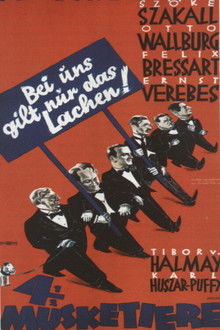
Four and a Half Musketeers
A Hungarian-Austrian comedy and one of the last emigrant films made in Austria before the industry submitted to pressure from Nazi Germany and ceased to employ Jewish filmmakers.

Excursion into Life
Felix Bressart, later one of the most delightful members of the Ernst Lubitsch "stock company," plays the title character in the Austrian comedy Hirsekorn Greift Ein (Hirsekorn Does Something About It). It's a typical worm-turns affair, as a mild-mannered provincial actor ends up working as a chauffeur for a scatterbrained female novelist. Slapstick is the order of the day, except in the scenes involving heroine Charlotte Susa. Guiding the actors through their paces was Rudolf Bernauer, a stage actor-manager of vast experience. Critics in 1931 felt that Hirsekorn Greift Ein was too thin to be stretched to 90 minutes.
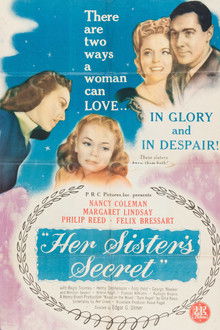
Her Sister's Secret
A WWII tale of romance that begins during New Orlean's "Mardi Gras" celebration when a soldier and a girl meet and fall in love. He asks her to marry him but she decides to wait until his next leave. He is sent overseas and she does not receive his letter and feels abandoned, but she does find out she is pregnant. She gives the child to her married sister and does not see her child again for three years. She returns to her sister's home to reclaim the child, and the soldier, who has been searching for her, also turns up. The sister is not interested in giving up the child. Written by Les Adams

A Song Is Born
The story of seven scholars in search of an expert to teach them about swing music. They seem to have found the perfect candidate in winsome nightclub singer Honey Swanson. But Honey's gangster boyfriend doesn't want to give her up.

Blossoms in the Dust
Edna marries Texan Sam Gladney, operator of a wheat mill. They have a son, who is killed when very young. Edna discovers by chance how the law treats children who are without parents and decides to do something about it. She opens a home for foundlings and orphans and begins to place children in good homes, despite the opposition of "conservative" citizens, who would condemn illegitimate children for being born out of wedlock. Eventually Edna leads a fight in the Texas legislature to remove the stigma of illegitimacy from birth records in that state, while continuing to be an advocate for homeless children.
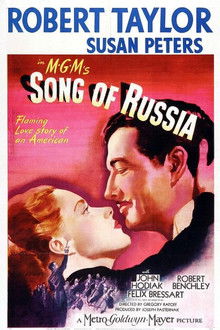
Song of Russia
American conductor John Meredith and his manager, Hank Higgins, go to Russia shortly before the Nazi invasion of the Soviet Union. Meredith falls in love with beautiful Soviet pianist Nadya Stepanova while they travel throughout the country on a 40-city tour. Along the way, they see happy, healthy, smiling, free Soviet citizens, blissfully living the Communist dream. This bliss is destroyed by the German invasion.