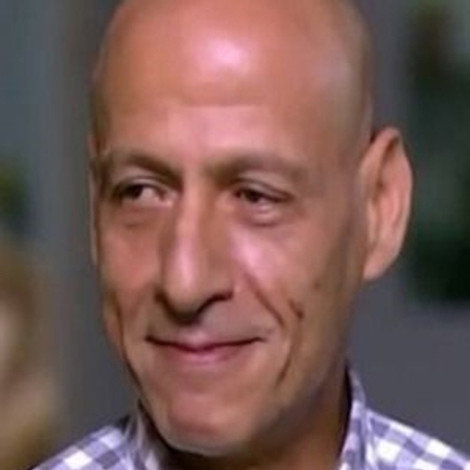
Personal Info
Known For
Gender
Birthday
Place of Birth
Roshdy El Shamy
Biography
Known for

Al-Gama'a
Al-Gama'a is an Egyptian television drama, Historical and Political drama series written by Wahid Hamid, directed by Mohammed Yasin and produced by Kamel Abu Ali. The series began filming in January 2010 with a budget of 50 million Egyptian pounds. The show deals with the rise of the Muslim Brotherhood, Egypt’s largest Islamist political group, which was officially banned but nonetheless tolerated to an extent before the revolution. Critics have decried the show's pro-government stance, charging that it plays into the Egyptian government's agenda prior to the 2010 Egyptian parliamentary elections.

Om Kulthum
Throughout its episodes, the series narrates the biography of the Arab singing lady (Umm Kulthum) since her inception in Sinbillawain and her journey with her father and siblings in singing religious songs on all occasions, through her artistic career and her move to stability in Cairo, and the stories of love that she went through during her life, and her artistic glory until she mastered The lyric scene in Egypt, and the crises she encountered during her artistic work and social life.

Days
Riad raises his orphaned niece, Abeer, as his own. But tensions flare between Abeer and his greedy wife, who tries to keep her away at all costs.

The Tiger
After an accident cost him his memory; Nimr finds himself involved and his life has become a part of the life of Egypt's biggest gold merchant as he tries to discover his identity.

Touba
After letting go of his criminal past and settling in a new city to start over, young Touba's life turns upside down when a person from his past appears and allies with his worst enemy.

Tayee
An Egyptian doctor becomes a police informant and uses his rare gift of tracking ancient artifacts in the smuggling business.

Sunset Oasis
The story revolves around the Egyptian police officer (Mahmoud Abdel-Zaher), who is transferred to the Siwa Oasis with his foreign wife, Catherine, who is passionate about Egyptian antiquities. Together they begin a new experience where the past blends with the present.

Misyou Ramadan Mabrouk Abul-Alamein Hamouda
The series revolves around the teacher of the first Arabic language, Professor Ramadan (Mohamed Heneidy), who lives in a rural village called Mitt Bariz, who is very loved by the people of the village and tries to exploit their love to illuminate their insight into what the mayor and the People's Assembly member asked about this village of corruption. In the midst of events, he goes to France and some comic paradoxes occur.

Al-Qahera : Kabul
Through three intertwining tales, the series sheds light on the terrorist acts taking place in the Arab region, especially Egypt, through the stories of the terrorist Ramzy, the police officer Adel who faces off against him, and the broadcaster Tarek Kassab who reports the events to the audience.

Taht El Wesaya
In the face of a patriarchal society, Hanan, a recently widowed mother of two, will do anything to keep custody of her children—even if it means becoming a fisherwoman.

Sodfa
Sodfa carries a dangerous secret that she seeks to hide from everyone, but her relationship with Mahran pushes her to reveal this secret, which makes him pursue her to find out the truth.

Equitable Division
It follows the struggle of three brothers over the property and wealth of their living father, while their only sister stands between their rising ambitions, leaving the ending hanging by the question: Who wins in this family conflict?

Mandatory Path
When a murder brings them together, Hussein and Ali, who have just discovered that they are brothers, must put their differences aside in order to solve the case.

Fi Kol Osboa' Youm Gom'a
Hoping to leave her past behind and start anew, Laila strikes a deal that prompts her to marry and live with Emad, a mentally-challenged man. However, their life together gets complicated when henious crimes take place at their living place each Friday.

Hady Moon
Hadi suffers memory loss due to an accident, and his personality seems to change every time the moon appears.