Personal Info
Known For
Gender
Birthday
Place of Birth
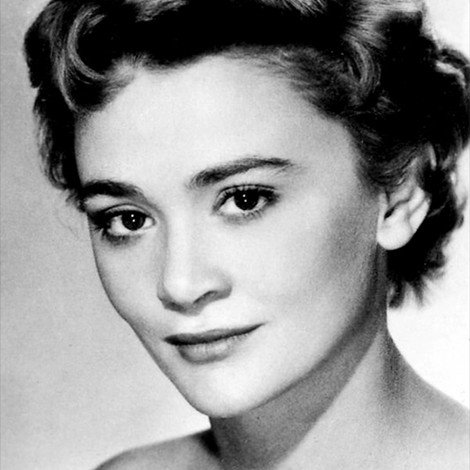
Danièle Delorme
Biography
Known for

Vivement dimanche

Spécial cinéma
Marcello Mastroianni, Isabelle Adjani, Alain Delon, Martin Scorsese, Woody Allen... the biggest stars in cinema were welcomed by Christian Defaye on his show Spécial cinéma. Between intimate confessions from actors and immersion in the world of the greatest filmmakers, Christian Defaye took viewers on a journey into the fascinating world of cinema for nearly thirty years.

Midi trente

Le Grand Échiquier
Le Grand Échiquier is a French variety television program created and presented by Jacques Chancel. It aired at 8:30 pm on the first channel of the ORTF from January 12, 1972 to July 12, 1972, then on the second color channel of the ORTF from September 1972 to December 1974, and finally on Antenne 2 from January 1975 to December 21, 1989. The program returned to France 2 on December 20, 2018 and is hosted by Anne-Sophie Lapix.

Cinépanorama

Mafiosa
By the will of her dead uncle who was murdered Sandra Paoli is propelled to the head of a powerful mafia clan. She becomes a respected, but also hated, woman in a world of men, murder and criminality.

Cléo from 5 to 7
Agnès Varda eloquently captures Paris in the sixties with this real-time portrait of a singer set adrift in the city as she awaits test results of a biopsy. A chronicle of the minutes of one woman’s life, Cléo from 5 to 7 is a spirited mix of vivid vérité and melodrama, featuring a score by Michel Legrand and cameos by Jean-Luc Godard and Anna Karina.

La Joie de vivre

Belle
Mathieu Grégoire is an esteemed author who lives in Spa with his wife and daughter and leads a carefully structured life. One day, while out in the desolate landscape of the High Fens he meets a mysterious woman whom he calls 'Belle'. An obsessive passion is kindled in Mathieu and in a short space of time he loses all control over his existence.

The Bamboo Incident
A young Vietnamese boy's life is thrown into turmoil by the war raging in his country. The ten year old remains with his mother and baby sister as his father goes off to fight for the Viet Cong. During his father's absence, his mother dies from overwork and the inability to find proper medical care for her illness. He cares for his baby sister and struggles to earn a living by shining shoes and doing other odd jobs before his father returns. Both an American soldier and a Viet Cong regular are shown defending their country's political agenda. Also shown are guerilla tactics and bombings in this feature directed by veteran combat photographer Raoul Coutard.

The Healer
Pierre Laurent, a former doctor, has established himself as a renowned healer in Brittany. A young girl, Isabelle, who follows his results with admiration, declares her love for him and becomes engaged. The reactions of his former colleagues bring Pierre before the courts. A misunderstanding with Isabelle thwarts the wedding plans. Later, the young girl, suffering from a brain tumor, allows herself to be cured by the healer. Pierre does not cure her, but leads her to her death without suffering.


Neither Seen Nor Recognized
In a small French village, everything would be quiet if the local wildlife cop was not being ridiculed by a smart poacher.

Twilight
At the beginning of the 20th century, the destiny of Félicie Nanteuil, a young girl from the provinces who became a big star on the stage thanks to a comedian who committed suicide out of love for her.

The J3
During the Second World War, in occupied Paris, a group of high school students is more active at selling cigarettes and silk stockings than at studying. But the day a new philosophy teacher takes charge of their class, things begin to change. It must be said that Mademoiselle Bravard is not only a gifted educator but a charming young woman as well. Thanks to her, all the students end up passing their finals.