Personal Info
Known For
Gender
Birthday
Place of Birth
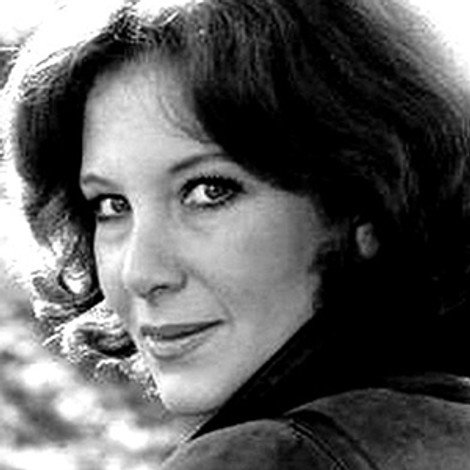
Anouk Ferjac
Biography
Known for

Cinépanorama

Graf Yoster gibt sich die Ehre
Graf Yoster gibt sich die Ehre [French title: Le comte Yoster a bien l'honneur] is a TV series which followed the adventures of the title’s amateur gentleman detective. It was a success in particular in Germany and in France. Originally the show was a German production in black-and-white but it evolved into a European co-production in colour.

Nestor Burma
Cynical private detective Nestor Burma investigating murders, missing persons, kidnapping and extortion cases in every arrondissement of Paris.

A Lover's Return
A ballet producer returns to his native town and schemes to avenge himself on the family who tried to murder him 20 years before.

Henry James Stories
A French-language anthology of seven famous, fantastic, and psychological stories by beloved American author Henry James.

Dom Juan
This telefilm in black and white is diffused on the first French chain the November 6th 1965. It undoubtedly remains the most known adaptation of the Dom Juan of Molière.

Piaf
Édith Giovanna Gassion is born in 1915. As a young girl she sings on the streets of Paris until a nightclub owner, Louis Leplée, discovers her. When he is murdered the composer Raymond Asso takes care of her and lets her perform at the ABC theatre, which leads to her breakthrough.

Je T'Aime, Je T'Aime
Recovering from an attempted suicide, a man is selected to participate in a time travel experiment that has only been tested on mice. A malfunction causes the man to experience moments from his past in a random order.
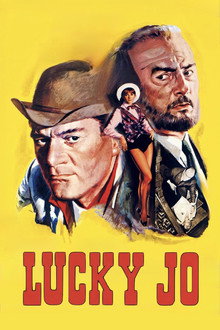
Lucky Jo
Lucky Jo and his three friends are little criminals, who try to live from small burglaries. But they never have luck - ever so often something inpredictable happens to Jo and gets one of them arrested. While Jo is in prison once again, they decide they'd better do without him in future. He decides to help them secretly...and unfortunately.

L’espionne sera à Nouméa
A young woman is forced into espionage so that her father can escape blackmail. The love of an aviator helps her regain her freedom and secure the arrest of the members of the network, whose leader commits suicide before the police arrive.

This Man Must Die
When his young son is killed in a hit and run accident, Charles Thenier resolves to hunt down and murder the killer. By chance, Thenier makes the acquaintance of an actress, Helène Lanson, who was in the car at the time of the accident. He then meets Helène’s brother-in-law, Paul Decourt, a truly horrible individual.

We Are All Murderers
Originally titled Nous Sommes Tout des Assassins, We Are All Murderers was directed by Andre Cayette, a former lawyer who detested France's execution system. Charles Spaak's screenplay makes no attempt to launder the four principal characters (Marcel Mouloudji, Raymond Pellegrin, Antoinine Balpetre, Julien Verdeir): never mind the motivations, these are all hardened murderers. Still, the film condemns the sadistic ritual through which these four men are brought to the guillotine. In France, the policy is to never tell the condemned man when the execution will occur--and then to show up without warning and drag the victim kicking and screaming to his doom, without any opportunity to make peace with himself or his Maker. By the end of this harrowing film, the audience feels as dehumanized as the four "protagonists." We Are All Murderers was roundly roasted by the French law enforcement establishment, but it won a special jury prize at the 1952 Cannes Film Festival.

La Traversée de Paris
Two unlikely companions must smuggle four suitcases filled with contraband pork across Nazi-occupied Paris.
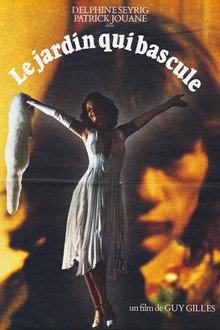
The Garden That Tilts
Karl, a young killer is to kill Kate, an adventurous lady living in a mansion by a lake. He approaches her but fails to kill her. Instead, he falls in love and becomes her lover ...
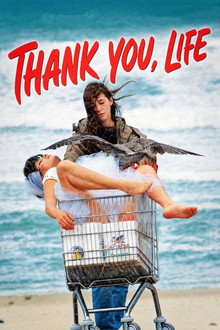
Thank You, Life
Camille, a naïve schoolgirl, meets an intriguing influence in Joelle, a slightly older and much more experienced spirit. Camille follows her new friend through the discovery of sex and the darker side of life. As the film progresses, Camille discovers AIDS and the fear that she may have picked up the disease in her early encounters.