Personal Info
Known For
Gender
Birthday
Place of Birth
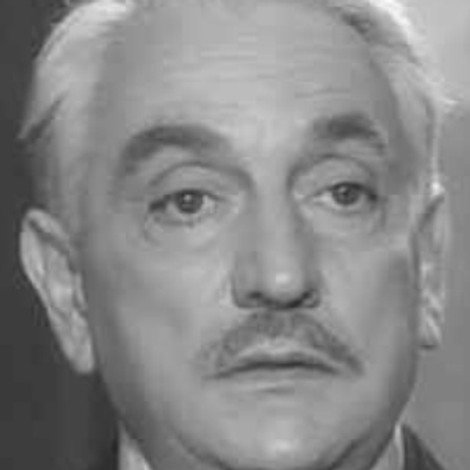
Jean-Paul Moulinot
Biography
Known for

Champs-Elysées

Graf Yoster gibt sich die Ehre
Graf Yoster gibt sich die Ehre [French title: Le comte Yoster a bien l'honneur] is a TV series which followed the adventures of the title’s amateur gentleman detective. It was a success in particular in Germany and in France. Originally the show was a German production in black-and-white but it evolved into a European co-production in colour.

Paris Vice Squad
Identite Judiciare stars Raymond Souplex as wily French police inspector Basquier. The villain is Berthet (Jean Debucourt), a high-ranking government official. Basquier suspects that Berthet is a vicious murderer, but is unable to prove anything thanks to bureaucratic interference. Thus, the good inspector plays a waiting game a la Columbo, hoping for that one fatal slip on the part of the killer. Certain portions of Identite Judiciare proved a bit too intense for American audiences, and were accordingly snipped by the censors.

the famous escapes
From Bonaparte to Casanova, history is cast in the light of famous escapes from various European countries.

Molière pour rire et pour pleurer
Molière pour rire et pour pleurer recounts the life of Jean‑Baptiste Poquelin, from his childhood in an artisan family to his rise as Molière, a central figure of French theatre. The series shows his difficult decision to abandon the family trade and join Madeleine Béjart to found L’Illustre Théâtre, marked by debts and repeated setbacks. While touring the provinces, he shapes his style and discovers the power of comedy. Back in Paris, he makes a name for himself with Les Précieuses ridicules, but his sharp satires provoke fierce opposition, especially during the Tartuffe scandal. Supported by Louis XIV, he continues despite attacks, literary rivalries, and tensions within his troupe, particularly with Armande Béjart. The miniseries also follows his growing exhaustion, his determination to perform at any cost, and his final breath after Le Malade imaginaire, the ultimate symbol of an artist who lived — and died — for the stage.

La Commère

Death, Where Is Your Victory?
Feeling complicit in a heinous act of her husband, a woman sinks into decay, then recovers and becomes a nun

La Belle et son fantôme

OSS 117 Is Unleashed
An American agent disappears after a scuba diving reconnaissance mission in Corsica. The Secret Service sends agent code name OSS 117 to investigate.

We Are All Murderers
Originally titled Nous Sommes Tout des Assassins, We Are All Murderers was directed by Andre Cayette, a former lawyer who detested France's execution system. Charles Spaak's screenplay makes no attempt to launder the four principal characters (Marcel Mouloudji, Raymond Pellegrin, Antoinine Balpetre, Julien Verdeir): never mind the motivations, these are all hardened murderers. Still, the film condemns the sadistic ritual through which these four men are brought to the guillotine. In France, the policy is to never tell the condemned man when the execution will occur--and then to show up without warning and drag the victim kicking and screaming to his doom, without any opportunity to make peace with himself or his Maker. By the end of this harrowing film, the audience feels as dehumanized as the four "protagonists." We Are All Murderers was roundly roasted by the French law enforcement establishment, but it won a special jury prize at the 1952 Cannes Film Festival.

Ce diable d'homme
This devil of a man plunges the viewer into the very heart of the Voltaire whirlwind, that incandescent mind who shook his century. The series follows his meteoric rise, his exiles, his battles and flashes of genius, in a Europe still tightly bound by absolutism. We discover an unbowed, charming, formidable man whose pen makes ministers, kings and fanatics tremble. Between glittering salons, damp prisons and passionate loves, Voltaire crosses the Age of Enlightenment like a meteor. Each episode reveals a confrontation, a flight, a victory wrested through the sheer force of intellect. Carried by elegant direction and a sweeping, novelistic energy, the series paints a vibrant portrait of a fighter for freedom. A journey into the life of a man who never stopped thinking, loving and provoking.

Under the Sign of the Bull
Albert is an eccentric inventor of missiles who comes under fire from his investors when his first prototype explodes. Even his sympathetic mistress has her doubts, as Albert lashes out in a verbal tirade condemning those of little faith in his genius.

The Fire Within
Depressed Alain Leroy leaves the clinic where he was detoxified. He meets friends, acquaintances and women, trying to find a reason to continue living.

The Devil and the Ten Commandments
The film consists of seven roughly 15 minute episodes, each showing what will happen if one or more of the Ten Commandments will be broken: Jérome Chambard is warned that he will lose his job if he continues to swear; Françoise Beaufort enamored of a stripper calls on her only to find her married to a janitor who doesn't know what kind of dancing his wife performs; Denis, a Jesuit novice, leaves the order to avenge his sister's suicide, which was provoked by Garigny, who seduced her into prostitution and drug addiction; Philip buys a necklace for Micheline though he is bored with her; a young man find out that his real mother is not Madeleine, but actress Clarisse Ardant; Didier Marin, cashier of a bank, was fired by his boss; the Devil appears as a serpent for Jérome Chambard and the bishop are eating.

Behold a Pale Horse
Manuel Artiguez, a famous bandit during the Spanish civil war, has lived in French exile for 20 years. When his mother is dying he considers visiting her secretly in his Spanish home town. But his biggest enemy, the Spanish police officer Vinolas, prepared a trap at the hospital as a chance to finally catch Artiguez.