
Personal Info
Known For
Gender
Birthday
Place of Birth
Yelizaveta Nikishchikhina
Known for

Fuse
Fitil is a popular Soviet/Russian television satirical/comedy short film series which ran for about 500 episodes. Some of the episodes were aimed at children, and were called Фитилёк, Fitilyok, Little Fuse. Each issue contained from the few short segments: documentary, fictional and animated ones. Directed by various artists, including Leonid Gaidai who presented his famous trio of Nikulin, Vitsin and Morgunov into the cast. It was called in USSR as "the anecdotes from the Soviet government".

Yeralash
The children's humorous film magazine "Yeralash" is a one-of-a-kind work of cinematography that ironically approaches the solution of everyday problems, focusing on the views and needs of modern society, allowing different generations to achieve mutual understanding.
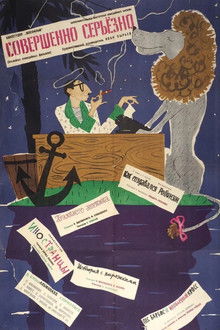
Sovershenno seryozno
An interesting voyage through the Soviet television and film industry.
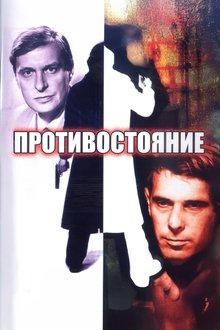
Confrontation
Operatives are looking for a killer who has appropriated someone else's identity. The story of a real case based on the story of Yulian Semyonov.
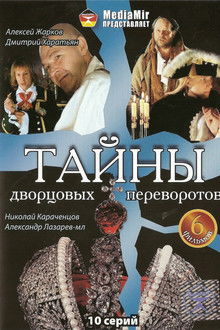
Secrets of Palace Coups
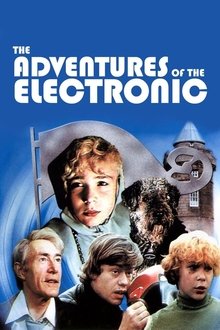
The Adventures of the Electronic
A Soviet scientist creates a brilliant robot. This is a boy who is able to solve any mathematical problems, he writes the best essays and sings perfectly! And he is also an exact copy of schoolboy Seryozha Syroezhkin. A clever boy quickly shifts all his duties to an electronic double. He does his homework for him, goes to school and does household chores that his parents entrust to Syroezhkin...
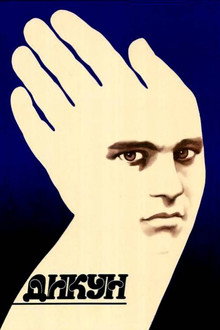
Savage
The movie is set in the early fifties in a provincial Uzbek town. Fear and alienation have penetrated this once cozy town. The hero of the film, teenager Alik, once witnesses a boorish act of a neighbor who made a dizzying career out of denunciations. Standing up for a helpless woman, the young hero, thereby signing his own verdict.
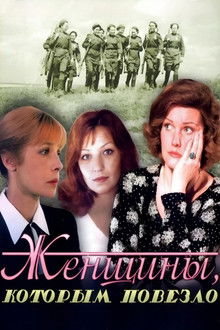
Women Who Got Lucky
Plot revolves around the post-war decades and tells about the fate of former participants of the Great Patriotic War - Vera Boglyuk, Nina Verkhovskaya, Dusya Koroleva, Zina Skvortsova and Natasha Druzhinina.
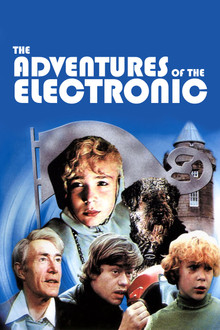
The Adventures of the Electronic
Professor Gromov constructs a robot called Electronic, which looks exactly like Sergey Syroezhkibn, a 6-grader from one of Odessa (USSR) schools. The robot also acts a lot like a human, and its dream is to become a real man. Electronic escapes from the professor's lab and accidentally meets Sergey, his prototype. Meanwhile, a gang lead by Stump is trying to kidnap Electronic to make him steal pictures from museums. For this purpose they send their hitman Urrie.
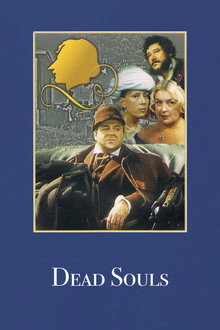
Dead Souls
Pavel Ivanovich Chichikov plans to buy the titles to “dead souls” and use them as collateral to obtain a large loan. He comes to a small provincial town and begins to proposition the local landowners. These landowners are revealed to be so petty and avaricious that not even Chichikov’s amazing offer can be worked to his advantage on them. Some stall, some refuse for no obvious reasons, some promise and then renege, and others want “in on the deal.” In the end, Chichikov, having concluded that the landowners are a hopeless lot, leaves for other regions.

The Princess and the Beans
A wealthy businessman tries to change his not so good sounding last name by marrying the heir of aristocratic family.
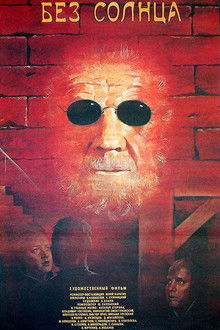
Without Sun
“Without the Sun” is the first name that Gorky himself gave to his play and which most closely matches its essence. For this work is not about the "day" and its people, but about the indestructible, passionate desire of people from darkness to light, to the sun. "
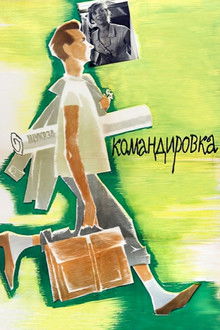
Business Trip
Agricultural machinery design engineer Mikhail Shcherbakov goes to the countryside instead of taking a vacation. The tractor designed by him does not work in one of the collective farms. Circumstances force him to stay much longer than he expected. Here he meets Klava, who works in the apiary. And far from being on official business, the engineer remains on the collective farm.

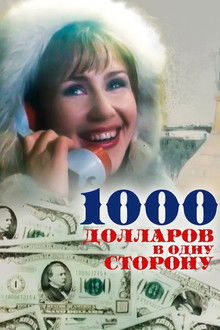
1000 Dollars One Way
It would seem that nothing is keeping the main character in Ivanovsk, especially since her sister Tamarka has settled well in Chicago and has been calling her for a long time. But she doesn’t go to America and doesn’t even want to.