
Personal Info
Known For
Gender
Birthday
Place of Birth
Omero Antonutti
Known for

Life Is Beautiful
A touching story of an Italian book seller of Jewish ancestry who lives in his own little fairy tale. His creative and happy life would come to an abrupt halt when his entire family is deported to a concentration camp during World War II. While locked up he tries to convince his son that the whole thing is just a game.

L'isola
A father accompanies his son on a trip to the sea, more precisely in the places of childhood, but a bad disease will recur in a more incisive way.

Under Flag
Argentina: 1969: Major Molina has been sent to a military outpost in southern Patagonia to investigate the brutal murder of soldier Lito. The harsh weather conditions of Patagonia reflect the strict and cruel way in which the Colonel Hellman and his officers direct the garrison. Gradually comes to light that Lito was drugged by a fellow, Reppeto, and therefore was unable to participate in an unexpected military exercise at night. For his "disobedience", Lito was beaten to death. Molina seeks justice, aided by the deceased's family and the village priest. However, he is forced to abandon the case when the military forces take the power in Buenos Aires. Years later, with democracy finally restored in Argentina, the case will be reopened causing the abolition of military service and the military justice system.

Fátima
1917, a beautiful apparition of Our Lady forever alters the lives of three children: Lucinda, Jacita and Francisco who lived in Villa Fatima in Portugal.

The Deserter
In this tragic story that has an unrealized potential to tug at the emotions, a woman in mourning for her two sons lost in World War I is the only one in her village determined to financially support a war memorial. The village poor have too little money, and the richer are tight-fisted. She has given a whole 15 years of savings -- yet the good priest, for whom she works as a maid, is not enthusiastic about her action because he is worried that the memorial will not remind the villagers of past horrors and suffering but disguise the human cost of war in rhetoric. As the memorial's advocates begin to sustain the day, flashbacks show how the woman's youngest son shot his captain, deserted the army, and came to die of fever while in his mother's care. The priest helped her as much as possible, yet he feels compelled to tell the authorities that her son was a deserter.

Verdi
Giuseppe Verdi was born in 1813 and lived until 1901, his life spanning nearly a century of political turmoil and considerable personal turmoil. This 1982 biographical television miniseries, as seen on PBS's Great Performances, dramatizes the life of this classic Italian composer known for operas including La Traviata, Rigoletto, and Aida and his Requiem.

Bankomatt
With three of his companions in a fatal gas-station robbery drowned while evading a police roadblock, the surviving young thug has no reason to turn himself in to the police, since they don't know about his existence. At least, that's the way his rescuer Bruno (Bruno Ganz) sees it. Besides, Bruno needs such an overly enterprising fellow to help him pull off a really big heist that he's been planning for a long time. It takes some doing, but the boy and his girlfriend are recruited by the older man, who has been keeping a low profile by working as a gardener.

A King for Burning
In 1534, the legendary Jan van Leyden, an Anabaptist, preaches in Münster, causing Catholics and Protestants alike to defect in droves—especially women. This leads to a bloody power struggle between the Anabaptists, the Church, the nobility, and the citizens, which ends in a long siege of Münster by the prince-bishop Franz von Waldeck.

Quick Trial
After a terrorist attack against a train, the police arrest the young laborer Stefano Baldini, member of a group of militant leftists. Entrusted for interrogation to Sergeant Pendicò and special agents Lorusso and Spasiani, Stefano dies, after four days, in unclear circumstances. Doubting the official version of the police, the second time in which a young person died in custody, journalist Cristina Visconti tries, with the aid of the sister of Stefano, to discover the truth. They rub up against a conspiracy of silence that encircles the acts of Pendicò and his associates. Frustrated beyond reason, Cristina tries a desperate ploy: publishing a story without evidence in the newspaper, accusing the three agents of having caused the death of Stefano with their blows. Cristina is put on trial for defamation. Can she avoid going to jail and also reveal the facts surrounding Stefano's death?

Kaos

Piazza Fontana: The Italian Conspiracy
On December 12, 1969, a bomb kills 17 people at the Piazza Fontana national bank in Milan, Italy, marking the beginning of the Years of Lead. Local anarchists are scapegoated for the massacre by police and the media, but a lone prosecutor uncovers a conspiracy of far-right groups, corrupt secret services, and other interests that seek to undermine democracy.

Miracle at St. Anna
Miracle at St. Anna chronicles the story of four American soldiers who are members of the all-black 92nd "Buffalo Soldier" Division stationed in Tuscany, Italy during World War II.

Padre Padrone
The true story of the life of Gavino Ledda, the son of a Sardinian shepherd, and how he managed to escape his harsh, almost barbaric existence by slowly educating himself, despite violent opposition from his brutal father.

Ombre
Elena Serpieri is an Italian neurologist who is in the United States, because she obtained a scholarship in a New York hospital. There she works together with the FBI on the profile of a dangerous serial killer.
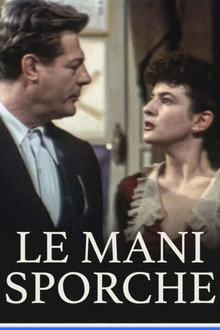
Dirty Hands
The story is set in Illyria, fictional central European country, towards the end of World War II. A young man infiltrates into the house of a left-wing politician as his secretary. By order of the Communist party, the young man has to kill the politician, who is suspected of a strategy of compromise with other parties.