Personal Info
Known For
Gender
Birthday
Place of Birth
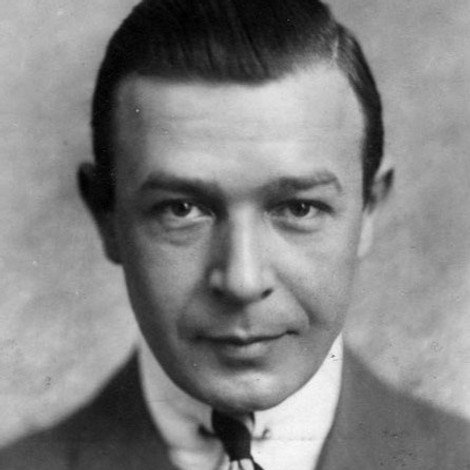
Georg Alexander
Known for

The Double
Jenny confronts her cousin Harry: Did he embezzle her fortune? No. But he escapes with married lover Germaine only to return quickly because her husband pursues them. Jenny is convinced Harry is his own double and arrests him at gunpoint.

Dyckerpotts Erben

My Leopold

Verliebtes Abenteuer
Charming Tom is pursuing fine Olivia both cheerfully and stubbornly. At first, she rejects him brutally; but then she finds pleasure in this intrusive guy, who’s following her everywhere. They spend an evening together; but afterwards, Olivia determines, that a valuable bracelet has been stolen from her. Now she thinks Tom is the infamous jewel thief, who’s been terrorizing the neighborhood.

Modern dowry
Dan Douglas is a typical Scottish. When his niece Evelyne marries engineer Fred Keller aboard the ship to Scotland, he gives her a pearl necklace as dowry, but it's false. The newlyweds face their differences when the necklace gets lost.
Der Millionendieb

The Bat
The delightful Johann Strauss comic opera Die Fledermaus was mercilessly lampooned in this truly bizarre production. For starters, a framing device has been added: After appearing in 300 consecutive appearances of Fledermaus (which translates as The Bat) the lead tenor (Georg Alexander) imagines that he's seeing bats everywhere. Driven a bit over the edge by all this, he falls asleep and has a nightmare about the opera, with a group of non-singers cast in the leading roles. The original libretto about romantic assignations, political imprisonments and mistaken identity is burlesqued to the hilt: at one point, the hero finds out that his prison cell is surrounded by rubber tubes!

The Bird Seller
The film is an adaptation of the 1891 operetta Der Vogelhändler by composer Carl Zeller, with libretto by Moritz West and Ludwig Held, though it incorporates few of the original songs, using them mostly instrumentally or in the background. The plot follows Adam, a Tyrolean bird seller in 18th-century Rhineland, who hopes to marry his beloved Christl, a postmaster's daughter; to secure his future, she arranges for him to perform at court, but complications arise when she is mistakenly suspected of an affair with a philandering prince.
Gelbe Bestien


The rejuvenated Adolar

Opera Ball
The Opera Ball (German: Opernredoute) is a 1931 German musical comedy film directed by Max Neufeld and starring Iván Petrovich, Liane Haid and Georg Alexander. It was part of a large group of operetta films made during the decade, although the film is not based on the operetta Der Opernball. The following year it was remade in French as Beauty Spot. A 1932 British remake After the Ball was also made.

Art of Love
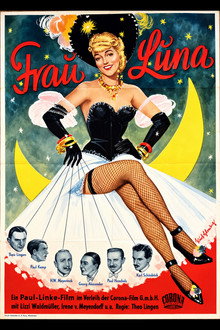
Mistress Moon
Berlin's theatre crowd is excited about the new operetta "Frau Luna". But for the head of the city's vice police, who was invited to the dress rehearsal, the costumes for the ladies onstage are a bit too revealing. He demands the show be cancelled as offensive. The president of the Thusneldenbund has taken it upon himself to alert everyone about the growth of immorality in the capital. The theatre director Knopp has come up with an idea to convince these "fine" gentlemen to let the operetta go onstage again: He intends to win over the friendship of the moral police and then nothing will stand in the way of "Frau Luna" once more being performed.

Wenn Männer verreisen
Ludwig Gruber, the director of a spa café, is a good man. Now and again, he makes little adventure-trips to Berlin to find business for his company. The women he is traveling with have an accident on the highway. Gruber is traveling incognito as “Mr. Rabbit” with Lotte, the leader of the group. Because of the accident, they’ll have to overnight together in a hotel. Since Mr. and Mrs. Rabbit are a “couple”, they’ll be getting a double-room, where they can … mmm … do what rabbits do. Since they both insist on climbing into bed with the lights out, it isn’t until the next morning that they notice they’ve been in the same bed the whole night. In the ensuing chaos, Grube loses his wedding ring, which is later sent to the address of Lotte’s mother, who now insists repeatedly, that he marry her daughter.