
Personal Info
Known For
Gender
Birthday
Place of Birth
Mladen Nelević
Known for
The Nemanjić Dynasty: The Birth of the Kingdom
Story about the most influential Serbian dynasty of the Middle Ages.

Indian Summer
"Miholjsko leto" depicts the everyday life of a home for the elderly. 12 Episodes
Motel Nana
Ivan teaches history in a Belgrade high school. In his class, Ivan is provoked by a student and ends up slapping him on the face. In Serbia, in the heat of transitional changes, Ivan’s presence in school is no longer welcomed. He finds a temporary job opportunity in a war-scarred mountain village in Bosnia. On his way there, he meets Yasmina, a young Muslim woman, back from Germany to her homeland after the war and after being invited by an old friend – Hazim - who now runs a motel. A lone kiss in a stormy night, in a village still lying in ruins, will bring Yasmina and Ivan closer together in a joint escape from reality and to a ride on a dusty bus, where neither one of them wants to sit next to the window.
Local Vampire
When a passive young businessman is conned and thrown into great debts, he and his mother concoct a desperate escape plan - to fake his death, stage a funeral, then hide him out in the attic. When he sneaks out to visit his girlfriend, he is spotted by the neighbors, who jump to the conclusion that he is a vampire risen from the dead. It's not long before the news of a lurking vampire attracts waves of tourists, including some mobsters who aren't completely sold on this whole vampire story.

Heritage
On the occasion of his son's engagement, Ivan and his family go to a friend's house for lunch. At a friendly table, he finds a man from his past who ruined his childhood.

Budva, on the Foam of the Sea
A TV series which depicts the clash of different value systems and mentalities of two Montenegrin families, one from the old city of Budva, and the other from transitional Nikšić.

Boiling
The action takes place in the period from 1930 to 1934. The main protagonist is a so-called “collective hero”, that is, the revolutionary movement of Yugoslavia during the 1930s, although, conditionally speaking, the main hero is Rodoljub Colakovic.

The Great Talent
A group of factory workers is trying to make a theatrical play as amateur production, but political bigwigs want to supress them.

Hide-and-Seek
The story of the fate of boys and girls who go to school on the day of the Victory of Fascism on May 9, 1945. The script is based on true events and tells the fate of the children of the victorious and vanquished in a common environment at the end of World War II in Serbia.
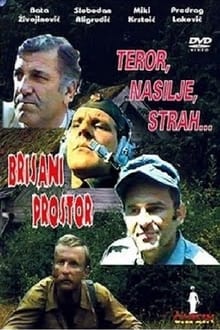
Open Space
Summer of 1972, a small group of fanatical Croatian nationalists, trained and equipped by extreme emigrant organizations, infiltrated the territory of former Yugoslavia with intent to organize an uprising against Tito's regime. This series, very loosely based on true events, depicts the manhunt that followed.
Small Doorway
A family drama about a group of Sarajevo boys from the same block, who do childish pranks and spend their time in one of the basements.
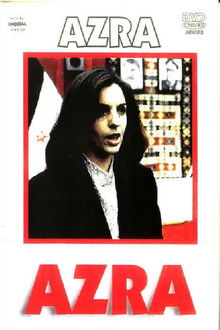
Azra
Azra a woman major in the partisan army, who fought the Germans in World War II, returns to her home village, which she helped to liberate. Although her husband was also a high ranking officer, and their goals were united, she finds it much harder to be accepted back into village and family life.
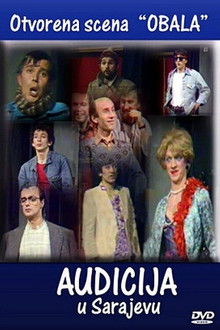
Audition
A cult stage play from the Academy of Performing Arts in Sarajevo, which involves the professor and the gallery of grotesque candidates devoid of any talent who applied for entrance exams.