Personal Info
Known For
Gender
Birthday
Place of Birth
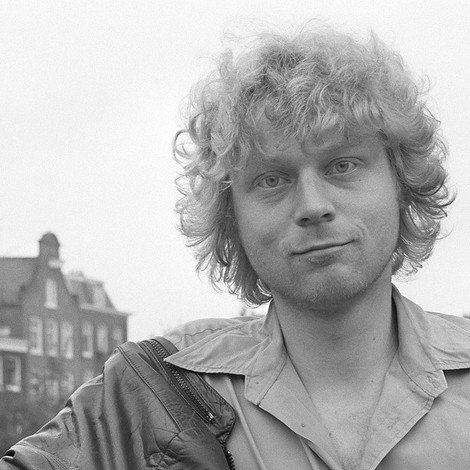
Theo van Gogh
Biography
Known for

Flodder
The misadventures of the anti-social Flodder family living in a upscale suburban neighborhood.

Theo van Gogh: The Yearning
Theo van Gogh yearned for love, attention and freedom. How do his family, colleagues, friends and enemies view the radical way in which he worked and lived? And, twenty years after the murder of Theo van Gogh, how do we relate to the discussions he sparked at the time?

Koos Tak's Lonely War
The miserable adventures of Koos Tak, reporter for newspaper 'De Tijdgeest'

Fortuyn: On-Hollands
What does Pim Fortuyn's legacy mean for the Netherlands today? How have his rise and his assassination changed the political and societal debate on migration? And what does that say about Dutch views on tolerance and diversity? In the eight-part KRO-NCRV documentary series Fortuyn: Un-Hollands, producer mint film office gives a voice to people who were barely heard at the time, but who were right at the center of the Fortuyn debate. Critics, political allies and opponents, men and women, with a bicultural background and white, tell how they experienced the Fortuyn revolt and what influence Pim Fortuyn had – and still has – on their lives and positions in the Netherlands.

The Northerners
A black comedy set in the 1960s in a small Netherlands community, populated by a cast of eccentrics, all of whom hold a range of sexual obsessions and frustrated desires.

Beatrix
Insiders, close friends, and experts talk about the impressive life of Princess Beatrix: the powerful woman, friend, and mother behind the office.

Wintertijd

Moord op Pim Fortuyn
Documentary by BNN about the murder of politician Pim Fortuyn, in which the facts surrounding the murder are viewed as parts of a conspiracy against him. On May 6, 2002, politician Pim Fortuyn was murdered at the Mediapark in Hilversum. Almost immediately thereafter, the perpetrator, Volkert van der G., was arrested. Nevertheless, conspiracy theories still persist claiming that Van der G. was aided in his act. These theories are unveiled using archival material, reconstructions, and animations.

Tadzio
Overstimulated by flamboyant props and distracted by extravagant queens pacing up and down the rooms and corridors, one easily forgets the 18th-century country house serving as the backdrop in Tadzio. Yet this imposing bourgeois mansion was the starting point of it all, as well as the only constraint the directing duo of the short film had to consider. An eminent Dutch cultural critic, Els Hoek, challenged several artists to feature this particular place in an audiovisual artwork. She provided them with a generous budget and left them to do the rest. Three films emerged from her idea – Tadzio among them.

White Madness
The toxic, suffocating relationship between a dominant mother and her estranged son, Lazlo. Lazlo lives a reclusive life in a squat, spending his time painting taxidermied animals and using heroin. When his mother is involved in a serious accident and calls for him, he is forced to confront the world he tried to leave behind, leading to a grim collision between her delusions of control and his self-destructive addiction.
Big Brother VIPS

Eenmotorige Mug
In the early spring of 1997, Theo van Gogh conducted a series of interviews with Willem Oltmans, the man who at the time loudly proclaimed that he had been obstructed by the State of the Netherlands for more than forty years—in particular Foreign Minister Luns, who called Willem Oltmans "the single-engine mosquito." For years, his lament was barely heard in the Netherlands. But around the mid-nineties, a different wind seemed to be blowing, and Oltmans gained an increasingly wider audience. For it turned out he was right; according to hundreds of secret coded telegrams, he had been obstructed for years in an extremely bizarre manner.

The Sequence of Parallel Bars
The film opens with a rubber-clad woman stepping sensuously out of a limousine. The camera lovingly closes-up on her stilletoed foot... She enters a dark desolate warehouse, and meets two men, who proceed to chain her up and worship her body. Originally projected on three screens simultaneously. Music by legendary noise musician Merzbow.

De storm van Balkenende
Balkenende's storm Jan Peter Balkenende discusses his premiership in detail for the first time. For eight years (2002 - 2010) he held the highest political office in The Netherlands.
25 kroonjaren, koningin Beatrix 1980-2005
On the occasion of Queen Beatrix's twenty-fifth anniversary of her reign. In conversations with Professor of Legal Philosophy Dorien Pessers, the Queen reflects on her role in office and discusses the various aspects of her position. The conversations are interspersed with interviews by Pim van Galen with Dries van Agt, Ruud Lubbers, Wim Kok, and Jan Peter Balkenende, the four prime ministers with whom the Queen has worked since 1980, and with archival material from the past twenty-five years. The broadcast is produced by NOS Actueel and hosted by Maartje van Weegen.