Personal Info
Known For
Gender
Birthday
Place of Birth
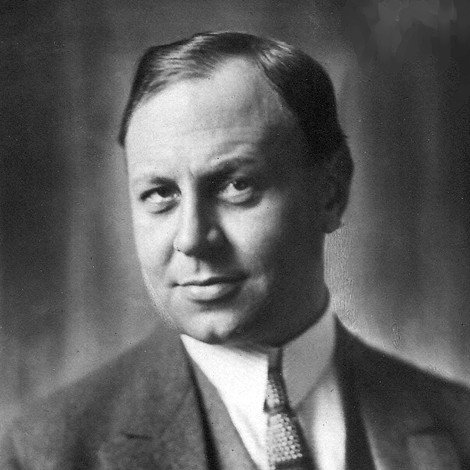
Emil Jannings
Biography
Known for

The Oscars
An annual American awards ceremony honoring cinematic achievements in the film industry. The various category winners are awarded a copy of a statuette, officially the Academy Award of Merit, that is better known by its nickname Oscar.

Betrayal
André Frey, a bohemian artist, woos and wins a rustic Swiss maid, promising to return to her after a visit to the city. The girl, Vroni, finds herself pregnant and is forced by her father to marry Poldi Moser, the mayor of the small Swiss town. Moser and Vroni are happy together, and two sons are born to them. André returns to the village periodically and finally asks Vroni to go away with him. She refuses, and he writes her an angry note. That evening, Vroni and André are involved in a toboggan accident; Vroni is killed outright, and André is fatally injured. Moser finds André's note and goes to him, demanding of the dying man to know which of the boys is in fact André's child. Thinking to protect his own son, André informs Moser that Moser's own son is his (André's) son. Moser swears vengeance on the child but relents when he realizes that he loves both boys equally.

The Tragedy of Love
The husband of Countess Manon Moreau is found murdered. André Rabatin, who belongs to the same club as Count Moreau, is the suspect. Rabatin, a old-school gentleman, affirms his innocence to the widow and claims that the death of the count must have been a tragic accident. Manon believes Rabatin and begins to fall in love with him. But Rabatin himself suspects that she has murdered her husband.

The Last Laugh
An aging doorman, after being fired from his prestigious job at a luxurious hotel, is forced to face the scorn of his friends, neighbours and society.

Faust
Murnau’s epic adaptation of Goethe’s tragedy stands with Fritz Lang’s Metropolis among the supreme achievements of German silent cinema. Gösta Ekman plays the alchemist who, his faith shaken in a time of plague, is offered the gift of healing and eternal youth… in exchange for his soul.

Quo Vadis?
"The Roman Banquet, the golden glories, the unrivaled luxuries, the wine, the dance, the song, the beautiful women, the sumptuous splendors that taxed a barbaric world for a night of feasting and revel-- Re-created for your entertainment in the most colossal drama produced", reads an ad in the Daily Argus of New York. Unione Cinematografica Italiana's lavish production of the oft-told tale stars Emil Jannings as Nero.

Danton
At the height of Reign of Terror Maximilien Robespierre orchestrates the trial and execution of several of his fellow leading French revolutionaries including Georges Danton.

Algol: Tragedy of Power
An alien from the planet Algol gives a man a device that creates enough energy to power the entire world.

The Blue Angel
Prim professor Immanuel Rath finds some of his students ogling racy photos of cabaret performer Lola Lola and visits a local club, The Blue Angel, in an attempt to catch them there. Seeing Lola perform, the teacher is filled with lust, eventually resigning his position at the school to marry the young woman. However, his marriage to a coquette -- whose job is to entice men -- proves to be more difficult than Rath imagined.

The Patriot
In 18th-Century Russia, the Czar, Paul, is surrounded by murderous plots and trusts only Count Pahlen. Pahlen wishes to protect his friend, the mad king, but because of the horror of the king's acts, he feels that he must remove him from the throne.

Traumulus
This film is a fascinating showcase for Emil Janning's theatrical play. He's a gentle school teacher who believes in his boys and is easily fooled about all things, while the other town officials want him dismissed. Curiously it's very hard to see what the film is exactly aiming for. Disaster strikes and the lax prof proves to be too far removed of the real problems of the world, on the other hand his enemies are shown in the most unsympathetic, satirical way denouncing the militaristic, bourgeois ideology of the Kaiserreich.

Der Schädel der Pharaonentochter
A pharaonic tragedy to the content that spans six different eras. In the first episode, the emergence and dramatic end of the love story between the pharaoh's daughter Princess Amnertis and her beloved Tirhaka is told until the latter comes to a violent death. From this drama arises a curse, which in the following episodes has had far-reaching effects over the centuries. Everyone who possesses the skull of the long-lost pharaoh's daughter must die violently until the day the skull is sunk in the sea.

Der letzte Appell

The Street of Sin
"Basher Bill," a retired prizefighter turned criminal, pretends to reform by joining a Salvation Army shelter in London run by a pious wraith named Elizabeth. Attracted to Elizabeth (although he is engaged to a street girl named Annie), Bill confesses to a bank robbery, has a spiritual revelation, and decides to go straight. His cast-off sweetheart reports him to the police; then, contrite, she warns Bill of the impending danger. Bill is captured immediately, but he escapes and sacrifices his life to save Elizabeth and the Salvation Army nursery when the rest of the gang use them as a human barricade against the police.

The Eyes of the Mummy
Egyptians Radu and Ma milk British tourists out of their money by offering phony tours of a mummy's tomb-- Radu has the girl lend her eyes to the "mummy" from inside an empty sarcophagus. When adventurer Wendland comes to visit the tomb, Ma is rescued and falls in love with him, leaving Radu in the dust. Needless to say, her former employer / captor follows them abroad in order to exact his revenge.