Personal Info
Known For
Gender
Birthday
Place of Birth
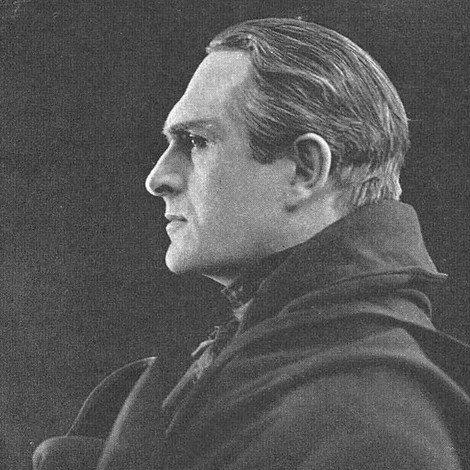
Olaf Fønss
Known for

The Mysterious Book

Zigeunerorkestret

The Indian Tomb, Part I: The Mission of the Yoghi
Ayan, Maharajah of Eschnapur, believes that his wife, Princess Savitri, has been unfaithful to him with officer Mac Allan. He decides to bury her alive, so he sends the Yogi Ramigani to England to look for Herbert Rowland, an architect; but when he orders him to build a tomb, Rowland refuses.

The Indian Tomb, Part II: The Tiger of Eschnapur
Rowland falls sick with leprosy while Mac Allan is captured by the Maharajah, who offers Irene a deal: one night with him in exchange for letting Rowland to be cured. She accepts, but tries to commit suicide.

Lay Down Your Arms!
Martha, a war widow, finds a new zest for life when she meets the noble Captain von Tilling. They marry, but before long he, too, is called to war. In his absence, Martha falls into a depression and is hospitalised. Sick with longing and learning that her banking firm has gone belly-up, she leaves the hospital and takes a train to the battlefield to find her husband. (stumfilm.dk)

The End of the Homunculus
A group of scientists, led by a Professor Ortmann, produce a living human child using scientific processes - a "homunculus." This creature is human in every way, except that he cannot experience love.

Journey into the Night
Dr. Egil Börne, an eminent physician, comes under the spell of an unscrupulous cabaret dancer and deserts his fiancée. The plot finds echoes throughout the Weimar period, including Sternberg’s The Blue Angel. Conrad Veidt appears in a supporting role as a sinister blind painter, whose entrance eerily presages Murnau’s Nosferatu. Der Gang in die Nacht, the earliest surviving film by F. W. Murnau, is also, paradoxically, the only Murnau film for which the original camera negative exists.

En Død i Skønhed

Atlantis
Overwhelmed by personal and professional problems, biologist Friedrich von Kammacher decides to travel abroad in order to regain the joy of living. During his adventurous journey he will meet two very different women, one of whom will be the key to his fate.

Scenens Børn
A spectacular theatre event will take place when the famous actor Axel Steiner will stage the opera "Tosca" with his favorite pupil Magda Irving in the title-role. But there is a dark cloud hanging over the opera house.

The Destruction of Mankind
For a long time the homunculus had to hide from his pursuers. But now he mingles with humanity again and sows discord, strife and murder. One day, when he meets an orphaned girl, he takes her to the shepherd Rudolf's parents. His goal is to pair the two together in order to breed a new human race from them. To this end, he kidnaps her to a deserted island. But the plan fails because Rudolf tries to kill the homunculus after learning his true identity. In revenge, the homunculus destroys the entire island, including the young couple. His hitherto loyal companion Edgar Rodin is so horrified by this deed that he renounces the homunculus and threatens him with death.

Mists of the Past
The year is 1820 and a young, promising artist, Olaf Malm, has settled in Rome, Europe’s centre of art at the time. He is in love with Sigrid, but class differences make their love impossible. Olaf Malm dies in a tragic accident; he allegedly drowns in the Tiber, but his body is never found. Sigrid gives birth to their lovechild, and twenty years later history repeats itself: their son, Henry, who has never known his real parents, loves a woman who is far above him in social rank. Fate brings him back to Rome, where his parents loved and lost each other many years before. (stumfilm.dk)

The Love Tragedy of the Homunculus
The homunculus and his companion Edgar Rodin make an invention that would allow the hateful homunculus to destroy the world. But first he wants to find out about love. When he observes how young Anna is rejected by her parents, he takes care of her and asks her parents for forgiveness - without success. He brings her to her seducer, who also rejects the girl. The homunculus then takes revenge by ruining the man financially and throwing Anna at his feet. But she still loves the villain and asks Homunculus for mercy. The homunculus cannot understand this feeling of love - he wants to try it out on himself. He puts a young woman who loves him to the hardest test, but she will do anything for him, sacrificing her fiancé and her parents. Only when he reveals his artificial nature to her, she leaves him. This experience confirms the homunculus in his intention to destroy mankind.

Die seltsame Vergangenheit der Thea Carter

The Artificial Man
Part of the artificial-creature series encompassing Der Golem (1914 and 1920), Alraune (1918, 1928, 1930) and Metropolis (1926), 'Homunculus' was the most popular serial in Germany during World War I even influencing the dress of fashionable Berlin. Foenss, a Danish star, is the perfect creature manufactured in a laboratory by Kuehne. Having discovered his origins, that he has no 'soul' and is incapable of love, he revenges himself on mankind, instigating revolutions and becoming a monstrous but beautiful tyrant, relentlessly pursued by his creator-father who seeks to rectify his mistake.