
Personal Info
Known For
Gender
Birthday
Place of Birth
Luna Jordan
Biography
Known for

Polizeiruf 110
Polizeiruf 110 is a long-running German language detective television series. The first episode was broadcast 27 June 1971 in the German Democratic Republic, and after the dissolution of Fernsehen der DDR the series was picked up by ARD. It was originally created as a counterpart to the West German series Tatort, and quickly became a public favorite.
Kommissarin Lucas

Helen Dorn
Helen Dorn is an expert Police Commissioner, who’s years of experience have given her killer instinct when it comes to crime. On the department head’s orders, Helen Dorn become involuntary partners with Detective Chief Superintendent Gregor Georgi, with Helen in the role of Georgi’s superior. After initially ruffling some feathers, as Gregor thought he was about to take over a case as head investigator and not confronted with a new superior, the two prove to be a solid pairing: Helen’s famed intuition is matched by Gregor’s rational analysis and precision. But will he be able to unearth her mysterious past?
Jenseits der Spree
SOKO Hamburg

Die Heiland: Wir sind Anwalt

Pumpen

Wake Up
"Wake Up" tells the story of Emilia, whose world came to a standstill two years ago when her sister Clara fell into a coma following a severe skiing accident. When Emilia participates in a study on anxiety therapy conducted by nanobot researcher Hevi Abdel, something unforeseen happens: Hevi’s consciousness briefly migrates into Emilia’s body. For Emilia, this research becomes her last hope of bringing her sister back to life.

Euphorie
Sixteen-year-old Mila returns from a psychiatric clinic after an alleged suicide attempt. She finds herself caught in a love triangle between Ali and Jannis and is drawn into a dangerous world of drugs and violence.
Sleeping Dog
A former detective now living on the streets searches for the truth after a new death raises unnerving doubts about a supposedly settled murder case.

Wild Republic
In the midst of the impassable landscape at the foot of the Alps, a young group of serious offenders is undergoing an experiential educational program intended to rehabilitate them. All of a sudden, a member of the program dies a violent death. Nobody knows exactly what happened, and the youths face a difficult decision. Should they wait for the authorities to recover the body and investigate the crime? Or, escape and take their fate into their own hands? The group doesn't have much in common with each other, though one thing unites them; all of them have had really bad experiences with the authorities and don‘t expect to be treated fairly. Since they don't know who the perpetrator is, they only have one option: to run. Up the mountains, up the highest peaks of the Alps. It seems hopeless until they stumble onto a complex cave system where they can find shelter from wind, weather, and their pursuers.

Easy Girl
Spending every evening in a new and mysterious stranger’s bed, capricious transient Nore agrees to move into a spare room eagerly offered to her by Jonna, a reserved medical student. Against the odds, this unlikely pair finds solace in each other and fall into an intoxicating pattern of partying hard at night with the local men vying for their attention. As their relationship intensifies, Nore’s troubled past comes to light and threatens to dismantle the blissfully ignorant, inexplicably jubilant lifestyle they’ve built together.
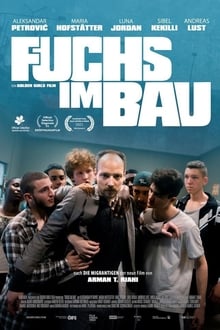
Fox in a Hole
When Fuchs starts his new job as a teacher in a prison school, replacing the old and unconventional teacher Berger against her will, he is forced to confront his biggest fear, triggered by the mysterious, withdrawn inmate Samira.

Kinderschauspieler – Der Preis des Erfolgs
The documentary takes a look behind the scenes of child and youth acting with Nick Romeo Reimann, Luna Jordan, and Constantin von Jascheroff. These former child actors talk about growing up in front of millions of viewers. Perhaps the most successful time of their lives has also left its mark. Fame and success on the one hand, bullying and pressure to perform on the other. And always the question: What's next? Will I be able to build on my past successes? A coming-of-age film about closeness, distance, and growing up in an extraordinary world.

Gegen das Schweigen - Machtmissbrauch bei Theater und Film
Insults, humiliation, violence, sexual assault - the world behind the camera and the scenes can be a nightmare for many theater and film professionals. Apparently there is a real climate of fear in some film and theater productions. Some directors, but also well-known actors, apparently abuse their power and treat those around them on set or on stage with contempt or even abuse. Individual cases have been known for years, including under #metoo. But are they really isolated cases? Or can directors and actors allow themselves anything because the system allows it? In their three-year research, the documentary filmmakers spoke to more than 200 film and theater professionals about the problems in their industry. How much responsibility do the alleged perpetrators bear for abuse of power and how much responsibility does the financiers, production companies, broadcasters and also the audience bear?