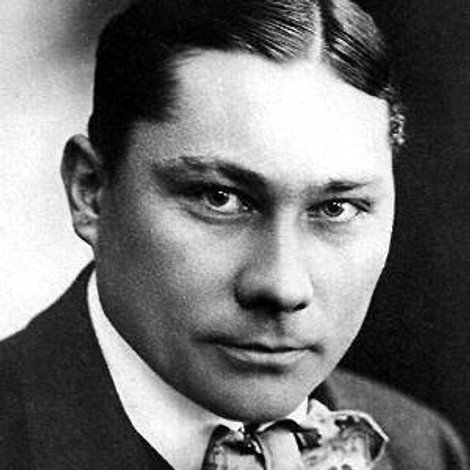
Personal Info
Known For
Gender
Birthday
Place of Birth
Paul Wegener
Biography
Known for

Das Liebesnest

Living Buddhas


Kolberg
During Napoleon's victorious campaign in Germany, the city of Kolberg gets isolated from the retreating Prussian forces. The population of Kolberg refuses to capitulate and organizes the resistance against the French army, which immediately submits the city to massive bombardments.

Fundvogel
Young Jan Bergwall visits his grandmother, the so-called centenary, at Woyland Castle. There he meets his cousin Andrea, who everyone calls "Fundvogel". Jan is fascinated by the young girl's beauty, and soon there is an erotic tension in the air between the two. Although they both have strong feelings for each other, they are afraid to make a commitment, even though their domineering grandmother is determined that they marry. Panicked that he might feel obliged to marry Andrea, Jan escapes from this place. Andrea is deeply disappointed and seeks revenge. Out of spite, she becomes involved with the falconer Bartel and is later raped in a wooden hut. The centigress, concerned about morals and customs, then sends Fundvogel to a convent. She escapes from there and flees into the arms of Jan. When he learns from a letter from the countess what has happened to Andrea, he leaves her a second time. In her despair, Fundvogel then throws herself off a bridge into the floods with suicidal intent.
Marshal Forward

Rübezahl's Wedding
In this film, the people of a Tyrolean town climb up into the nearby mountains, searching for a place where they can hold a picnic and a spring festival: ideally, a place where they can eventually erect dwellings and cultivate crops. Led by the local nobleman (Arthur Ehrens), they find an appropriate spot, and the festivities begin. Some children briefly perform a charming folk dance. Suddenly the Rübezahl arrives and threatens to kill all the townsfolk if they don't leave immediately.

Only a Comedian
A moving actor at the rococo era shows the power-hungry-crude minister of a small state prince in the barriers, while he makes use of his resemblance to the sovereign and slips in his role. - Double role for Rudolf Forster who plays his figures very much chilly.

Wedding in Barenhof
Lothar von Pütz and Roswitha von Krakow fall in love and only then discover that their fathers are bitter enemies. When Lothar's father dies, a close friend of his father's, Baron Maximilian von Hanckel, takes the boy under his wing and tries to make peace between the families. He visits Roswitha's father, who begins to hope that he can marry his daughter to the older, but wealthy, baron, who is still a bachelor. When an argument breaks out between Lothar and Roswitha, she agrees to marry Maximilian. It is only at the pre-wedding party that Roswitha and Lothar have a real conversation. Maximilian overhears everything, releases Roswitha from her vows, and brings the two young people together.

Monna Vanna

Hans Westmar
Nazi film about the story of a Nazi Storm Trooper named Horst Wessel--here called "Hans Westmar"--who took part in street brawls and assassinations in Berlin in the 1920s and 1930s against Communists and other opponents of the Nazis, and was killed by Communists not long before this film came out.

Steuermann Holk

The Golem: How He Came into the World
In 16th-century Prague, a rabbi creates the Golem - a giant creature made of clay. Using sorcery, he brings the creature to life in order to protect the Jews of Prague from persecution.
Wenn die Sonne wieder scheint
The Termoehlens belong to the old farming class in Flanders. Their estate does well and their flax is the best far and wide. And as is the custom, old Termoehlen is like a ruler over his family, the servants and the maidens. Even his son Ludwig, who has just returned from agricultural school with all his ideas on how to improve the farm, doesn’t stand a chance. When Ludwig falls in love with the maiden Rieneke – known as Schellebelle – his father become a despotic enemy.