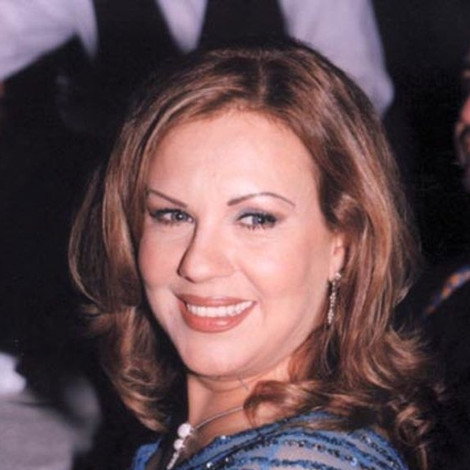
Personal Info
Known For
Gender
Birthday
Place of Birth
Salma Al-Masri
Biography
Known for

Maraya
Created and starring the legendary Yasser Al Azmeh, Maraya ran for 20 seasons from 1982 to 2013 — making it one of the longest-running comedy series in Arab television history. Each episode presents standalone stories skewering the social, political and economic frustrations of everyday Arab life with sharp wit and biting satire. A mirror held up to an entire society, it entered homes across the Arab world for three decades and never stopped being relevant.

Hammam AlQishani
The series goes into details of the events that Syria went through between the years 1955-1959, including the tripartite aggression against Egypt in 1956, the establishment of unity between Syria and Egypt, and the revolution against the monarchy in Iraq, through the Qishani neighborhood, where its people work as merchants, lawyers, doctors, intellectuals and other works.

Stiletto
A body falls from the top floor at a glamorous party in Beirut's wealthy elite. Detective Rami begins questioning the guests and quickly discovers that four women — Falak, Alma, Joelle and Nayla — are bound together by a web of secrets, betrayal and hidden history. A glossy Lebanese murder mystery set among the privileged class.
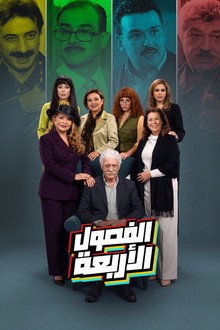
The Four Seasons
Damascus in the late 1990s. Kareem and Nabila are raising five very different daughters — each with her own personality, ambitions and complications — alongside a scene-stealing aunt Jamila. Every episode centres on a family issue that brings everyone together to argue, laugh and muddle through. Warm, witty and deeply rooted in Syrian daily life, it remains one of the most beloved family comedies in Syrian television history. Stars Jamal Suleiman and Khaled Taja.

Ala Al Hilwa Wa Al Morra
Farah is a talented wedding planner who has kept her heart locked up ever since the man she was supposed to marry vanished on their wedding day five years ago. When her boss hands her his new wedding to organise, she discovers the groom is that same man — now engaged to someone else. A warm, bittersweet Lebanese romantic comedy-drama starring Dana Mardini and Nicolas Mouawad, adapted from the Turkish hit İyi Günde Kötü Günde.

Al Hajjaj
This biography of Al Hajjaj Bin Youssef Al Thaqafi looks back on his cruelty, his clemency and his loyalty, and paints the portrait of a controversial regent.
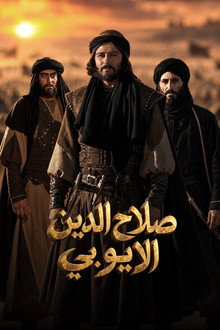
Salah Al-Deen Al-Ayoubi
A sweeping historical epic tracing the life of Saladin from his humble origins to his unification of fractured Muslim kingdoms and his legendary recapture of Jerusalem from the Crusaders after nearly a century of occupation. Starring Jamal Suleiman and directed by the late Hatem Ali, written by Walid Seif — the same partnership behind Palestinian Alienation — this is widely regarded as one of the finest historical dramas in Arabic television, epic in scale yet deeply human in its portrayal of leadership, faith and sacrifice.

The Falcon of Quraish
When the Abbasids overthrow the Umayyad Caliphate in Damascus, slaughtering nearly the entire dynasty, one young prince escapes — Abd al-Rahman. Hunted across deserts and seas, he eventually reaches the fringes of the Muslim world and, through sheer will and political genius, founds a new Umayyad emirate in Andalusia. Written by Walid Seif and directed by Hatem Ali, this is the first chapter of their celebrated Andalusian trilogy — epic, human and historically meticulous.

Memories of the Next Era
Matar disappears under mysterious circumstances for 20 years, during which everyone has believed he had died a martyr. However, he returns in a new form and builds a financial empire amidst the mystery surrounding the source of his wealth. Using the spider's method, he tightens his grip on everyone and exploits them to achieve his goals of doubling his wealth and taking revenge on his past friends.

Znoud Al-Sit
Separate connected episodes about events and situations taken from the reality of daily life, and Aisha solves them, and each episode also presents the methods of making dishes from Damascus cuisine, in the framework of comedic situations between the life of Aisha and those around her.

Another Rainy Day
The series discusses the living conditions of middle-class families by presenting the daily lives of a group of educated characters looking for job opportunities and self-fulfillment in the capital, Damascus, and it deals with the relationships between spouses, siblings, friends, and lovers, as well as between parents and children.

Deer in the Wolves' Forest
Tells a story of corruption in Syria. A minister's son takes advantage of his position and wealth to derail the life of a poor family.

The Key
A social drama about the Syrian society and the corruption that runs rampant across all of its different classes, as well as exploring some ideals like love, integrity, and honesty.

Sert Alhob

The Face of Justice
The Face of Justice tells the story of crimes, their investigation, and the trials of criminals in a suspenseful, crime-drama style. It presents true crime stories that occurred.