
Personal Info
Known For
Gender
Birthday
Place of Birth
Lil Dagover
Biography
Known for
Scene of the Crime
Tatort is a long-running German/Austrian/Swiss crime television series set in various parts of these countries. The show is broadcast on the channels of ARD in Germany, ORF in Austria and SF1 in Switzerland.

Bambi
The Bambi, often called the Bambi Award and stylised as BAMBI, is a German award presented annually by Hubert Burda Media to recognize excellence in international media and television to personalities in the media, arts, culture, sports, and other fields "with vision and creativity who affected and inspired the German public that year", both domestic and foreign. First held in 1948, it is the oldest media award in Germany. The trophy is named after Felix Salten's book Bambi, A Life in the Woods and its statuettes are in the shape of the novel's titular fawn character. They were originally made of porcelain until 1958, when the organizers switched to using gold, with the casting done by the art casting workshop of Ernst Strassacker in Süßen.

German Film Award
Gut gefragt ist halb gewonnen

The Cabinet of Dr. Caligari
Francis, a young man, recalls in his memory the horrible experiences he and his fiancée Jane recently went through. Francis and his friend Alan visit The Cabinet of Dr. Caligari, an exhibit where the mysterious doctor shows the somnambulist Cesare, and awakens him for some moments from his death-like sleep.
Seniorenclub
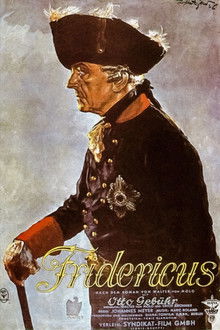
Fridericus
In 18th century Europe, King Friedrich II of Prussia leads his army through the seven-years-war with neighboring states, and after numerous near defeats, eventually brings a victorious army back to Berlin.
Siedlung Arkadien
Vienna 1910
Vienna 1910 is a 1943 German biographical film directed by Emerich Walter Emo and starring Rudolf Forster, Heinrich George and Lil Dagover. It is based on the life of Mayor of Vienna Karl Lueger. Its antisemitic content led to it being banned by the Allied Occupation forces following the Second World War.
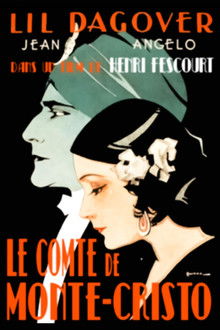
Monte Cristo
Young sailor Edmond Dantès is wrongfully imprisoned, escapes, finds treasure, and reinvents himself as the wealthy Count of Monte Cristo to exact revenge on those who betrayed him.
Blick zurück im Film
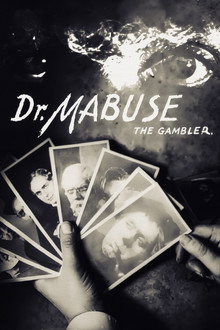
Dr. Mabuse, the Gambler
Dr. Mabuse and his organization of criminals are in the process of completing their latest scheme, a theft of information that will allow Mabuse to make huge profits on the stock exchange. Afterwards, Mabuse disguises himself and attends the Folies Bergères show, where Cara Carozza, the main attraction of the show, passes him information on Mabuse's next intended victim, the young millionaire Edgar Hull. Mabuse then uses psychic manipulation to lure Hull into a card game where he loses heavily. When Police Commissioner von Wenk begins an investigation of this mysterious crime spree, he has little to go on, and he needs to find someone who can help him.
Otto – The Series
“Otto – The Series” is an unusual comedy format from the early 1990s centred on Otto Waalkes, blending classic crime entertainment with Otto’s distinctive brand of humour. Rather than telling a continuous story, the series combines newly shot sketches featuring Otto with scenes from old Edgar Wallace films. These original sequences were re-dubbed, completely transforming their content. Dialogue that was once serious turns into absurd wordplay, and the originally suspenseful plots are deliberately played for laughs. In this way, Otto effectively “smuggles” himself into the dark world of the Wallace films, turning it into a parody driven by nonsense, running gags, and his characteristic humour. The result is an idiosyncratic mix of crime and comedy, whose particular charm lies above all in its playful use of the original material.

The Bird Seller
The film is an adaptation of the 1891 operetta Der Vogelhändler by composer Carl Zeller, with libretto by Moritz West and Ludwig Held, though it incorporates few of the original songs, using them mostly instrumentally or in the background. The plot follows Adam, a Tyrolean bird seller in 18th-century Rhineland, who hopes to marry his beloved Christl, a postmaster's daughter; to secure his future, she arranges for him to perform at court, but complications arise when she is mistakenly suspected of an affair with a philandering prince.
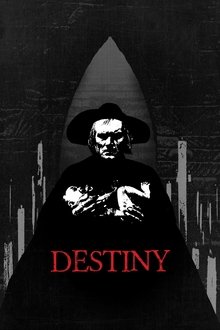
Destiny
As a young couple stops and rests in a small village inn, the man is abducted by Death and sequestered behind a huge doorless, windowless wall. The woman poisons herself in order to join him and is met by Death, who gives her three opportunities to prove that love is stronger than death, thereby freeing her beloved from his fate.