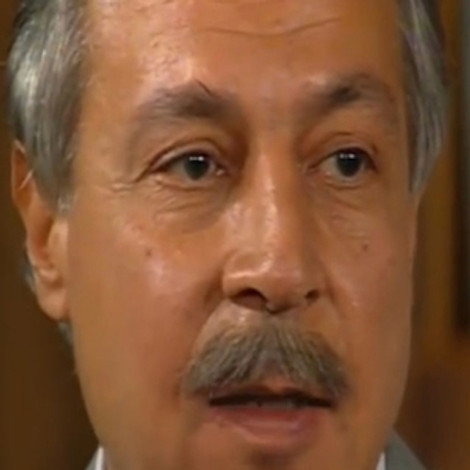
Personal Info
Known For
Gender
Birthday
Place of Birth
Raouf Moustafa
Known for

El Helmeya Nights
A sweeping saga spanning Egyptian history from the era of King Farouk to the early 21st century, Al Helmeya Nights centres on the bitter rivalry between the Al-Badri and Ghanem families in Cairo's Helmeya neighbourhood. Driven by revenge, ambition, and shifting power, the series — written by Osama Anwar Okasha with over 300 actors across six seasons — is widely considered one of the greatest achievements in Arab television drama.

Critical Moments
A medical drama about the stories of a large number of doctors, staff and patients at Dr. Galal's hospital, and the daily challenges that the hospital staff faces both in their work and their personal lives.

Bwabet Elhalwani
Bwabet El‑Halawani brings to life the human stories behind Egypt’s transformation during the Suez Canal era. Through craftsmen, families, and dreamers caught in political and social upheaval, the series blends history with personal struggle, showing how ambition, sacrifice, and resilience shaped a defining moment in Egypt’s past.

Zezenia
Set in Alexandria during the 1940s, at the height of the city's cosmopolitan golden age, Zezenia follows Bishr — the son of an Egyptian father and Italian mother — as he navigates a fractured sense of identity torn between East and West. Against a backdrop of World War II, mixed nationalities, and a society on the brink of change, the series is a sweeping portrait of love, belonging, and the soul of a city.

Al Sera Al Helalya
It takes about the movement of the Hilali Tribe from the Arabic peninsula to the nowadays Tunisia. It takes about the adventures of Abu Zaid which are a mixture of facts and myths with a glimpse of glory on the hero's cunning and wisdom.

Al-Gama'a
Al-Gama'a is an Egyptian television drama, Historical and Political drama series written by Wahid Hamid, directed by Mohammed Yasin and produced by Kamel Abu Ali. The series began filming in January 2010 with a budget of 50 million Egyptian pounds. The show deals with the rise of the Muslim Brotherhood, Egypt’s largest Islamist political group, which was officially banned but nonetheless tolerated to an extent before the revolution. Critics have decried the show's pro-government stance, charging that it plays into the Egyptian government's agenda prior to the 2010 Egyptian parliamentary elections.

المصراوية

Without Mentioning Names
The series revolves around several intertwined events, different Aisha. The series deals with the story of Rabih al-Halawani, and his son Rabie al-Halawani. The magazine and its partner in extortion operations, ill-informed. On the other hand, there is a reason to spend the protection and care of a purebred (ewe) and closer to her on the other side, as she escapes to work for Karawana and then becomes a beach dancer. He exploits the need for a job as an engineer by one of the sons of the Egyptian countryside, in order to exploit him and his father to implement private and suspicious deals.

Alseera AlAshouria: AlHarafeesh
Based on the novel by Naguib Mahfouz (The Harafish), the series presents the biography of the popular hero Ashour Al-Naji and his family, as he represents a symbol of principles, values, justice, mercy and fairness to the simple.

Hekayat Beneeshha
Dr. Layla Sallam, freshly healing from two tumultuous marriages, finds herself drawn to Omar, a complex patient battling mental illness. As their bond deepens—blurring lines between love and healing—Omar's quest for truth challenges Layla to confront her own demons.

Mahmoud Al-Masri
Mahmoud works in the port of Alexandria and gets close to Adnan Fakhouri, the wealthy businessman, and marries his sister. After his ships and companies get nationalized by the 1952 July revolution, Mahmoud and his brothers travel to America and then return in the era of Sadat.

Om Kulthum
Throughout its episodes, the series narrates the biography of the Arab singing lady (Umm Kulthum) since her inception in Sinbillawain and her journey with her father and siblings in singing religious songs on all occasions, through her artistic career and her move to stability in Cairo, and the stories of love that she went through during her life, and her artistic glory until she mastered The lyric scene in Egypt, and the crises she encountered during her artistic work and social life.

King Farouk
The biography of King Farouk I of Egypt, the penultimate king of the Muhammad Ali dynasty. Succeeding his father, Fuad I, to the throne, Farouk's reign ended when the Egyptian revolution of 1952 broke out, and he was overthrown and exiled.

Saraya Abdeen
A period drama about the time of Khedive Isma'il Pasha's reign, focusing on the inside world of Abdeen palace, where competitive conflict develops between the Harem in order to win the Khedive's heart, against a backdrop of political tension and unrest.

The People of Cairo
A dramatic police investigation by chief detective Colonel Hassan, the task entrusted to him is to look into a bomb report in a luxury hotel in downtown Cairo on the wedding night of the scandalous businesswoman Belle Safi, who will be attended by important community figures at various levels, but each carrying Inside is much worse than what people show.