
Personal Info
Known For
Gender
Birthday
Place of Birth
Fernand Gravey
Biography
Known for

Discorama

Cinépanorama
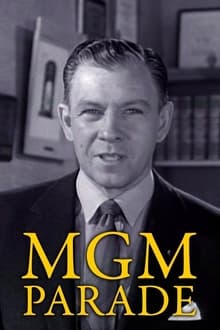
MGM Parade
The original concept of the show was to allow the viewer to see the inner workings of a movie studio and featured interviews with MGM stars and explanations of how movies were made. Later, the format changed to show edited versions of MGM films.

The Hideout
A jewel thief hides his loot in a WELL while escaping. He returns several years later only to find there is a Resort on the site and the well is the centerpiece of the place. He then has to find a way to retrieve his haul.
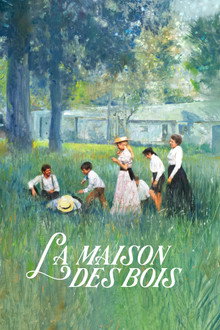
La Maison des bois
During the Great War, in a small rural French village far from the front, a gamekeeper and his wife take in children displaced by the war.

How to Steal a Million
A woman must steal a statue from a Paris museum to help conceal her father's art forgeries.
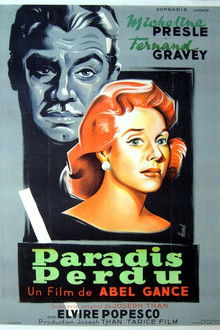
Four Flights to Love
In pre-World Ward I in Paris, a budding artist, Pierre LeBlanc, falls in love and marries Janine, a dressmaker's assistant. Pierre has a flair for designing clothes, and he and his bride live in a blissful paradise, until the war breaks out and he becomes a soldier. Janine dies in childbirth and, no longer desiring to live, Pierre volunteers for a dangerous patrol behind German lines. While recuperating in the hospital from a wound he received on the mission, Pierre spends his time drawing sketches of dresses. He becomes rich and famous after the war. Years later, after devoting himself to his daughter, Pierre seeks a marriage with a girl no older than his daughter. A conflict develops and to ensure his daughter's happiness, Pierre sacrifices his own plans.
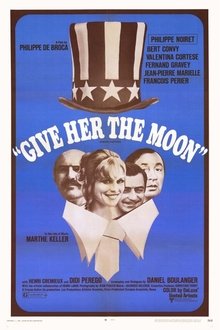
Give Her the Moon
Marie, a young provincial girl, is seduced by an American billionaire. She agrees to stay with him if he moves her village to New York.
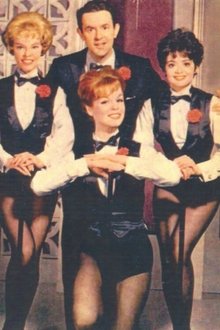
Harry's Girls
Harry's Girls is an American situation comedy which appeared on NBC from September 13, 1963, to January 3, 1964. The series stars Larry Blyden portraying Henry Burns, the leader of a vaudeville troupe consisting of three young women. The co-stars were Dawn Nickerson as Lois, Susan Silo as Rusty, and Diahn Williams as Terry.

Guns for San Sebastian
Leon Alastray is an outlaw who has been given sanctuary by Father John, whom he then escorts to the village of San Sebastian. The village is deserted, with its cowardly residents hiding in the hills from Indians, who regularly attack the village and steal all their supplies. When Father John is murdered, the villagers mistakenly think the outlaw is the priest. Alastray at first tells them he is not a priest, but they don't believe it, and an apparent miracle seems to prove they are correct. Eventually, he assists them in regaining their confidence and defending themselves.
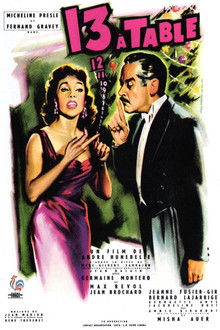
Thirteen at the Table
Madeleine Villardier is terribly superstitious, and she's in a lot of trouble for the New Year's Eve party she's planning. Inexorably, the number of guests is down to thirteen. To add to her dismay, the presence under her roof of a certain Consuelo is proving cumbersome, especially as this lady has revelations to make about Antoine Villardier's stormy past. The mistress of the house's trances alternate with marital explanations. But why not consider the fateful number as a lucky charm?

Pas moral pour deux sous
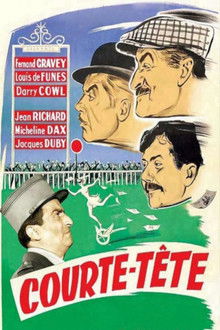
Slightly Ahead
A brilliant swindler, Olivier Parker, hires a small-time pipe salesman, Amédée, to swindle a naive provincial, Ferdinand Galiveau, a chicken merchant. Renamed Teddy Morton and now a jockey, Amédée must ride a mare on which Ferdinand, advised by Parker, must bet. Absolutely convinced of his mystification, Parker bets on an oddball who, of course, loses, while at the last minute Galiveau, having bet on an outsider, wins a fortune. All Parker has to do is find another sucker.
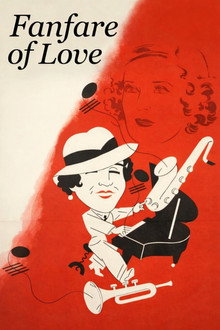
Fanfare of Love
Two unemployed musicians dress up as women to be hired by an all-female orchestra called "Tulips from Holland"; they fall in love with two gorgeous musicians.
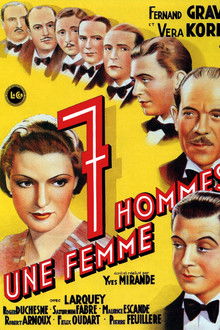
Seven Men, One Woman
At the urging of her childhood friend Brémontier, Lucie de Kéradec, a wealthy widowed countess who wishes to remarry, invites all of her seven suitors to her mansion. Her untold intention is to test them by claiming to be ruined. The experience is a success in that each of the potential husbands reveals his inner nature but a failure when it comes to finding a new life partner. None of the guests passes the test except - the eighth man, namely Brémontier who loved Lucie in secret but, being penniless, had not dared declare his flame to her.